
Indonesians on Alert as Industrial Jobs Become Harder to Find: Minister’s Advice
Jakarta, CNBC Indonesia — Industrial growth in Indonesia does not automatically create as many jobs as it did in the past. Changes in the nature of industry, particularly the adoption of technology, are posing a new challenge for the government as it seeks to expand employment opportunities.
Manufacturing has long been an important sector for national employment. However, companies’ workforce needs can change when they begin relying on technology and reduce their dependence on tasks previously done manually.
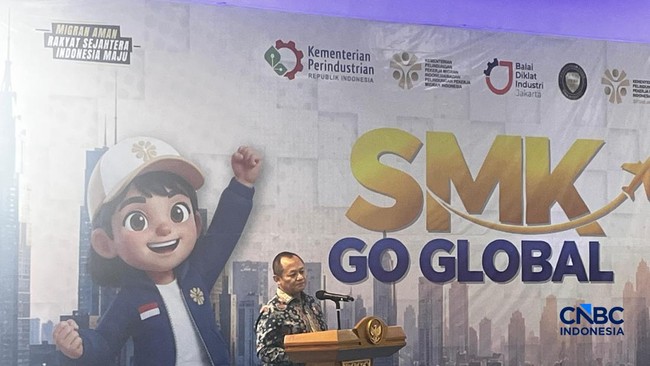
“Indeed, our industry is growing, and manufacturing is growing and employing more than 20 million Indonesian workers. But over time, the character of our industry is changing,” Industry Minister M Sarmuji said at the Jakarta Industrial Training Centre on Thursday (15 October 2026).
These changes mean the relationship between economic growth and job creation requires closer attention. Increased economic activity is not always accompanied by a rise in employment on the same scale as before.
“Industries that used to be highly labour-intensive have now adopted technology, which may well mean they employ fewer people than before,” he said.
This presents a particular challenge as the government seeks both to boost economic growth and tackle unemployment. Changing industry requirements mean workers need skills better suited to technological developments and production processes.
“The capacity of our economic growth to generate jobs is not as strong as it used to be. In the past, 1% economic growth could absorb around 400,000 workers; today, even 300,000 would probably be considered quite good,” Sarmuji said.
The decline in job-creation capacity highlights the need to find additional employment opportunities beyond the traditional pattern of industrial hiring. Developing skills is one way to equip Indonesian workers to fill the positions available in the labour market.
Vocational programmes and training need to be geared towards producing workers with relevant skills. Co-operation between ministries could also help align training facilities with the needs of companies at home and abroad.
“What is the solution for Indonesia if the nature of our industry is changing in terms of employment, and the relationship between economic growth and job creation is changing? One solution is to send skilled Indonesian workers to fill positions that are also needed in other countries,” Sarmuji concluded.
Source: jawawa.id (https://jawawa.id/newsitem/indonesians-on-alert-as-industrial-jobs-become-harder-to-find-ministers-advice-1792057824)
Originally published by CNBC Indonesia (https://www.cnbcindonesia.com/news/20261015140956-4-776488/warga-ri-siaga-cari-kerja-di-industri-makin-sulit-ini-saran-menperin), translated from Indonesian