
Indonesians Lose Trust in Social Media, Citing Damage to the Nation
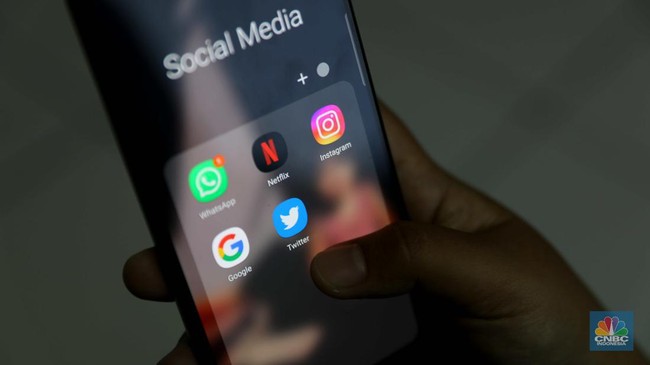
Public perception of the impact of social media has changed significantly in recent years. The Pew Research Center released a survey involving 37 countries on 1 October 2026.
Overall, an average of 55 per cent of citizens still believe that social media has a positive impact on democracy, while 35 per cent believe otherwise. However, in high-income countries, negative views actually predominate. In the United States, 64 per cent consider social media to be detrimental to democracy. This shift in perspective is also clearly visible in Indonesia, where the change is among the sharpest in Southeast Asia, according to the official Pew report, Friday (2/10/2026).
Three years ago, in a 2023 survey, 64 per cent of Indonesians believed social media had a positive impact on democracy. That figure has now fallen to 55 per cent. Conversely, those who believe social media harms democracy have risen sharply from 24 per cent to 4ly per cent. This 19-percentage-point increase makes Indonesia one of the countries with the most significant shifts in perspective both regionally and globally.
Indonesians experience two opposing sides simultaneously. Approximately 77 per cent agree that social media makes people more aware of events happening around them. Furthermore, 55 per cent feel that social media provides a more meaningful voice in political life. However, at the same time, 66 per cent agree that social media facilitates the spread of misleading information to influence public opinion. Additionally, 55 per cent feel that social media actually divides political views among citizens.
Compared to neighbouring countries, the shift in perspective in Indonesia is very prominent. In Malaysia, only 27 per cent consider social media bad for democracy. In Singapore, the figure is even lower at 22 per cent. In the Philippines and Thailand, only 23 per cent and 21 per cent, respectively, see a negative impact.
On the other hand, the percentage of those who view social media positively remains very high in those countries: Philippines 72 per cent, Thailand 71 per cent, Malaysia 65 per cent, and Singapore 63 per cent. This means that although Indonesia remains in the majority group that sees the positive side of social media, the decline in positive views and the rise in negative views in this country are occurring much faster than in neighbouring nations.
Several factors may explain this difference. In Indonesia, social media has played a very large role in political events and general elections in recent years. The spread of unverified news, divisive narratives, and misleading information often coincides with important events. This causes citizens to feel the negative impacts more directly. In neighbouring countries, although similar challenges exist, the shift in perspective has not been as rapid as in Indonesia.
Younger age groups in Indonesia tend to view the positive side more favourably than older groups. This suggests that daily experiences in using social media help shape an individual’s perspective. For the generation that grew up alongside social media, the space feels more like a means of participation. For older generations, the rapid and sometimes uncontrolled change in atmosphere feels more worrying.
This means that the benefits of information openness are still widely felt in Indonesia, but the risks of division and falsehood are now felt more tangibly than before. This shift serves as a warning signal that a healthy public sphere cannot be maintained on its own.
Source: jawawa.id (https://jawawa.id/newsitem/indonesians-lose-trust-in-social-media-citing-damage-to-the-nation-1790952756)
Originally published by CNBC Indonesia (https://www.cnbcindonesia.com/tech/20261002150124-37-772924/warga-ri-sudah-tak-percaya-dengan-media-sosial-sebut-rusak-negara), translated from Indonesian