
Indonesians Become
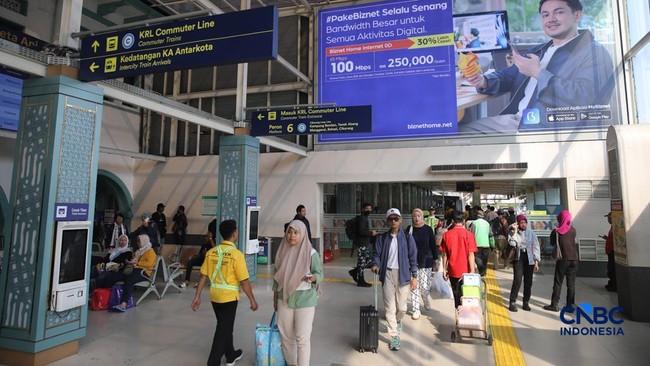
Indonesians are becoming more budget-conscious, opting for land-based travel over flights during long holiday periods. Amidst the pressure of the Rupiah’s exchange rate and high airline operational costs, many tourists are now choosing to travel short distances using private vehicles.
Maulana Yusran, Secretary General of the Indonesian Hotel and Restaurant Association (PHRI), stated that this trend was evident during the Eid al-Adha holiday period, with more tourists holidaying within Java rather than at destinations requiring air travel. “The largest origin of tourist movement is indeed on Java Island. Therefore, they may prefer to move to areas that are not too far and can be reached via road trips, especially since ticket prices are not cheap,” Maulana told CNBC Indonesia on Tuesday (2/6/2026).
The high cost of air tickets has led some members of the public to alter their travel plans. This is reflected in the increased hotel occupancy in several favourite tourist areas within Java during the long holiday, while some regions outside Java did not experience a significant surge in visits.
Maulana explained that the issue of air ticket prices is not only influenced by the Rupiah’s exchange rate against the US Dollar. The aviation industry also faces pressure from rising various operational cost components. “When we talk about the dollar, we are not just talking about the exchange rate. International ticket prices and flight costs are also influenced by many factors, including global oil and aviation fuel prices,” he said.
Airlines have a significant dependency on dollar-based components, ranging from aircraft maintenance and fleet leasing to the procurement of spare parts, most of which use foreign currency. Consequently, when the Rupress weakens, the pressure on airline operational costs increases, which ultimately has the potential to affect the ticket prices paid by passengers. “Our domestic flights certainly have a large dependency on the dollar. Therefore, the exchange rate condition will exert pressure on airline operational costs and ticket prices,” said Maulana.
This means tourists tend to consider travel cost efficiency before deciding on a destination. Nevertheless, the domestic tourism sector still benefits from high public mobility in several favourite tourist destinations. Areas such as Bandung, Puncak, and Yogyakarta remain primary destinations for tourists during long holidays. “If access is easy and can be reached via land travel, people will certainly prefer that option. Because travel cost factors are currently one of the main considerations for tourists,” said Maulana.
Previously, the Ministry of Transportation (Kemenhub) established a policy to adjust the fuel surcharge for economy class passengers on scheduled domestic commercial air transport. This step is outlined in the Decree of the Minister of Transportation Number KM 1041 of 2026 to respond to fluctuations in aviation fuel prices in the domestic market. Under the new regulation, the highest surcharge percentage is set between 10% - 100% of the Upper Fare Limit (TBA). The implementation of this additional fee has been applied by airlines since 13 May 2026.
“The adjustment of the fuel surcharge is carried out based on the mechanism and formulation established in the regulation. The government continues to ensure that the implementation of this policy is carried out in a measured manner, while still paying attention to consumer protection, tariff affordability, and the operational sustainability of airlines,” said the Director General of Civil Aviation, Lukman F. Laisa, in an official statement on Thursday (14/5/2026).