
Indonesians Are Eating Less Rice, Yet Production Is Surging
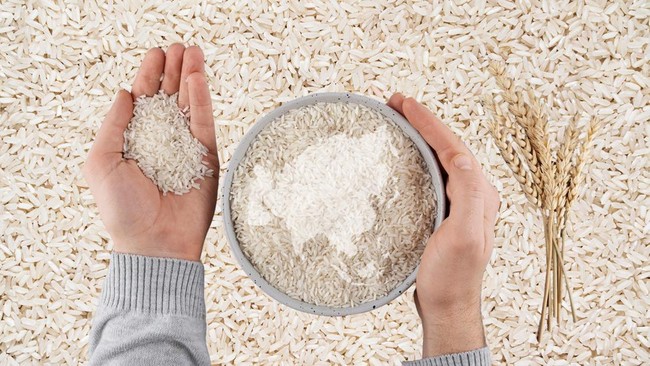
Jakarta, CNBC Indonesia — Rice consumption per capita in Indonesia has been on a downward trend in recent years. By contrast, national rice production increased in 2025, exceeding consumption needs and generating a surplus.
In its March 2026 Executive Summary of Indonesian Population Expenditure and Consumption, Statistics Indonesia (BPS) recorded average rice consumption of 6.26 kilogrammes per capita per month.
BPS said this was down 3.02% from March 2025, when consumption stood at 6.45 kilogrammes.
The decline extends a trend dating back to 2021. Data from the same series of publications show that rice consumption fell from 6.70 kilogrammes per capita per month in March 2021 to 6.26 kilogrammes in March 2026, a decrease of about 6.6% over five years.
Consumption fell in both urban and rural areas. In March 2026, it stood at 5.84 kilogrammes and 6.89 kilogrammes per capita per month, respectively, compared with 6.04 kilogrammes and 7.07 kilogrammes a year earlier.
Spending on ready-to-eat food rises
The decline in rice consumption has coincided with a shift in eating habits. BPS data indicate that people in both urban and rural areas are beginning to reduce the amount of rice in their daily meals.
At the same time, spending on prepared food and drinks rose by Rp28,801, from Rp248,501 per capita per month in March 2025 to Rp277,302 in March 2026.
BPS said this reflected a growing preference for convenience and saving time.
Changes in consumption patterns were also apparent in nutritional intake. BPS recorded a 0.29% fall in average calorie consumption, from 2,073.43 kilocalories per capita per day in March 2025 to 2,067.36 in March 2026. Protein consumption, by contrast, rose 0.13% over the same period, from 62.78 grams to 62.86 grams per capita per day.
Spending on eggs and milk also increased by 12.46% year on year to Rp44,915 per capita per month, the largest rise among food categories.
BPS said the increase could reflect greater attention to meeting demand for animal protein, although prices may also have contributed.
However, higher consumption of prepared food does not automatically mean people are eating rice less often. Some rice consumption may have shifted to ready-to-eat meals, so overall demand for rice may not necessarily have fallen.
Rice spending rises despite lower consumption
Despite the decline in consumption, household spending on rice increased. BPS recorded a 3.23% rise in average rice expenditure, from Rp19,689 in the March 2025 survey to Rp20,324 per capita per week in March 2026.
Rice prices also strengthened over the same period. Citing the latest Agricultural Economic Statistics, BPS said the average wholesale price of rice in Indonesia rose 4.81% year on year, from Rp13,757 to Rp14,419 per kilogram in March 2026.
This indicates that households are paying more for rice even as they consume less. The increased burden of rice expenditure warrants attention in relation to prices and purchasing power.
The pressure is particularly relevant to lower-spending households.
According to BPS, the 20% of the population with the lowest expenditure allocates 18.94% of its food spending to cereals, compared with just 7.50% among the top 20%.
The decline in rice consumption therefore cannot be attributed solely to changing tastes. Affordability also needs to be considered, although the data do not establish how much it has contributed to the fall in consumption.
Indonesia has a rice surplus of millions of tonnes, but…
While per-capita rice consumption has declined, national production rose in 2025. BPS data show rice production reached 34.69 million tonnes, up 13.29% from 30.62 million tonnes in 2024.
The increase coincided with an expansion in harvested paddy area to 11.32 million hectares, up 12.69% on the previous year. Paddy production, measured as dry milled grain (GKG), also rose to 60.21 million tonnes.
With production higher, Indonesia recorded a rice surplus in 2025. The National Food Agency (Bapanas) calculated that production exceeded consumption requirements by about 3.52 million tonnes, based on the national food balance.
The surplus has continued into 2026. Bapanas estimates rice production from January to June at 19.27 million tonnes, exceeding consumption needs of 15.48 million tonnes. This would leave a surplus of about 3.79 million tonnes in the first half of the year.
Nevertheless, a production surplus does not mean every region has excess supply. Uneven distribution, the need to maintain food reserves and differences in harvest seasons remain important factors in ensuring availability and price stability.
Weather risks also need to be taken into account. Indonesia’s rice production in 2026 is still projected to reach about 34 million tonnes, exceeding consumption needs. However, El Niño could put pressure on harvests in 2027, particularly in farmland dependent on rainfall.