
Indonesian Youth Delegation Experiences China’s Intangible Cultural Heritage in Shanxi
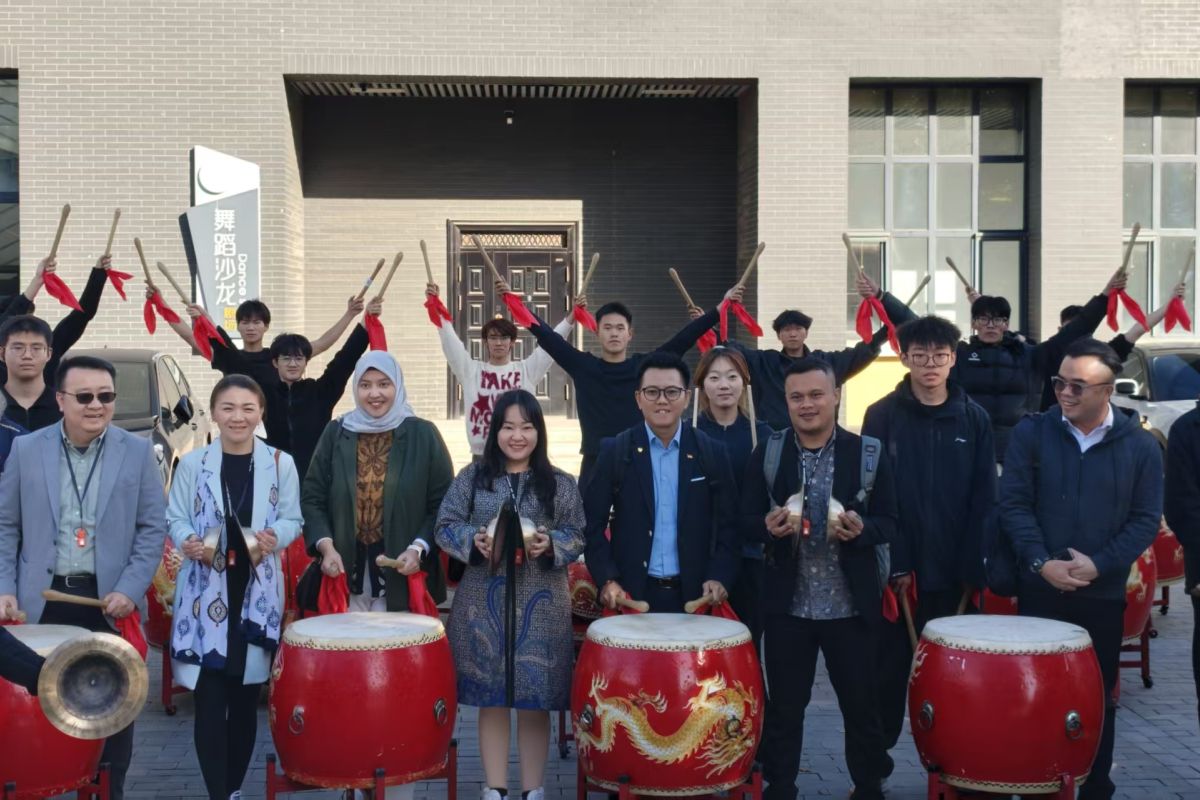
Shanxi, China (ANTARA) — From making pottery on a wheel and playing traditional gongs and drums to painting with ink, an Indonesian youth delegation took part in an immersive programme exploring intangible cultural heritage (ICH) in Shanxi Province, northern China.
The activities, which included rural ICH workshops and a university-based preservation programme, offered close-up insights into the artistic value of traditional Chinese crafts and deepened cultural learning between young people from the two countries.
Liujiaobao Village in Taiyuan, Shanxi, has adopted a distinctive model of “one courtyard, one item of intangible cultural heritage; one courtyard, one cultural theme”. Abandoned residential courtyards in the village have been revitalised and now host more than 100 forms of intangible cultural heritage.
At a lion-dance workshop in the village, rows of carefully crafted lion heads in different styles lined the walls, creating a striking display. Accompanied by the resounding beat of gongs and drums, a red lion leapt and spun nimbly, filling the room with the festive spirit of folk traditions in northern China and drawing repeated applause from the delegates.
At a pottery workshop, the delegates put on aprons and sat at pottery wheels. Using local loess from Shanxi, they learnt to knead the clay, centre it on the wheel and shape vessels under the guidance of craft inheritors.
They felt the changing texture of the clay at their fingertips and learnt about the ancient firing techniques used to produce black-glazed ceramics.
At the Meiyi Lacquer Workshop, the delegates explored gold-inlay lacquerwork, which is recognised as provincial-level intangible cultural heritage in Shanxi. The lustrous lacquer pieces, their intricate patterns and the dozen or so complex traditional steps behind each work gave the visitors a deeper appreciation of the meticulous craftsmanship involved.
They also sampled Shanxi’s famous aged vinegar and tried water marbling to make personalised creative bags, experiencing the province’s ICH traditions across food and handicrafts.
At Taiyuan Normal University, the campus exchange began with a lively welcome ceremony featuring Taiyuan gong and drum music. Taiyuan is known as the “hometown of gongs and drums”. Its traditional gong and drum art was included on China’s national intangible cultural heritage list in 2008 and is a distinctive symbol of Shanxi culture.
The university’s Xingzhi Gong and Drum Troupe gave an energetic, grand performance. Afterwards, the delegates picked up copper cymbals and joined in, following the rhythm as they learnt basic playing techniques and experienced the spirited, vigorous sound of northern Chinese percussion.
They then enjoyed a folk music ensemble featuring traditional Chinese instruments, including the pipa, erhu, ruan and dizi, and took in the appeal of Chinese melodies. In a freehand bird-and-flower painting class, instructors guided them as they dipped brushes into ink and pigments to create their own magnolia paintings. Many delegates said the hands-on session had been a valuable experience.
Yen Yen Kuswati, a youth affairs official at the Indonesia-China Friendship Association (PPIT), said Chinese culture was broad and profound, rich in wisdom and philosophical thought, and held special, deep meaning for Indonesia’s ethnic Chinese community.
“Passed down and integrated over generations, Chinese culture has long been an important part of Indonesia’s multicultural fabric. The emotional bond created by shared cultural roots made this ICH exchange particularly moving,” Yen Yen said. She expressed hope that the event would further strengthen and deepen friendship between the two nations for generations to come.
Dicky Larson, founder of Link Education Group, called for stronger exchanges and cooperation between schools on both sides, including student and teacher exchange programmes and the sharing of educational resources. He also proposed more youth-focused initiatives, such as cultural and arts performances and traditional festival activities, to improve mutual cultural understanding and enable young people to carry forward China-Indonesia friendship.
From living heritage practices in rural areas to structured heritage education at universities, Shanxi’s ICH preservation efforts made a deep impression on the delegation. The cross-border cultural dialogue not only introduced Indonesia’s young people to China’s rich traditional heritage, but also built a solid bridge for mutual cultural learning and friendship among the youth of the two countries.
Source: jawawa.id (https://jawawa.id/newsitem/indonesian-youth-delegation-experiences-chinas-intangible-cultural-heritage-in-shanxi-1793886710)
Originally published by Antara (Indonesian) (https://www.antaranews.com/berita/5834803/delegasi-pemuda-indonesia-rasakan-wbtb-china-di-shanxi), translated from Indonesian