
Indonesian Workers Welcome Minimum Pay Rise for Food Delivery Couriers in Australia
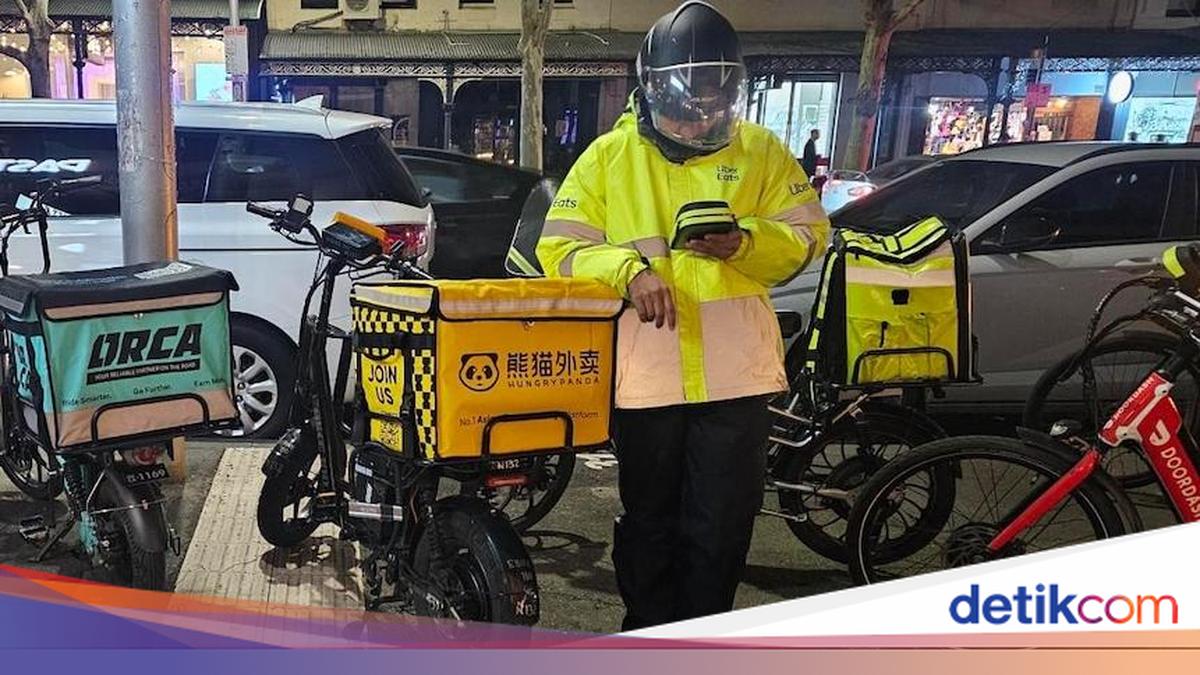
To earn extra income amid the rising cost of living in Australia, Alvien Arief, an Indonesian living in Sydney, works as a food courier for Uber Eats.
But Alvien says freelance ride-hailing drivers in Australia often receive uncertain income.
“There are times when I can earn more than AU$32 [over Rp400,000] per hour, but at other times the income can be much lower, depending on orders, working hours, and conditions on the ground,” he said.
On Monday (17/08), for the first time in Australia, app-based food delivery couriers such as Uber Eats and DoorDash received a minimum wage of at least AU$31.30 per hour. This figure is above the national minimum wage of AU$26.44, or more than Rp330,000.
Around 250,000 ride-hailing drivers in Australia will be affected by this change, which will not only see them receive a higher minimum wage but also gain insurance protection.
Alvien hopes this change will at least provide more certainty for food delivery workers.
“With this change, we as gig workers can now feel that our income is closer to that of regular workers, especially because there is certainty regarding minimum earnings per hour,” Alvien told Erwin Renaldi from ABC Indonesia.
“With a more certain minimum payment, at least we now have the assurance that every hour we spend working will be paid more fairly.”
Sammy, an Indonesian in Melbourne who goes by one name, also welcomed the minimum wage change for food couriers, saying it could help improve driver welfare.
“Especially because previously drivers were not paid for waiting time at restaurants or during drop-offs, which when accumulated could amount to quite a lot,” he said.
Despite the minimum wage for food delivery drivers having risen, Sammy says he is not interested in becoming a full-time food courier in Australia because his other work still offers higher pay.
According to him, there are a number of considerations, such as career development opportunities and the uncertain path to becoming a permanent resident of Australia.
“Because it is almost impossible for me to get PR [permanent resident] in Australia if I work as a full-time food delivery driver,” said Sammy.
Alvien says app-based food couriers face a number of challenges, such as waiting for orders, dealing with busy restaurant conditions, and interacting with customers.
“I myself use an e-bike [electric bicycle], so physically it may be more tiring than using a motorbike or car,” he said.
He says he has not yet considered becoming a full-time food delivery worker, as he still wants to see how the system and its implementation unfold.
Reforms for gig economy workers were introduced two years ago by the Australian federal government, which gave the Fair Work Commission the authority to set minimum standards for food couriers so they could be “employee-like.”
Until now, most of them have been independent contractors, which meant they did not receive workplace protections.
Transport Workers Union (TWU) national secretary Michael Kaine said this change has been a decade in the making.
“This is truly history being made, not just in Australia, but around the world,” Michael said.
Regarding the safety of food delivery workers, according to the Transport Workers Union, at least 25 gig workers have died since 2017.
Uber Eats managing director for Australia and New Zealand, Ed Kitchen, said the reform seeks to preserve the flexibility of gig work while improving worker conditions.
“These standards provide a guaranteed safety net while protecting the flexibility that food delivery workers say they value most,” Ed said.
A DoorDash spokesperson said the new minimum standards are an example of industry and unions finding common ground.
“This is modern regulation that will protect workers without removing the flexibility that attracted them to this work in the first place,” the DoorDash spokesperson said.