
Indonesian Tycoon Fled to Singapore a Century Ago Due to Crushing Government Tax Pressure
The phenomenon of Indonesian companies and conglomerates shifting their ownership to Singapore has recently captured public attention. However, the exodus of major entrepreneurs from the homeland to the Lion City is not a new story.
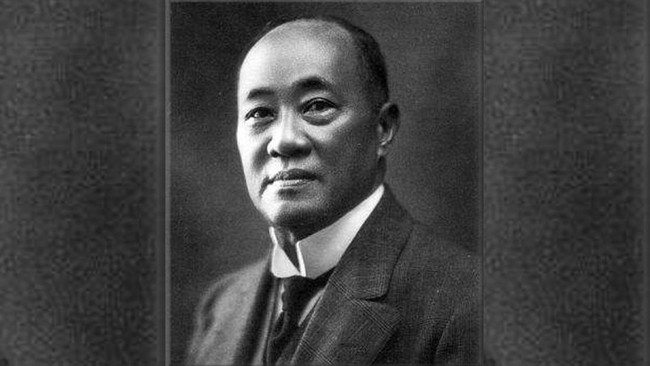
While five prominent Indonesian companies are recorded to have been acquired by Singaporean investors throughout 2025, a look back one century shows a similar drama occurring on a much larger scale. The protagonist was a legendary business giant, Oei Tiong Ham.
Oei Tiong Ham was no ordinary entrepreneur. He was the founder of Oei Tiong Ham Concern (OTHC), a business empire that dominated the global sugar industry in 1893. Based in Semarang, the OTHC business web extended internationally, reaching India, Singapore, Japan, and London.
Due to the vast extent of his plantations, OTHC successfully controlled almost half of the global sugar supply at the time. Unsatisfied with just the sugar industry, Oei diversified his business into banking, shipping, and warehousing. Historian Onghokham, in his book Konglomerat Oei Tiong Ham (1992), noted that the total wealth of this ‘Sugar King’ reached a staggering 200 million guilders.
Targeted by Government Taxes
However, this immense accumulation of wealth became a double-edged sword. The colonial government of the Dutch East Indies, struggling to plug budget deficits following World War I, targeted Oei as an easy source of state revenue.
The increasingly suffocating tax pressure eventually forced the tycoon to depart, leaving the colonial government at a loss after losing one of its largest taxpayers.
According to records by Liem Tjwan Ling in Oei Tiong Ham: Raja Gula dari Semarang (1979), the colonial government once issued a tax bill of 35 million guilders to Oei. Despite this, as noted in Benny G. Setiono’s Tionghoa dalam Pusaran Politik (2003), Oei was known as a very compliant taxpayer who always fulfilled his obligations in full.
The problem was that every time a bill was settled, the colonial government would issue a new, irrational bill—sometimes draining up to 40% to 50% of his total income. Feeling there were indications of malpractice and unilateral extortion, Oei took a firm stand. He refused to pay the additional taxes and chose to sever all ties with the colonial government, including leaving the Dutch East Indies.
Singapore as a ‘Safe Haven’
Initially, rumours circulated that the billionaire would seek business asylum in Europe. The Dutch newspaper De Telegraende (19 May 1920 edition) reported Oei’s plan to settle long-term on the Blue Continent.
However, by 1921, the tide turned. Upon the advice of his legal team, Europe was deemed non-ideal because it implemented much more progressive and expensive tax systems. The final choice fell on Singapore, which was then a British colony, as it offered a far more business-friendly fiscal climate.
The decision to move to Singapore proved to be a brilliant financial move for Oei. His tax burden plummeted. While he was demanded to pay 35 million guilders in the Dutch East Indies, in Singapore, he only needed to spend 1 million guilders.
Acquiring Assets and Making History in Singapore
While Batavia lamented the loss of significant tax potential, Oei moved aggressively in Singapore. He acquired property and land on a massive scale. Historical records show that the total area of land purchased by Oei at that time was equivalent to one-quarter of Singapore, all registered under his personal name.
Beyond accumulating assets, Oei also exerted influence in the regional financial sector. He acquired the shipping company Heap Eng Moh Steamship Company Limited and became one of the early shareholders of the Overseas Chinese Bank (OCB), which has since transformed into the Asian banking giant, OCBC.
As a form of social contribution, the National Library Board of Singapore records that Oei donated US$150,000 for the construction of the Raffles College building. He was also known for his generosity in donating to networks of schools, hospitals, and various social activities there.
His legacy of philanthropy and strong business influence is such that the name Oei Tiong Ham is immortalised in street and building names in Singapore to this day.
Interestingly, until his death on 6 July 1924, Oei Tiong Ham chose to maintain stateless status. He officially renounced his Dutch East Indies citizenship but declined to become a British subject.
This story from a century ago serves as a real reflection that, historically, tax policies that are overly oppressive and lack business certainty risk causing capital and major players to ‘fly’ to neighbouring countries.
Source: jawawa.id (https://jawawa.id/newsitem/indonesian-tycoon-fled-to-singapore-a-century-ago-due-to-crushing-government-tax-pressure-1781578233)
Originally published by CNBC Indonesia (https://www.cnbcindonesia.com/market/20260615205212-17-743075/pengusaha-kakap-ri-kabur-ke-singapura-gegara-ditekan-pajak-pemerintah), translated from Indonesian