
Indonesian Transport Society Highlights Community Crowdfunding for Road Repairs, Warns Government Must Not Neglect Duty
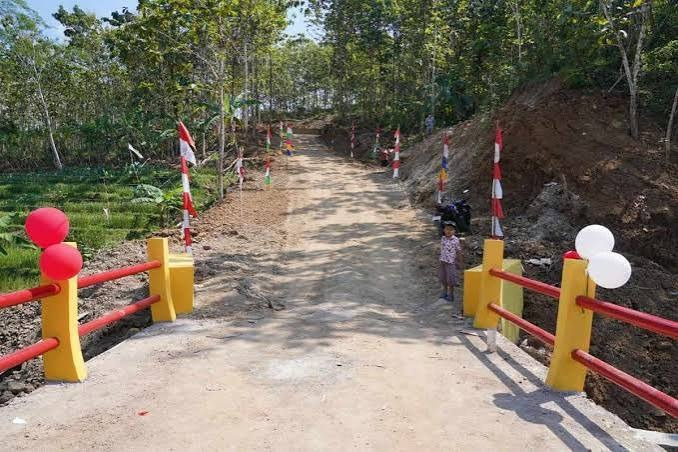
The Indonesian Transport Society (MTI) has highlighted the phenomenon of communities independently building and repairing roads, which has recently become widespread in various regions. If left unchecked, it is feared that this will impact the transport system and infrastructure governance.
According to MTI Supervisory Board member Djoko Setijowarno, these community-led road repairs are triggered by residents’ frustration, as repeated requests for repairs submitted to the government have not been realised. “Yet road infrastructure is a fundamental service from the state to the people. But when the right to safe mobility often clashes with slow bureaucracy and limited regional budgets, the public becomes impatient,” Djoko told Media Indonesia on Sunday (12/7/2026).
The academic from Unika’s Civil Engineering programme added that communities face a difficult choice: allow their local economy to grind to a halt or fund the repair of public facilities themselves. He illustrated this with examples of residents building roads independently, such as in Umbul Glimbung Hamlet, Bandar Agung Village, East Lampung Regency; in Toronan and Kowel Villages, Pamekasan Regency, East Java; in Nglebak Village, Blora Regency, Central Java; and in Mangkualam Village, Cimanggu District, Pandeglang Regency, Banten.
“This is a real portrait. Even in Pintu Rime Gayo District, Bener Meriah Regency, Aceh, residents together with donors successfully raised up to Rp1 billion in community funds to restore the function of the crucial Enang-Enang Road and Bridge for their mobility,” he said.
The phenomenon of residents pooling money to repair damaged roads is a real reflection of the strong spirit of mutual cooperation and, at the same time, a form of protest against bureaucratic delays or government budget limitations. “It also proves that social capital in Indonesia is still very high. This means the public not only demands but is also willing to step in and sacrifice material resources for the common good,” he stated.
So far, crowdfunding has often become a quick-fix solution for communities trying to prevent traffic accidents or economic losses due to damaged roads caused by government bureaucratic sluggishness. Djoko Setijowarno added that while inspiring, the phenomenon indicates a gap in the fulfilment of public services. Moreover, residents are already burdened with paying various taxes, from vehicle tax to land and building tax.
“When tax obligations have been fulfilled, but people still have to pay again for basic infrastructure, the effectiveness of regional budget allocations needs to be questioned. Local infrastructure often loses priority to cosmetic projects or routine bureaucratic spending,” Djoko asserted.
MTI cautioned that community-led road repairs generally use makeshift tools and materials without proper civil engineering standards. As a result, the repairs often do not last long and are likely to deteriorate again during the rainy season. Under Law Number 22 of 2009 on Road Traffic and Transport, road administrators—both central and regional governments—have a legal obligation to promptly repair damaged roads to prevent accidents. If negligence leads to a road accident, the regulation stipulates legal sanctions for the government as the road administrator.
Therefore, MTI hopes that the phenomenon of community crowdfunding for road repairs does not continue to recur and become normalised. The impact is no longer just a social issue but will suppress and distort the blueprint for the development of the National Transport System (Sistranas). In the long term, MTI notes four crucial impacts on the transport system and infrastructure governance, particularly concerning the fragmentation of infrastructure standardisation and quality.
“I need to emphasise here that an inclusive and safe transport system requires strict SOPs, from road gradient and asphalt thickness to drainage systems,” he said. Community repairs generally use makeshift materials, such as instant cement without proper aggregate, and often ignore hydrological aspects like drainage. Poorly repaired roads will quickly deteriorate again under vehicle loads and weather conditions. This disrupts inter-regional connectivity, hampers the smooth flow of logistics, and reduces national travel time efficiency.
“So I say, many crucial impacts emerge from this community-funded phenomenon, and it is a paradox that could threaten the national transport system. The government should take it seriously,” Djoko Setijowarno concluded.
Source: jawawa.id (https://jawawa.id/newsitem/indonesian-transport-society-highlights-community-crowdfunding-for-road-repairs-warns-government-must-not-1783846251)
Originally published by Media Indonesia (https://mediaindonesia.com/nusantara/910046/masyarakat-transportasi-indonesia-soroti-fenomena-warga-patungan-perbaiki-jalan-rusak-pemerintah-tidak-boleh-abai), translated from Indonesian