
Indonesian Students Strengthen AI Literacy for Future Teachers in Malaysia
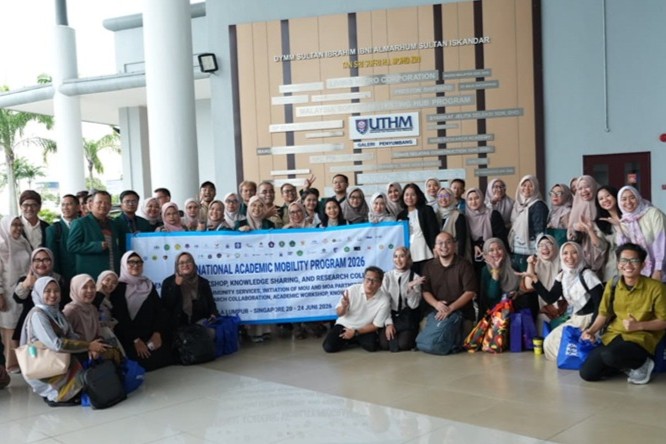
A team of doctoral students from Universitas Negeri Jakarta (UNJ) has organised an international community service programme at Universiti Tun Hussein Onn Malaysia (UTHM) in Johor, aimed at strengthening artificial intelligence (AI) literacy among prospective teachers. The programme, titled ‘AI for Smart Learning: Enhancing Digital Literacy, Learning Engagement, and Future Workforce Skills through the Use of Artificial Intelligence’, was held on Sunday, 22 June, as part of an International Mobility Programme with the Johor Business School. It was designed to equip teacher trainees with an understanding of how to utilise AI ethically and responsibly in education. Team leader Yulius Yuwono Saputra stated that the rapid development of AI has transformed many aspects of life, including the education sector. ‘Therefore, future teachers need to understand how to use this technology as a learning support tool without diminishing students’ critical thinking abilities,’ he said. The programme employed a participatory counselling method, covering stages from preparation and material delivery to group discussions, presentation drafting, and reflection sessions. Topics included the challenges of AI use in education, digital ethics, academic integrity, plagiarism prevention, strengthening critical thinking skills, and AI-based learning strategies. In the main session, presenters Aji Kresno Murti and Rully Arifiansyah introduced a learning approach that positions AI as a partner in the learning process through a ‘Ask, Understand, Analyse, Create, and Evaluate’ framework. This approach is expected to help teachers use AI productively without replacing the primary role of human thought. The programme involved ten doctoral students from UNJ across various disciplines. Beyond AI in education, participants also received materials on the application of AI in investment, digital marketing, digital governance, digital payment systems, strategic management, and anti-money laundering measures. Participants were also tasked with creating learning products in the form of presentations containing case studies, classroom AI strategies, ethical principles, and critical thinking-based learning activities. Evaluations showed that all groups successfully produced presentations incorporating ethical principles of AI use and learning activity designs that promote critical thinking. Yulius concluded that through this activity, the UNJ doctoral student team hopes academic collaboration between Indonesia and Malaysia will continue to grow, while strengthening the readiness of future educators to face digital transformation through the ethical, critical, and responsible use of AI.