
Indonesian Students Lead the World in AI Adoption
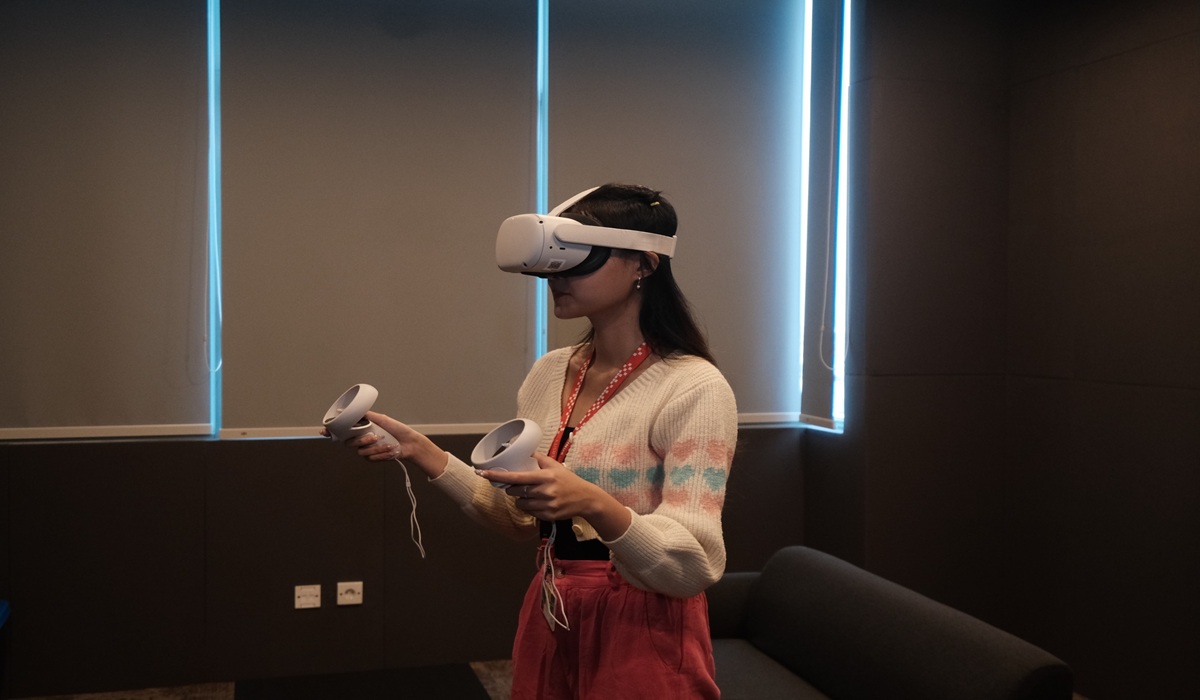
The use of artificial intelligence (AI) among Indonesian students has reached a massive scale. According to data from the Global Student Survey 2025 released by Chegg, 95% of students in the country have integrated generative AI into their learning processes. This figure places Indonesia in first place among 15 countries surveyed globally.
However, behind this high level of technology adoption, new concerns have emerged from parents. Their anxiety does not focus on the technology itself, but rather on the long-term impact on their children’s ability to think independently. A significant question arises: will students remain capable of performing critical analysis, or will they instead become trapped in a dependency on instant AI-generated answers?
To address this challenge, Binus University has introduced the Digital Transformation & AI Experience Ecosystem. This approach is designed so that students are not merely passive users, but are equipped with the ability to understand technology accurately and responsibly.
The Rector of Binust University, Dr Nelly, S.Kom., M.M., CSCA., emphasised that universities now bear a greater responsibility. “The development of AI encourages us not only to teach the use of technology but to ensure that students remain capable of building independent reasoning and understanding the relevant context of its use,” she stated.
Parental concerns are well-founded. A survey by Echelon Insights of 1,511 parents showed that 56% believe their children are active users of AI, yet they are calling for strict supervision to maintain problem-solving abilities.
Binus University recognises that the industries of the future are not just looking for individuals proficient in AI. According to the Future of Jobs Report 2025, skills such as creativity, collaboration, and adaptability will become increasingly crucial, as 39% of core worker skills are predicted to change by 2030.
Within the Binus ecosystem, students are encouraged to evaluate and validate AI outputs through various stages of learning, ranging from research to industry collaboration. This is supported by a comprehensive digital infrastructure.
Dr Nelly added that this commitment has been realised through the curriculum and daily learning experiences. “We accompany students so they can utilise AI productively without losing their analytical power,” she concluded.
For parents, this approach is becoming a new standard in choosing educational institutions. Readiness for the AI era is no longer measured solely by digital facilities, but by how a campus can maintain the intellectual integrity of its students amidst the technological tide.