
Indonesian Stocks Slide 1.7% as BI Rate Decision, Vietnam Upgrade Weigh
Indonesian Stocks Slide 1.7% as BI Rate Decision, Vietnam Upgrade Weigh
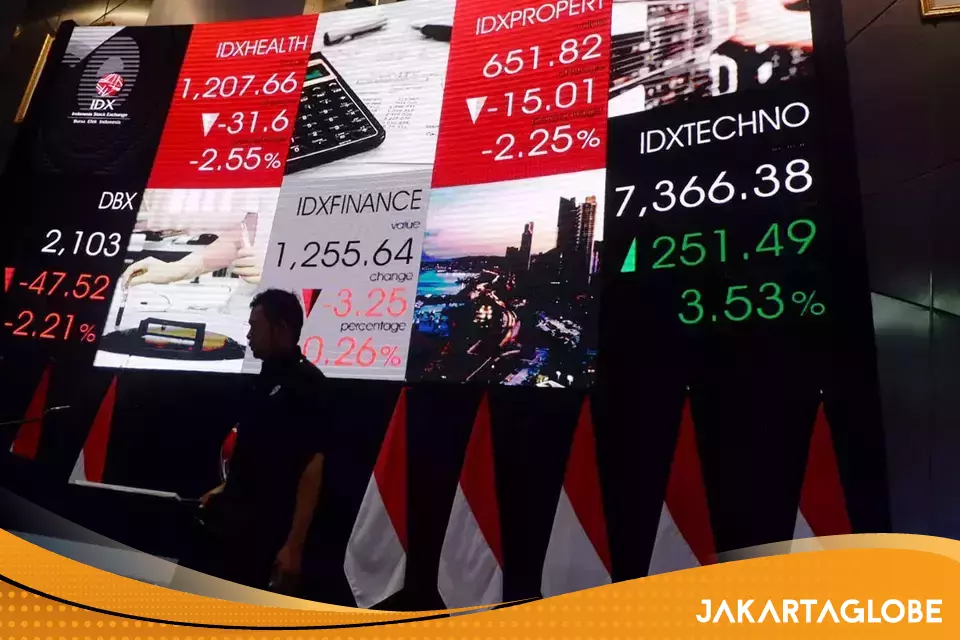
Jakarta. Indonesian stocks fell 1.7% on Tuesday as investors awaited Bank Indonesia’s monetary policy decision and weighed the potential impact of Vietnam’s promotion to emerging-market status on regional capital flows.
Jakarta Composite Index (JCI) dropped 107 points to close at 6,277, after trading between 6,258 and 6,423.
Trading volume reached 33.7 billion shares, with a total turnover of Rp 14.45 trillion ($809.16 million) across 2.16 million transactions. A total of 139 stocks advanced, 533 declined and 118 were unchanged.
Pilarmas Investindo Sekuritas said domestic market pressure reflected investors’ wait-and-see stance ahead of BI’s September 22-23 policy meeting, with markets expecting the central bank to keep its benchmark interest rate unchanged.
“This is a concern because the room for intervention or support to strengthen the rupiah could become increasingly limited amid pressure on the domestic currency,” Pilarmas wrote in its research note on Tuesday.
Another source of pressure was FTSE Russell’s decision to upgrade Vietnam from a frontier market to an emerging market, potentially attracting foreign capital into Vietnamese stocks and prompting a rebalancing of investment flows across Southeast Asia.
Pilarmas said the upgrade would intensify competition for global investment managers’ funds, as Vietnam would join Indonesia in the secondary emerging-market category.
“The risk of capital outflows from the domestic stock market remains a threat that must be watched closely,” the brokerage added.
However, foreign capital movements do not always follow a linear pattern, Pilarmas said, meaning the impact of Vietnam’s upgrade on Indonesian stocks would depend on global investors’ allocation strategies.
External sentiment was comparatively supportive, with oil prices declining further from last week’s highs amid intensified diplomatic efforts to end the Middle East conflict, Pilarmas said.
US President Donald Trump was scheduled to address the United Nations General Assembly in New York, with a potential meeting with Iranian President Masoud Pezeshkian on the sidelines.
Lower oil prices helped ease concerns over inflationary pressures, Pilarmas said. Satellite data also showed a surge in Saudi oil cargoes in the Persian Gulf, indicating that exports were beginning to shift back through the Strait of Hormuz while the East-West Pipeline remained closed.
Major Asian markets closed higher on Tuesday. South Korea’s Kospi gained 0.2%, while Hong Kong’s Hang Seng Index added 0.2%. The Shanghai Composite edged up less than 0.1%.
Tokyo markets remained closed for an extended holiday, with trading set to resume on Thursday.
On Wall Street, US stocks rallied on Monday, bringing the S&P 500 within reach of its record high.
The S&P 500 climbed 1.5%, leaving it 0.4% below the record set last month. The Dow Jones Industrial Average rose 366 points, or 0.7%, while the Nasdaq Composite jumped 2.3% to a new all-time high.
Tags: Keywords: