
Indonesian SMEs Encouraged to Enter China's Supply Chain Through Digitalisation and Investment
Indonesia’s Minister for Cooperatives and SMEs, Maman Abdurrahman, is pushing for accelerated concrete cooperation between Indonesia and China through strengthened digitalisation, market access, and integration of SMEs into the global supply chain during his working visit to the People’s Republic of China.
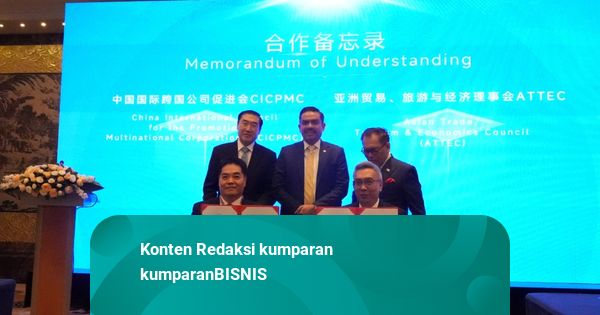
This visit includes participation in the Indonesia-China SME, Trade, and Investment Cooperation Forum 2026, held on 1 April 2026 in Beijing, attended by more than 100 participants from government, business actors, industry associations, and financial institutions from both countries.
The forum featured several key speakers, including the Indonesian SMEs Minister as the keynote speaker, Indonesian Ambassador to China and Mongolia Djauhari Oratmangun, leaders from business organisations ATTEC and CICPMC.
Panel discussion sessions also featured various strategic speakers, including the Director General of National Export Development from the Ministry of Trade Fajarini Puntodewi, Deputy for Medium Enterprises from the Ministry of SMEs Bagus Rachman, Deputy for Strategy and Policy Development from LKPP Aris Supriyanto, Head of DKI Jakarta’s PPKUKM Office Elisabeth Ratu Rante Allo, and Financial Attaché at the Indonesian Consulate General in Hong Kong Ristola Nainggolan.
The forum not only served as a dialogue platform but also produced several initial understandings through the signing of cooperation agreements and business matching activities that brought together Indonesian and Chinese business actors in various priority sectors.
On that occasion, the SMEs Minister emphasised that the transformation of Indonesian SMEs must be driven by technology, digitalisation, and strategic partnerships.
“With more than 60 million SMEs, Indonesia has great potential to integrate into the global value chain, including with China as the main partner,” he said.
In addition to the forum, the SMEs Minister, along with Dr Irene M. Han, Deputy Ambassador of Indonesia to China, held bilateral meetings with the Deputy Minister of Industry and Information Technology (MIIT) and the Deputy Minister of Commerce of China (MOFCOM).
In the meeting with MIIT, Indonesia pushed for strengthened cooperation in developing SME capacities, including training, industrial apprenticeships, and technology transfer in machinery, robotics, and artificial intelligence (AI). The SMEs Minister also introduced the integrated digital system “Sapa UMKM” which will connect more than 60 million SMEs in Indonesia, as well as opening opportunities for integration with China’s digital ecosystem.
Meanwhile, in the meeting with MOFCOM, both parties reaffirmed their commitment to expanding market access for Indonesian SMEs, including through cross-border e-commerce. The bilateral trade value between the two countries has exceeded USD 167 billion, reflecting great potential that can continue to be developed.
The SMEs Minister also highlighted the importance of resolving obstacles to exporting swiftlet nests, given that Indonesia is the main supplier to the Chinese market.
In a business meeting held at the Indonesian Embassy in Beijing, the SMEs Minister met with various Chinese business actors in the agriculture, energy, logistics, research, and digital technology sectors. Several companies expressed concrete interest in strengthening cooperation, particularly in developing food commodities such as mung beans and durian, strengthening logistics infrastructure, and utilising digital technologies such as integrated payment systems and blockchain.
As part of the series of visits, the SMEs Minister also held a meeting with the Indonesian diaspora in China, consisting of business actors, professionals, and students. In that meeting, the SMEs Minister invited the diaspora to play an active role as a bridge for promoting Indonesian SME products in the Chinese market.
Meanwhile, the Indonesian Ambassador stated that bilateral cooperation can also positively support the strengthening of Indonesian SME capacities.
“Going forward, we hope that Indonesia-China cooperation not only increases trade value but also encourages technology transfer, quality investment, and strengthening of Indonesian SME capacities to be more competitive in the global market,” said the Indonesian Ambassador to Beijing.
This working visit reaffirms Indonesia’s commitment to strengthening economic partnerships with China, particularly in encouraging SMEs to become more competitive, technology-based, and connected in the global supply chain.