
Indonesian Shipyard Industry Struggles with Declining Orders from Mining Sector
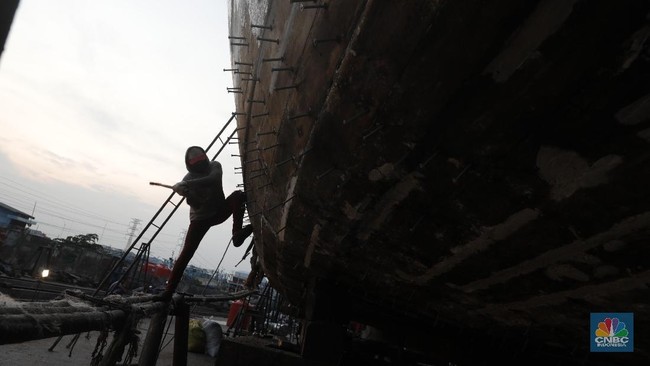
The national shipbuilding industry is currently facing a shift in demand patterns. After several years of heavily supporting the mining sector, particularly for tug and barge vessels, the market for new ships is beginning to shrink.
This condition has prompted industry players to redirect their work towards other types of vessels. Requirements for ships used in the distribution of fuel, oil, and gas, as well as ferry services, are becoming the new markets being pursued by several shipyards.
The Chairperson of the Indonesian Association of Shipbuilding and Offshore Industry Companies (IPERINDO), Anita Puji Utami, stated that this change in demand is quite significant. Out of approximately 280 association members, including shipyards and supporting industries, new ship construction is no longer the dominant workload.
“I need to convey that currently, within our association of 280 members consisting of shipyards and other supporting industries, the situation in the shipbuilding industry is that national ship construction has begun to decline,” Anita told CNBC Indonesia on Tuesday (29/09/2026).
Over the last five years, the mining sector has been one of the primary sources of work for shipyards. Tug and barge combinations are widely needed to support commodity transportation activities, but changes in coal trade have also influenced the demand for new ship construction.
The most noticeable decline is occurring in vessels directly related to mining. Meanwhile, shipyards are starting to work on vessels for fuel and energy distribution, as well as ferry ships.
“Particularly in the last five years, it was dominated by fulfilling the needs of the mining industry, such as tug and barges. But currently, the need for tug and barges, due to several developments in coal importation, is significantly affecting new construction in Indonesia,” she said.
The change in the composition of work is also evident in the types of vessels now entering shipyards. SPOB (Self-Propelled Oil Barge) vessels, mini tankers, oil and gas industry support vessels, and RORO ferries are among the types being constructed, including in Batam and Java.
Regarding domestic work, the character of government projects also differs. Projects from the Ministry of Defence are largely directed towards State-Owned Enterprises (SOEs), whereas private shipyards rely more on commercial markets and ship maintenance work.
“As a result, it has decreased by almost… perhaps now only about 40% remains. 60% has all been delivered; what remains for new construction demand related to the mining industry has indeed significantly declined,” said Anita.
This shift has made ship maintenance the primary pillar of shipyard activity. Nevertheless, production capacity for building new ships remains available and can be utilised again if domestic demand improves.
“In terms of the occupancy of shipyard capacity itself, it is still feasible to conduct shipbuilding in Indonesia. We certainly hope for a return of new construction in Indonesia, especially for the private sector. Therefore, we are also encouraging government policies that favour new shipbuilding in Indonesia,” she concluded.