
Indonesian School Wins Asia Award for Banana Waste Innovation
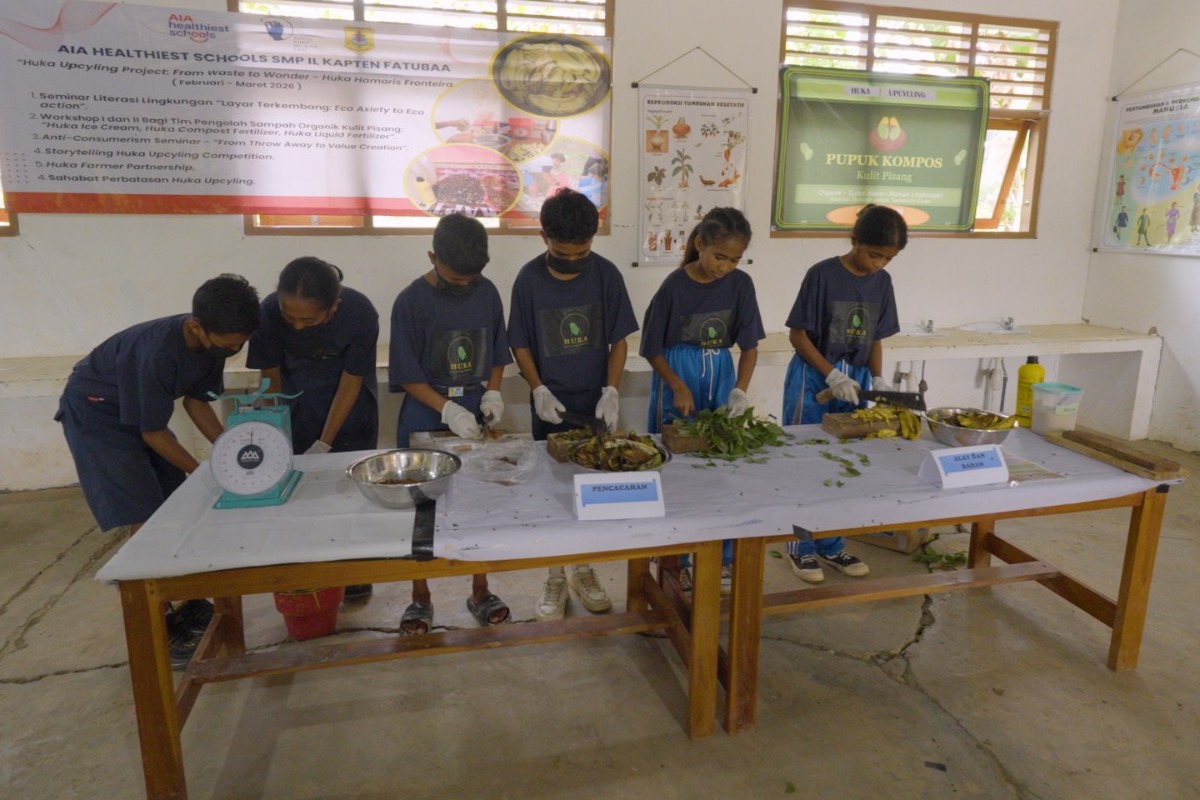
Environmentally based innovation developed in schools is regarded as a means of building awareness, creativity and entrepreneurial skills among pupils. When applied sustainably, the approach not only creates benefits for the school environment but also delivers tangible impact for the surrounding community. For this innovation, SMP IL Kapten Fatubaa in Fatubaa Village, Indonesia, successfully won the Grand Prize of the AIA Healthiest Schools Competition 2026 and received a prize worth US$40,000. The award was granted after the school developed a programme utilising banana peel waste to produce ice cream, compost and liquid fertiliser, which has benefited more than 1,000 local residents.
The competition, now in its fourth year, is part of the AIA Healthiest Schools (AHS) programme, which encourages pupils aged 5 to 16 to build healthy living habits through four main pillars: healthy eating, active lifestyles, mental health and sustainability.
SMP IL Kapten Fatubaa was selected as the regional winner after competing against nearly 1,000 entries from various countries in the Asia-Pacific region, the highest level of participation since the competition was first held. The award was announced at a regional ceremony in Bangkok, Thailand. Through the competition, each school is challenged to present real solutions to health and well-being issues in their own environments. The approach is expected not only to build healthy living habits among pupils but also to create a positive impact that can be felt by the wider community.
Head Judge of the AIA Healthiest Schools Competition and AIA Group Chief Marketing Officer, Stuart A. Spencer, said the competition was designed to help the younger generation apply health knowledge into real action.
“Evidence shows that early intervention can have a lasting impact. Through this programme, pupils build healthy living habits whilst also developing important life skills such as creativity, problem-solving and teamwork,” said Stuart.
According to Stuart, the programme not only raises awareness of the importance of healthy living but also encourages sustainable behavioural change as part of the commitment to helping people live healthier, longer and better lives.
Group Chief Executive and President of AIA Group, Lee Yuan Siong, added that the programme’s main strength lies in its ability to turn the concept of healthy living into habits practised every day.
“Simple actions such as eating more healthily, being more active and looking after mental health may seem small. However, when done consistently at school and in the community, these actions can create behavioural change on a much wider scale,” he said.
A teacher at SMP IL Kapten Fatubaa, Antonius Kapitan, admitted he had not expected his school to win the regional award. According to him, the teachers and pupils simply tried to present solutions that could benefit the surrounding environment.
“We, the teachers and especially the pupils, simply tried our best. We tried to turn banana peels into products such as ice cream, liquid fertiliser and compost fertiliser,” said Antonius.
He emphasised that the award was not the ultimate goal. The school is committed to continuing the programme so that its benefits can be felt by more pupils and members of the community.
“We have a duty to continue this project because the purpose of this activity is not to win awards, but for our pupils, their future, and the community around us. We want to keep producing and bringing benefits to more pupils and communities,” he concluded.
Source: jawawa.id (https://jawawa.id/newsitem/indonesian-school-wins-asia-award-for-banana-waste-innovation-1783615829)
Originally published by Media Indonesia (https://mediaindonesia.com/humaniora/909376/sekolah-indonesia-raih-penghargaan-asia-lewat-inovasi-pengolahan-limbah), translated from Indonesian