
Indonesian Scholarship Recipients in Australia Struggle with Rising Living Costs
Data from the Australian Bureau of Statistics (ABS) shows that living costs for various household groups in Australia rose by 3.7 to 4.7 per cent in the year to June 2026. Although tuition fees and some living expenses for scholarship recipients are covered by the Indonesian or Australian governments, the increase is felt more acutely when partners and children also reside in Australia.
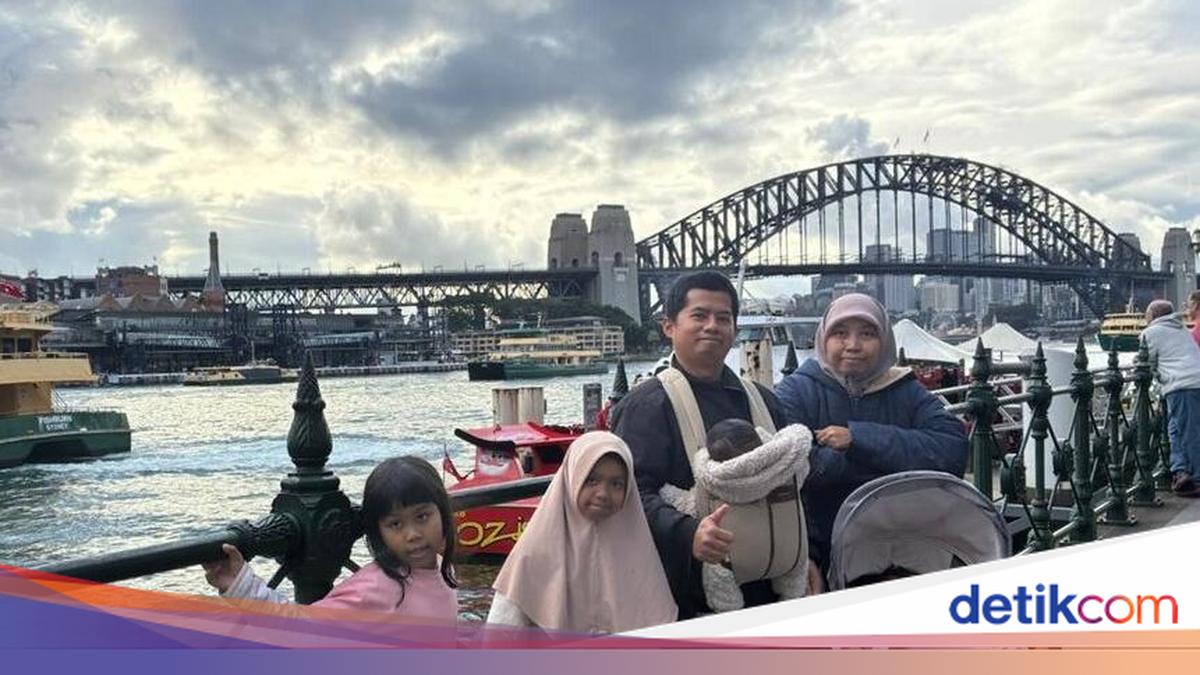
Sitti Rahma Yunus, a lecturer from Makassar pursuing a PhD in Education at the University of Queensland with an LPDP scholarship since January 2025, experienced this firsthand. In Brisbane, she lives with her husband and four children in the Taringa area. In her first year, she paid around AU$620 per week in rent. When the rent increased to approximately AU$680 per week, she chose to move. The family now lives in a smaller house with only two bedrooms, paying about AU$400 per week. “I receive a living allowance of AU$2,700 per month. If I paid AU$620 per week, that would be AU$2,400 per month,” she said, noting the allowance is disbursed every three months. “The living allowance would be gone just for the house rent.”
Housing costs are a major issue for international students in Australia. A Study Australia survey from late 2025 found that 41 per cent of international students reported difficulty finding accommodation. Rahma receives an additional family allowance for her husband and one child. According to the 2025 LPDP Financial Disbursement Guidebook, doctoral programme recipients can obtain a family allowance for a maximum of two dependents, each worth 25 per cent of the recipient’s monthly living allowance.
Before bringing her family to Australia, Rahma said she had to borrow around Rp400 million from a bank. Approximately Rp300 million was used to purchase health insurance in Australia for her husband and children, which is not covered by LPDP, while the remainder covered airfares and other departure needs. To meet their needs in Australia, her husband works full-time as a cleaner at the school their children attend, in addition to practising frugality. She noted that the high cost of childcare in Australia means she must care for her five-month-old and two-and-a-half-year-old children herself. “If I were to put my child in daycare, we wouldn’t have enough money. That’s what I find really tough as a mother,” she said.
Anjana Demira, an Australia Awards Scholarship (AAS) recipient pursuing a Master of Global Media Communication at the University of Melbourne, also faces extra expenses for bringing her family. She came with her husband and one child and receives a Contribution to Living Expenses (CLE) of about AU$1,389 per fortnight, in addition to her tuition fees. The AAS website states benefits include tuition, CLE paid fortnightly, student health insurance, and a one-off Establishment Allowance of AU$5,000 upon arrival. Unlike LPDP, she does not receive a living contribution for her husband and child. Anjana said she still had to purchase health insurance for her husband and child for two years in Australia, costing around Rp120 million from her own savings. She also spent about Rp20 million from her savings, despite receiving the AU$5,000 Establishment Allowance. While her child’s main school fees are covered by the state government, she still pays for additional costs like uniforms, books, and supplies, with initial school expenses reaching at least AU$600.
“We also thought, if we truly had no money, could we accept this scholarship? Because it would be difficult, as our savings were also used for documents and other things before we even arrived here,” she said.
To cope with the high cost of living in Australia, Anjana has cut back on several expenses. For instance, she always tries to cook at home more often. She also chose not to install home internet, relying instead on the data included in her mobile phone plan to save money. Anjana said she works part-time at a café, while her husband works as a courier from around five in the morning until seven at night. Unlike LPDP, which restricts scholarship recipients from working, AAS recipients can work as long as it does not violate visa conditions or study obligations.
Despite the financial challenges, both Rahma and Anjana chose to bring their families to avoid separation during their studies and to allow their children to experience living and learning in an Australian environment. “As a mom, my well-being probably wouldn’t be like this if I left my child in Indonesia for two years,” Anjana said.
For those who come alone, the calculation is different. Mohamad Desgia, an LPDP scholarship recipient pursuing a Master of Public Policy and Management at the University of Melbourne, came without a partner or children. He receives a living allowance of AU$2,800 per month. The amount of the LPDP allowance varies.
Source: jawawa.id (https://jawawa.id/newsitem/indonesian-scholarship-recipients-in-australia-struggle-with-rising-living-costs-1786694078)
Originally published by detikcom (https://news.detik.com/internasional/d-8618416/tantangan-hidup-di-australia-dengan-beasiswa-saat-biaya-hidup-makin-mahal), translated from Indonesian