
Indonesian Residents Flock to Buy Electric Vehicles, Aiming for Savings and Freedom from Fuel?
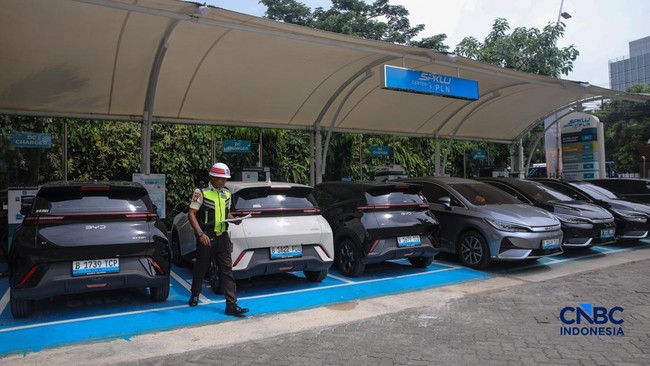
Vehicle sales in Indonesia suddenly surged in April 2026. Interest in purchasing electric vehicles increased sharply.
Data from the Indonesian Automotive Industry Association (Gaikindo) recorded wholesales at 80,776 units. This figure rose 55% compared to April last year, which stood at 52,108 units. Compared to March 2026, the increase was also significant, reaching 31.8%.
This rise emerged after the automotive market slowed during the Lebaran period. In March, vehicle distribution fell 13.8% compared to the previous month as dealer activities and public purchases were held back by the long holiday. April marked a turning point as vehicle distribution returned to normal and consumers began re-entering showrooms.
From the retail sales perspective, or dealer sales to consumers, the situation also strengthened. April retail sales reached 75,730 units, up 13.7% from March. Year-on-year, retail sales grew 30.2%. In the first four months of 2026, national wholesales have already reached 289,787 units, up 12.5% from the same period last year.
Electric Vehicle Sales Rise: Due to Affordability or Efficiency?
Amid this surge, one change is beginning to appear in the Indonesian automotive market: interest in electric vehicles continues to rise.
Pressures from living costs, fuel prices, vehicle instalments, and daily operational expenses have led some consumers to recalculate the costs of owning a petrol car.
This calculation becomes even more apparent with fuel prices moving higher over the past two years. Electric vehicles offer cheaper energy refuelling costs compared to petrol. Several international studies show that electric vehicle operating costs are lower due to more efficient energy consumption and simpler engine maintenance.
In the UK, research by Compare the Market estimates that the average cost of owning an electric car is £528 cheaper than a petrol car. Savings come from lower energy and vehicle maintenance costs. Electric vehicle taxes are also lighter than conventional cars in some countries.
A similar pattern is emerging in Indonesia. High non-subsidised fuel prices are prompting middle-class consumers to consider daily vehicle costs. In a rough simulation, the cost of charging an electric car for daily mileage is still cheaper than petrol consumption for a conventional vehicle with a mid-range engine capacity.
Moreover, the government has raised non-subsidised fuel prices for three consecutive months, which will certainly impact expenditures.
The tax factor also provides a boost. The Indonesian government is still offering several incentives for electric vehicles, from Government-Borne Value-Added Tax (PPN DTP) to lower vehicle taxes in some regions. These incentives are gradually narrowing the price gap with petrol cars, especially in the entry-level segment.
However, the electric car calculation is not as simple as cheap charging costs. The purchase price of electric vehicles remains relatively expensive due to batteries being the main component with high costs. Consumers also need to prepare additional costs such as home charger installation, increased household electricity capacity, and potential long-term battery replacement.
Several banks and financing institutions are beginning to read this market direction change. Electric vehicle loans are being offered more aggressively as demand grows. Long tenors and low down payments are strategies to attract consumers wanting to reduce monthly expenditures amid rising living costs.
On the other hand, the used car market is also moving. Petrol cars with high fuel consumption are facing resale price pressure. Consumers are now increasingly sensitive to daily operational costs, especially after global energy prices fluctuated wildly in recent years.
Gaikindo itself targets national car sales throughout 2026 to reach 850,000 units. This target is up 5.8% from last year’s realisation of 803,687 units. If the efficiency consumption trend continues to strengthen, the Indonesian automotive market is likely to move into a new phase: consumers buying vehicles with a spending calculator in hand, no longer just looking at brands and designs.
Global Trend
The rise in electric vehicle sales is not only occurring in Indonesia but is a global trend.
Benchmark Mineral Intelligence, a research firm specialising in analysis of the electric vehicle (EV) and battery supply chain, reported that 2.1 million electric vehicles were sold globally in December 2025.
Thus, total sales throughout 2025 reached 20.7 million EV units in the passenger car and light vehicle segments. Sales in 2025 jumped 20%.