
Indonesian Red Cross distributes 250,000 litres of clean water to drought-hit Bekasi residents
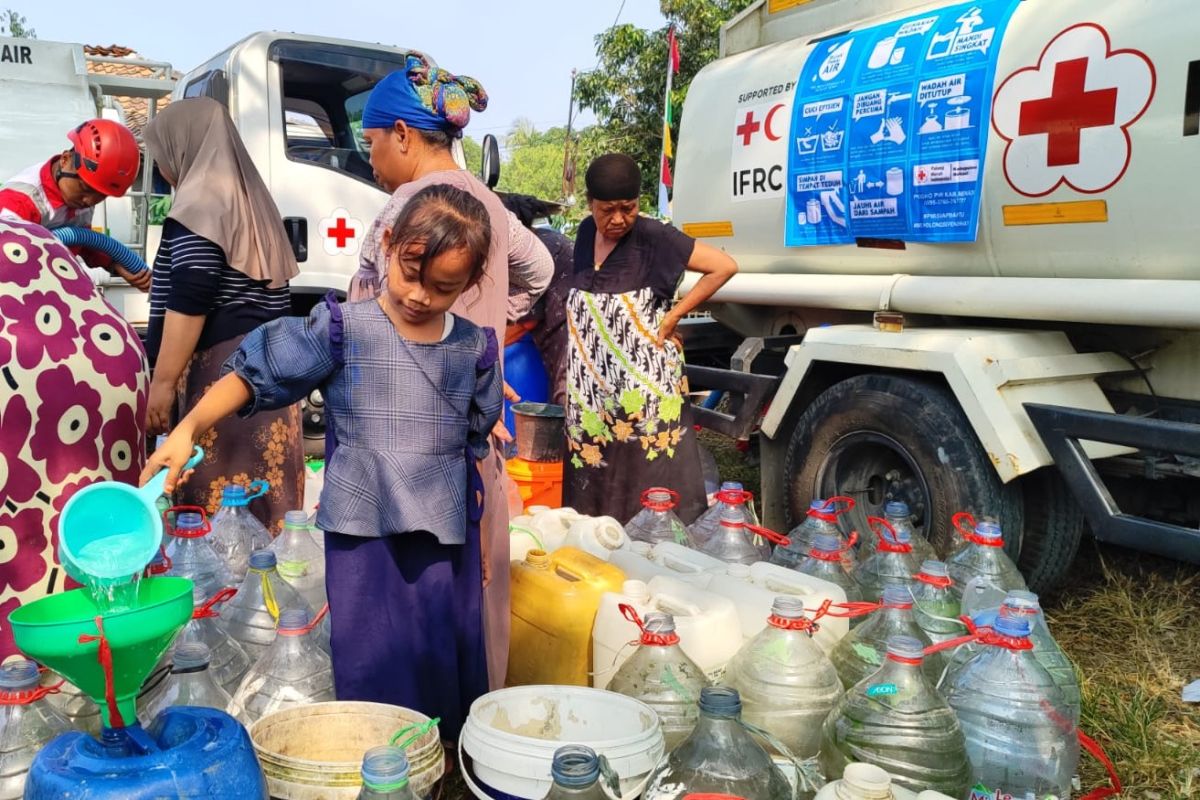
The Indonesian Red Cross (PMI) announced that between 24 June and 17 July 2026, it distributed 250,000 litres of clean water to 17,490 residents in Cibarusah and Bojongmangu sub-districts, Bekasi, to address the impact of drought.
Akhmad Kosasih, Chairman of PMI Bekasi Regency, stated on Saturday that the organisation delivered 20,000 litres of clean water to residents affected by drought in Ridogalih Village, Cibarusah Sub-district. The water, sourced from the Tirta Bhagasasi regional water company, was distributed to meet the needs of residents in four to five hamlets experiencing difficulty obtaining clean water during the dry season.
“We will continue our efforts to ensure that communities affected by drought maintain access to clean water,” he said.
To date, there have been 20 clean water distribution points established based on requests from the community and village governments. Distribution locations include Ridogalih Village (Cibarusah Sub-district), Nagasari Village (Serang Baru Sub-district), as well as Sukamukti Village, Sukabungah Village, Medal Krisna Village, and Karang Indah Village (Bojongmangu Sub-district).
This clean water distribution is based on Bekasi Regent Decree Number 100.3.3.2/Kep.477-BPBD/2026 concerning the Drought Emergency Alert Status and the result of coordination with the Bekasi Regency Disaster Mitigation Agency (BPBD) and other relevant stakeholders.
“PMI also urges the public to use water sparingly. Residents who begin to experience difficulty obtaining clean water are expected to report immediately to the village government or BPBD so that an assessment can be conducted and aid distributed swiftly,” he added.
Meyliany, Head of the PMI Bekasi Regency Headquarters, explained that Ridogalih Village is one of the priority areas because it experiences a clean water crisis almost every year during the dry season.
“This condition is influenced by low rainfall, limited groundwater reserves, soil characteristics that struggle to retain water, and the uneven distribution of piped clean water networks. The Bojongmangu Sub-district area also faces similar challenges due to geographical conditions that cause groundwater availability to decline during the dry season,” she said.