
Indonesian Police Food Task Force Detects Indications of Palm Oil Price Cartel
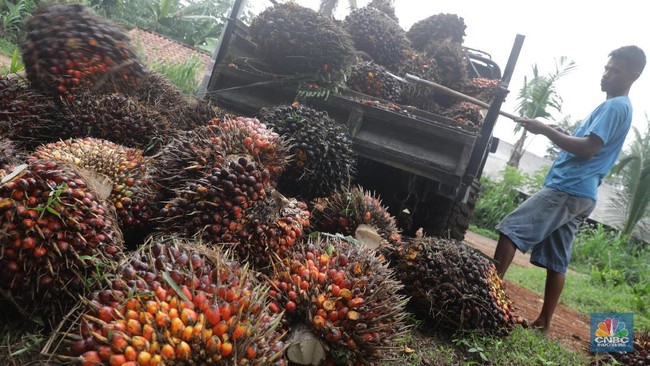
The Indonesian National Police Food Task Force has highlighted the recent slump in fresh fruit bunch (TBS) palm oil prices. Law enforcement officials suspect the existence of collusive practices causing prices at the farmer level to decline, even as global market conditions show an opposing upward trend.
Brigadier General Ade Safri Simanjuntak, Director of Special Economic Crimes at the National Police Criminal Investigation Agency and Head of the Food Task Force, stated that they have found indications of hidden agreements causing unnatural price movements. “We suspect indications of a cartel here, or malicious collusion, carried out to agree on lowering TBS prices,” Ade Safri said during a press conference at the Ministry of Agriculture in Jakarta.
This suspicion arises because the decline in TBS prices is occurring while crude palm oil (CPO) prices in the international market are actually increasing. This condition is deemed inconsistent with standard market mechanisms, which should otherwise drive higher prices for farmers.
To investigate these allegations, the Food Task Force plans to collaborate with the Business Competition Supervisory Commission (KPPU). This collaboration will take place at both central and regional levels to trace potential cartel practices within the palm oil supply chain. “We will not hesitate to enforce the law strictly within the applicable legal corridors,” he added.
Amidst the investigation, the Ministry of Agriculture has submitted data regarding hundreds of palm oil companies suspected of failing to restore TBS prices to appropriate levels. This data has been handed over to the police for follow-up.
Minister of Agriculture Amran Sulaiman revealed that more than 300 companies or palm oil mills have been reported to law enforcement. The data was sent to the General Criminal Investigation Directorate at several regional police headquarters and copied to the National Police Chief, General Listyo Sigit Prabowo.
According to Amran, the weakening of TBS prices following the government’s announcement of PT Danantara Sumberdaya Indonesia (DSI) as a sole palm oil exporter is an economically difficult condition to explain. This is because global CPO prices are rising and the US dollar is strengthening against the rupiah—two factors that should provide a positive boost to export commodity prices.
“With a 10 percent difference in the dollar value, prices must rise. There is no reason for them to fall,” Amrit stated. Previously, Amran convened various palm oil industry stakeholders for a coordination meeting to control TBS and CPO prices, attended by representatives from independent farmers, partner farmers, palm oil mills, and the Indonesian Palm Oil Association (GAPKI). The government aims to ensure that palm oil prices return to a level that benefits the 15 million farmers who rely on this commodity for their livelihoods.