
Indonesian Police Call for Inter-Agency Collaboration to Combat Increasingly Sophisticated Environmental Crime
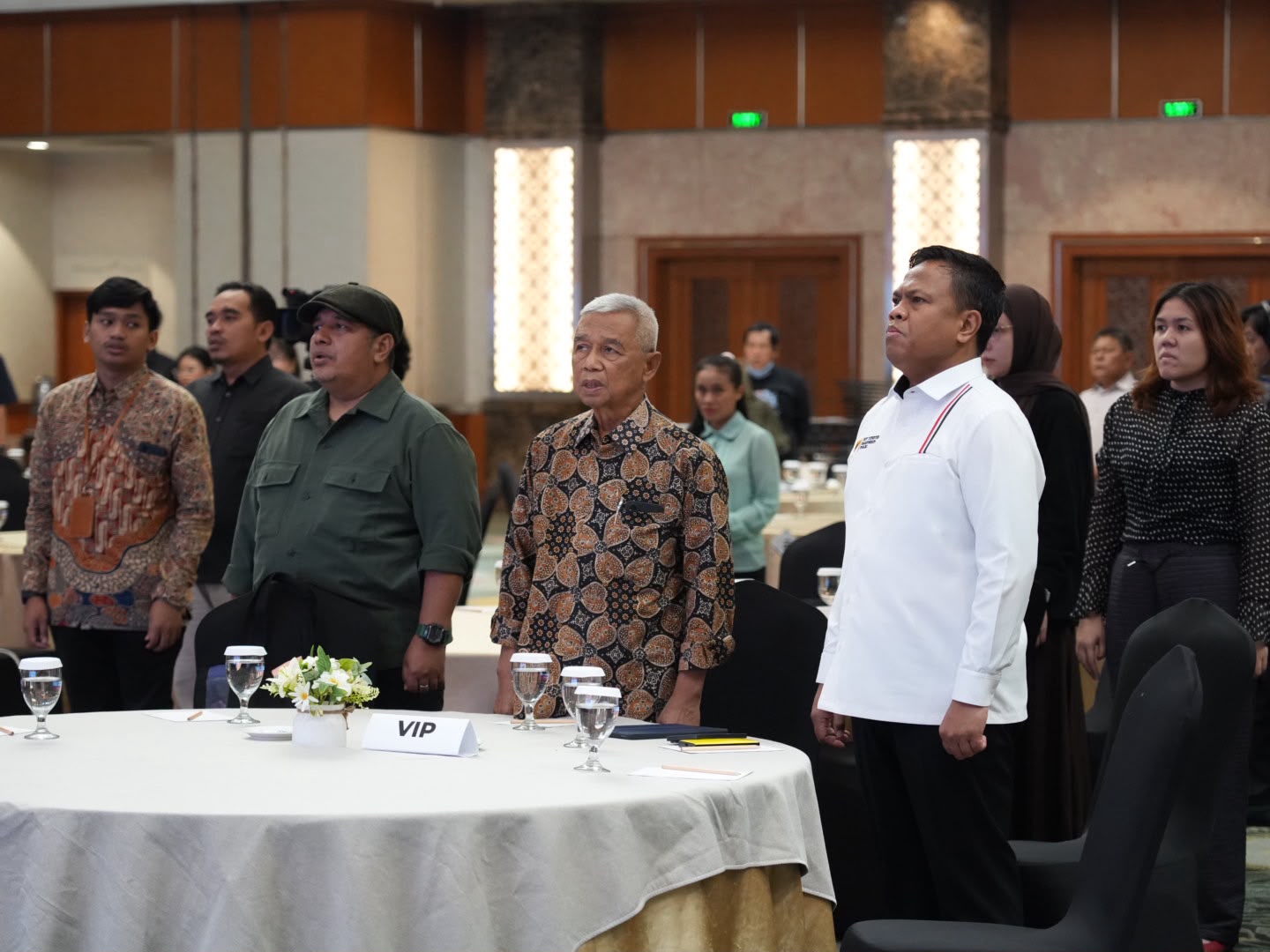
Brigadier General Muhammad Irhamni, Director of Environmental Law Enforcement at the National Police Criminal Investigation Division (Bareskrim Polri), has affirmed the importance of strengthening enforcement strategies and synergy among law enforcement agencies to eradicate crime in the Natural Resources and Environment (SDA-LH) sector. According to Irhamni, this is essential because SDA-LH crime has become increasingly modern, sophisticated and organised, exploiting regulatory loopholes and using complex corporate instruments.
“Environmental crime in the modern era can no longer be confronted with conventional, reactive methods. Perpetrators of SDA-LH crimes now operate in organised networks, exploiting regulatory loopholes and using complex corporate instruments. Therefore, the law must not lag a step behind; law enforcers are required to possess analytical acumen as sharp as that of researchers and academics in mapping out these new modes of operation,” Irhamni said whilst attending the National Symposium on the SDA-LH Crime Outlook 2026-2030, organised by Auriga Nusantara in Jakarta on Thursday (16 July 2026).
Irhamni noted that sectoral egos have often been the greatest stumbling block in resolving cases of environmental destruction. Through the data and studies presented in the outlook, he believes the time has come for the Police, the Attorney General’s Office, the KPK and relevant ministries to dissolve bureaucratic boundaries in order to build a single integrated database system.
“This multisectoral collaboration is the key to dismantling structured environmental mafia networks,” Irhamni asserted.
Irhamni highlighted that the criminal law approach must not stop at punishing field-level perpetrators or low-level intellectual actors. According to him, future law enforcement must shift towards a follow-the-money approach to pursue corporations that damage the environment and seize the assets derived from their crimes.
“Recovering state losses and restoring ecosystems is far more crucial than merely imprisoning frontline workers. Hence, the follow-the-money approach is needed to pursue corporations that damage the environment and seize the proceeds of their crimes,” he added.
He also emphasised the importance of integrating academic research into case investigation files. According to him, testimony from environmental experts and studies from university law faculties should serve as primary instruments to strengthen evidence in court. By treating science and scientific data as the main pillar of investigation, the room for perpetrators to escape the law can be significantly narrowed.
“SDA-LH crime is essentially not merely a criminal act against the environment, but a crime that threatens national sovereignty, food security, energy security and public welfare. Illegal logging, illegal mining, trafficking of protected wildlife and environmental pollution frequently involve cross-regional and even cross-border networks with enormous flows of funds,” Irhamni explained.
Therefore, he reminded that its handling must be treated as serious organised crime requiring a rapid, integrated and intelligence-based legal response. According to him, the success of law enforcement should not be measured solely by the number of cases processed, but by the state’s ability to sever the chain of crime from upstream to downstream.
“Law enforcers are required not only to respond to reports, but also to proactively build early detection systems, strengthen inter-agency information exchange, and utilise digital technology, financial analysis and spatial mapping in every investigation. With this approach, law enforcement will move beyond merely punishing perpetrators towards a comprehensive strategy to prevent environmental crime from recurring,” he added.
Irhamni also reminded that the 2026-2030 period will be a crucial time for Indonesia’s ecological resilience. If law enforcers do not tighten their ranks and improve their technical competence from now on, the environmental damage that occurs will be irreversible.
“A firm, transparent legal commitment that sides with environmental sustainability is the only legacy worth fighting for the sake of future generations,” he asserted.
Irhamni also expressed appreciation for the material presented at the National Symposium on the SDA-LH Crime Outlook 2026-2030 organised by Auriga Nusantara. According to him, the materials offered fresh perspectives and valuable input for law enforcers to improve the effectiveness of environmental case handling in the field.
He also commended the quality of the material presented by the speakers, whom he deemed highly competent and experienced in their fields.
“Regarding these environmental and natural resources activities, the material presented was excellent. All the speakers present possessed high levels of competence, ranging from former KPK leaders to deans actively conducting research on SDA-LH crime,” he concluded.
Source: jawawa.id (https://jawawa.id/newsitem/indonesian-police-call-for-inter-agency-collaboration-to-combat-increasingly-sophisticated-environmental-crime-1784299864)
Originally published by Media Indonesia (https://mediaindonesia.com/politik-dan-hukum/911998/bareskrim-polri-sebut-kejahatan-lingkungan-makin-canggih-aparat-penegak-hukum-harus-berkolaborasi), translated from Indonesian