
Indonesian Petai Bean Spreads Widely, High Demand in Malaysia to Japan
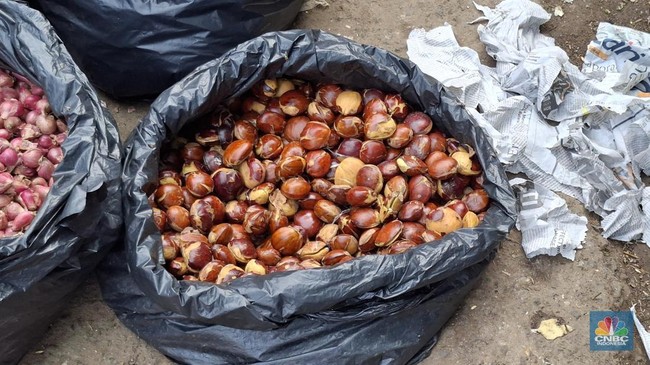
Petai bean, a vegetable known for its distinctive pungent aroma, is not only popular among Indonesians but also globally. Beyond its unique flavour and aroma, petai bean is rich in health benefits, from supporting the digestive system to maintaining heart health, leading to growing demand and supply over time. According to the 2024 Horticulture Statistics data from BPS, petai bean production in 2024 nearly reached 1.7 million quintals, following consistent increases from 2020. About five years ago, petai bean production was only 1.3 million tonnes. Although increases in 2021, 2022, and 2023 were not very significant, petai bean production has never declined over the past five years. In 2020, petai bean production was recorded at 1.29 million quintals and increased by around 18% in 2021 to 1.53 million quintals. A fairly significant increase occurred again from 2023 to 2024, from 1.57 million quintals to 1.7 million quintals in 2024. The Trail of Indonesian Petai Bean Exports Not only domestic demand, this large production is supported by substantial export demand. However, the path for petai bean to export markets has not always been smooth. In 2020, exports were hampered by pesticide residue regulations. The government responded by tightening quality oversight. These efforts bore fruit. In 2021, West Sumatra succeeded in penetrating the Japanese market, with the inaugural shipment of 100 kg of petai bean passing quarantine tests. In the international trade classification system, petai bean is categorised under HS codes 07089000 and 07099990, in the group of edible vegetables. Demand primarily comes from Indonesian and Malaysian diaspora communities scattered around the world. Malaysia is recorded as the main market. In 2022, Indonesia exported 723,934 kg of petai bean to the neighbouring country. Although it stagnated in 2023 at 723,709.9 kg, export volume surged sharply in 2024 to 947,710.54 kg, making Malaysia the most stable and growing market. The Hong Kong and Japanese markets also show enthusiasm, though fluctuating. Exports to Hong Kong rose from 23,419 kg (2022) to 25,814.9 kg (2023), but fell to 15,835.97 kg in 2024. A similar pattern occurred in Japan, from 25,441 kg (2022) to 27,837.9 kg (2023), then down to 17,859.97 kg this year. Singapore recorded an increase from 95,940.9 kg (2022) to 127,091.13 kg (2023), but declined to 99,816.06 kg (2024). Meanwhile, Saudi Arabia experienced a significant decline from 52,953.75 kg (2022) to only 16,640.97 kg in 2024.
Source: jawawa.id (https://jawawa.id/newsitem/indonesian-petai-bean-spreads-widely-high-demand-in-malaysia-to-japan-1777731195)
Originally published by CNBC Indonesia (https://www.cnbcindonesia.com/research/20260502150052-128-731687/semriwing-jengkol-ri-merebak-laku-keras-di-malaysia-sampai-jepang), translated from Indonesian