
Indonesian Parliament Urges Certainty in RKAB to Secure Nickel Downstreaming Supply
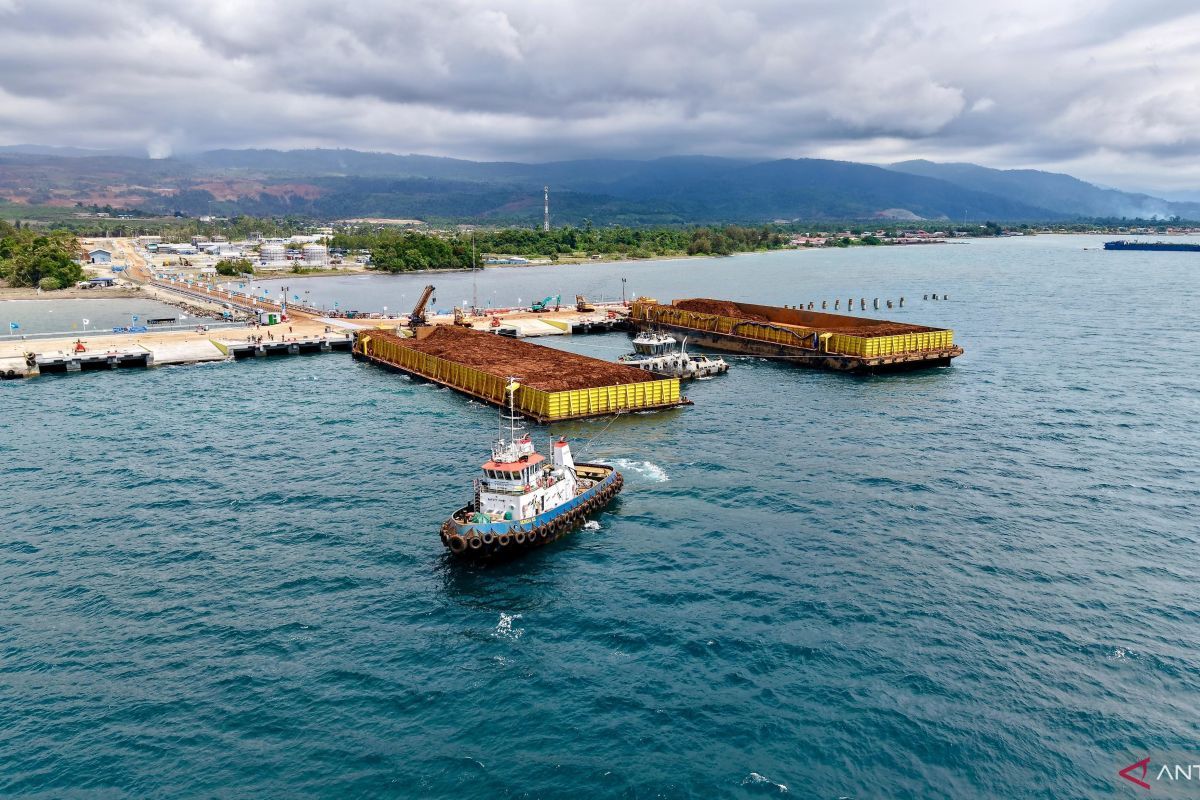
Members of Commission XII of the Indonesian House of Representatives (DPR RI) have requested the government to accelerate the completion of the Work Plan and Budget (RKAB) for mining companies under the MIND ID subholdings. This is intended to provide production certainty, including the supply of raw materials for mineral downstream projects.
According to Ramson Siagian, a member of Commission XII, certainty regarding the RKAB is necessary so that state-owned mining companies can execute their production and business plans optimally, in line with the development of the domestic mineral processing industry. “We urge the Ministry of Energy and Mineral Resources to accelerate every RKAB submission from all MIND ID subholdings. We must be firm,” Ramson stated in Jakarta on Friday.
One of the issues being faced is by PT Vale Indonesia Tbk (INCO), which is still awaiting the completion of its RKAB revision to increase nickel ore production quotas in Pomalaa, Southeast Sulawesi, and Bahodopi, Central Sulawesi. The additional production is required to align mining capacity with the raw material needs of the nickel processing projects currently being developed by the company.
For Bahodopi, Vale plans to produce approximately 8.83 million tonnes of nickel ore in 2026, whereas the current quota obtained is around 2.31 million tonnes. Meanwhile, in Pomalaa, the production plan reaches approximately 18.06 million tonnes, while the obtained quota is around 5.85 million tonnes. This production requirement is directly linked to the development of Vale’s nickel processing projects.
The company previously stated that the additional quota is not solely aimed at increasing production, but also at fulfilling the commitment to supply ore for processing facilities developed alongside partners. Vale is developing the Indonesia Growth Project (IGP) in Sorowako, Pomalaa, and Morowali. Several of these projects utilise High Pressure Acid Leaching (HPAL) technology to process low-grade nickel ore into Mixed Hydroxide Precipitate (MHP), an intermediate material used in the battery industry supply chain.
On the same occasion, Commission XII member Yulian Gunhar stated that the management of mineral resources by state companies should be directed towards generating greater added value for the national economy. He noted that MIND ID’s position as the state mining holding is crucial to ensuring Indonesia’s mineral wealth does not remain merely as a mining commodity, but continues to serve as a basis for domestic industrial development.
“The state controls natural resources, processes them domestically, transforms them into industry, creates added value, with the ultimate goal of public prosperity,” said Gunhar. He assessed that domestic mineral processing could expand economic benefits through the creation of industrial activities, added value, employment, and state revenue.
The Minister of Energy and Mineral Resources, Bahlil Lahadalia, previously ensured that the revision of Vale’s RKAB is a priority for the government to finalise. “It will be my attention to ensure we complete this,” Bahlil said during a working meeting with Commission XII of the DPR RI in Jakarta last Wednesday.
Bahlil explained that the government has already granted initial RKAB approval to Vale. The company subsequently applied for an additional production quota, which the government will evaluate based on the company’s performance. “Vale’s quota is not being cut. We are providing it, but they are requesting an increase,” Bahlil remarked.
He added that the government applies the same treatment in determining the RKAB for mining companies, while still considering the performance of each individual company. The certainty of Vale’s RKAB revision is highly relevant to maintaining the continuity between mining activities and processing facilities. The availability of ore according to requirements is a critical factor in ensuring that downstream investments can operate according to their planned capacity and stages.