
Indonesian Ombudsman Establishes 2026 Religious Holiday Allowance Monitoring Post
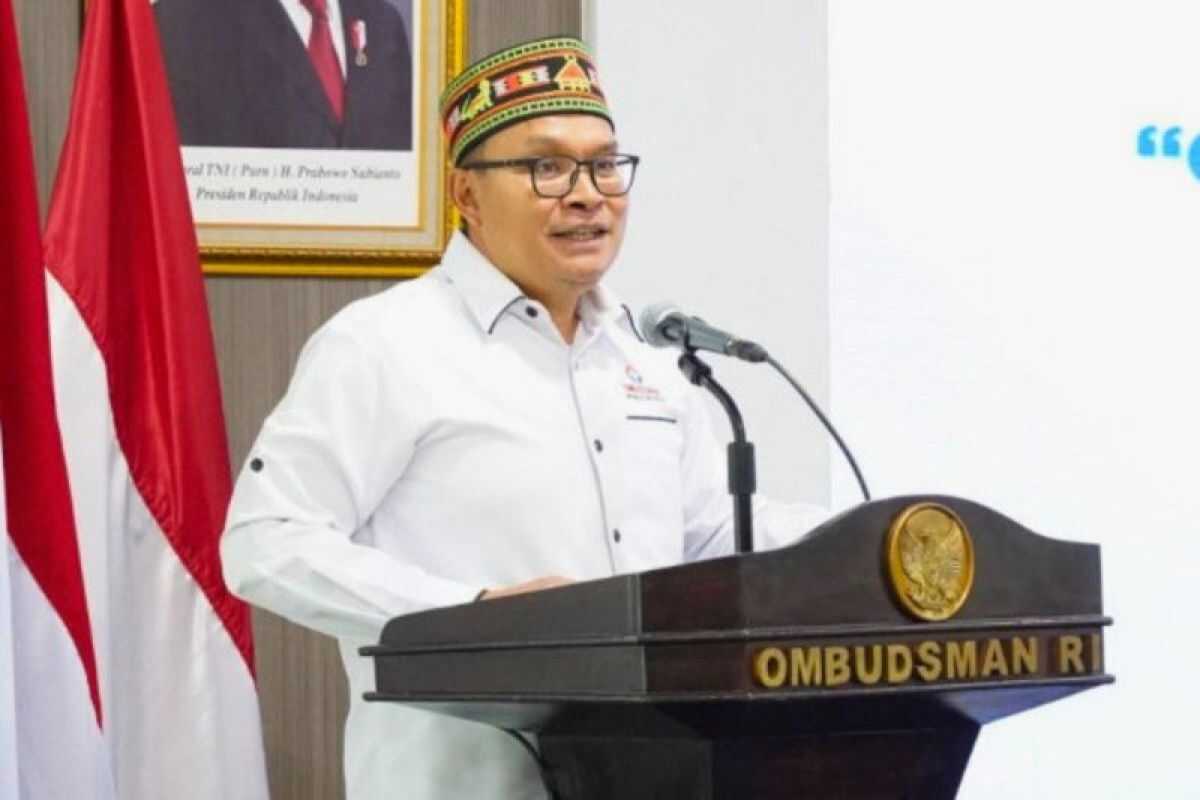
Jakarta (ANTARA) - The Indonesian Ombudsman (ORI) has collaborated with the Ministry of Manpower and a number of regional governments to establish a 2026 Religious Holiday Allowance (THR) Monitoring Post ahead of the holiday allowance payment period.
Ombudsman member Robert Na Endi Jaweng said the post represents a form of public service oversight in the employment sector through surprise inspections of companies, institutional coordination, and complaint resolution monitoring as anticipatory and preventive measures against maladministration in the distribution of workers’ THR.
“As a state institution overseeing public services, the Ombudsman also encourages members of the public who experience or witness maladministration in religious holiday allowance payments to report it to us,” Robert said when contacted in Jakarta on Monday.
He assessed that oversight of religious THR payments for private sector employees remains suboptimal, as 652 complaints from workers regarding maladministration in THR distribution filed between 2023 and 2025 have yet to be resolved by the government.
To prevent similar problems from recurring ahead of the 2026 THR payments, ORI has requested that the Ministry of Manpower and regional governments develop a comprehensive oversight framework and follow up on complaints consistently and thoroughly.
He explained that follow-up action could range from resolving complaints that constitute outstanding “debts” from previous years to addressing the systemic root causes to prevent recurrence.
In following up on complaints, Robert said the Ministry of Manpower and regional governments must impose firm sanctions on companies that fail to comply with religious THR payment obligations.
According to him, corporate non-compliance is a systemic issue that recurs annually. Therefore, beyond enforcing sanctions, the government needs to collaborate on developing anticipatory measures against potential non-compliance, particularly in industrial regions such as DKI Jakarta, West Java, Central Java, East Java, and Banten.
Furthermore, he said, the Ministry of Manpower and regional governments need to strengthen the capacity of labour inspectors, where the quality, quantity, and integrity of inspection personnel are crucial factors in ensuring worker protection.
“In addition to increasing personnel numbers, a systematic process is also needed to enhance inspectors’ ability to enforce THR payment norms upon companies,” he added.
He further stated that the government needs to integrate THR payment complaint posts. The Ministry of Manpower must be open to synchronising the THR monitoring post’s operational processes down to the regional level.
He noted that this is important to ensure the effectiveness of complaint resolution and to guarantee that workers experiencing maladministration in pursuing their normative rights receive certainty of service.
He emphasised that religious holiday allowances are a normative right of workers, and maladministration in their distribution clearly undermines the rights and justice within industrial relations as a norm that employers are obliged to observe.
Therefore, he continued, the government must ensure that oversight is carried out effectively and comprehensively, including ensuring when, in what form, and how every worker receives their THR without delay, is served when filing complaints, and is free from discrimination and all forms of maladministration.