
Indonesian National Police Strengthen Global Role at 10th APTA Conference in Mongolia
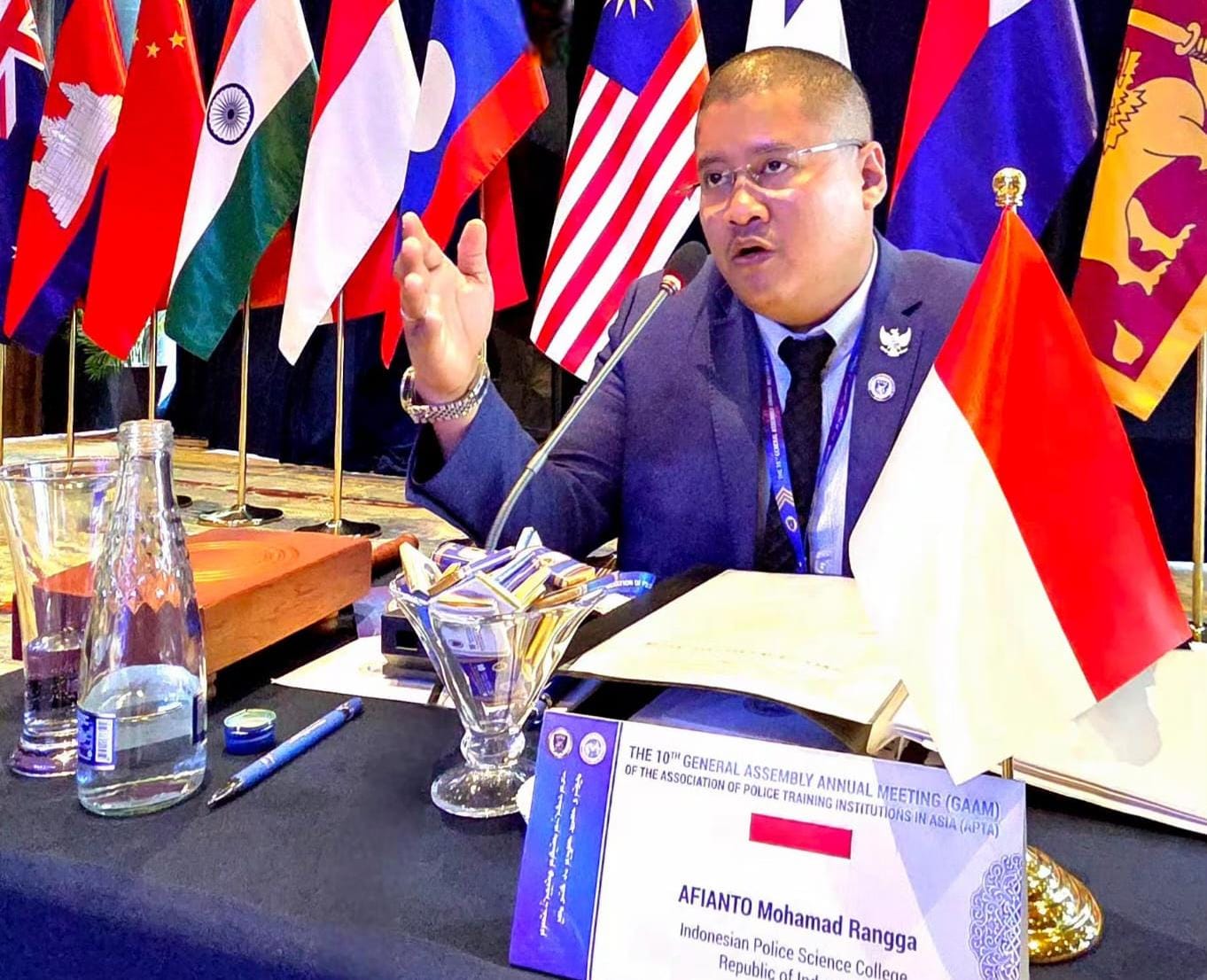
The Indonesian National Police (Polri) has once again strengthened its presence in the international policing community through its participation in the 10th Association of Police Training Institutions in Asia (APTA) conference, held in Ulaanbaatar, Mongolia, in late July 2026. The conference brought together police training and education institutions from various countries to discuss policing challenges amidst rapid social changes and technological advancements. More than 20 countries, with a total of over 40 delegates, participated in the five-day forum, which served as a space for exchanging ideas and experiences, particularly in responding to changing societal characters and policing challenges in the digital era.
Polri sent a delegation consisting of senior middle-ranking officers, academics, and policing experts from the civilian sector. This composition reflects Polri’s effort to present a multidisciplinary perspective in the international policing forum. One of the Indonesian delegates was Rangga Afianto, an academic and policing expert from STIK Lemdiklat Polri. His presence was part of a mandate from Polri leadership to represent Indonesia and convey academic perspectives regarding the development of policing in Indonesia.
“The participation of academic elements in the Polri delegation is considered vital, as the development of policing relates not only to law enforcement but also touches upon social, technological, and cultural issues, as well as the relationship between the police institution and the community,” said Rangga Afianto in an official statement on Saturday (1/8).
Rangga stated that his presence was to represent Indonesia’s policing approach, which positions the community as an essential part of the policing process. This concept is realised through the strengthening of community policing (Polmas) and the involvement of civil society in various aspects of policing, both in theoretical perspective and field implementation.
One of the primary issues addressed at the 10th APTA conference was the ability of policing institutions to adapt to changing times. These changes are marked by the increasing dominance of the younger generation, specifically Millennials and Generation Z, in various aspects of society. He noted that the changing character of these generations brings consequences for how policing institutions build communication, public services, crime prevention, and community trust.
“Policing institutions are required to understand the character of the new generation, which grows up in a digital environment with communication patterns different from previous generations. This condition necessitates that conventional policing approaches be continuously evaluated and adjusted to societal developments,” he said.
Furthermore, the development of Artificial Intelligence (AI) is a dynamic factor that policing institutions must anticipate. “AI technology opens new opportunities to support various policing instruments, ranging from data analysis, early detection, and information management to improving the quality of police services. However, the use of such technology also demands prepared human resources, ethical frameworks, and adequate governance,” he explained.
Rranga believes that the transformation of policing institutions in the digital era is not achieved solely by adopting technology. Changes must also be accompanied by adjustments in organisational capacity and human resources to ensure technology is used responsibly and remains oriented towards the public interest.
The discussion regarding generational shifts is highly relevant to a field currently being developed within STIK Lemdiklat Polri, namely ‘Youth Policing’. This concept was developed in response to demographic changes and the strategic role of the younger generation in social life. Youth policing positions young people not merely as subjects of policing, but as strategic partners in creating community security and order.
“In this approach, the police are required to build communication and collaboration patterns that are more adaptive to the youth. The goal is not only to prevent potential security disturbances but also to build legal awareness, increase community participation, and create a more constructive relationship between the police and the youth,” he added.
Rangga Afianto is one of the policing academics actively developing the concept of Youth Policing within Polri. The development of this field is expected to serve as an academic contribution to strengthening the capacity of the police institution in facing rapid social changes. Indonesia’s participation in the 10th APTA conference also serves as an opportunity to introduce Polri’s perspectives and experiences in facing these challenges to the international policing community. Beyond discussing youth and technological transformation, the APTA conference also serves as a strategic space to strengthen institutional relationships between police forces across various countries, facilitating the exchange of information, experience, and best practices to face increasingly complex and cross-border security challenges.