
Indonesian National Police Requests Rp66 Trillion Budget Increase, Including Funds for Riot Control
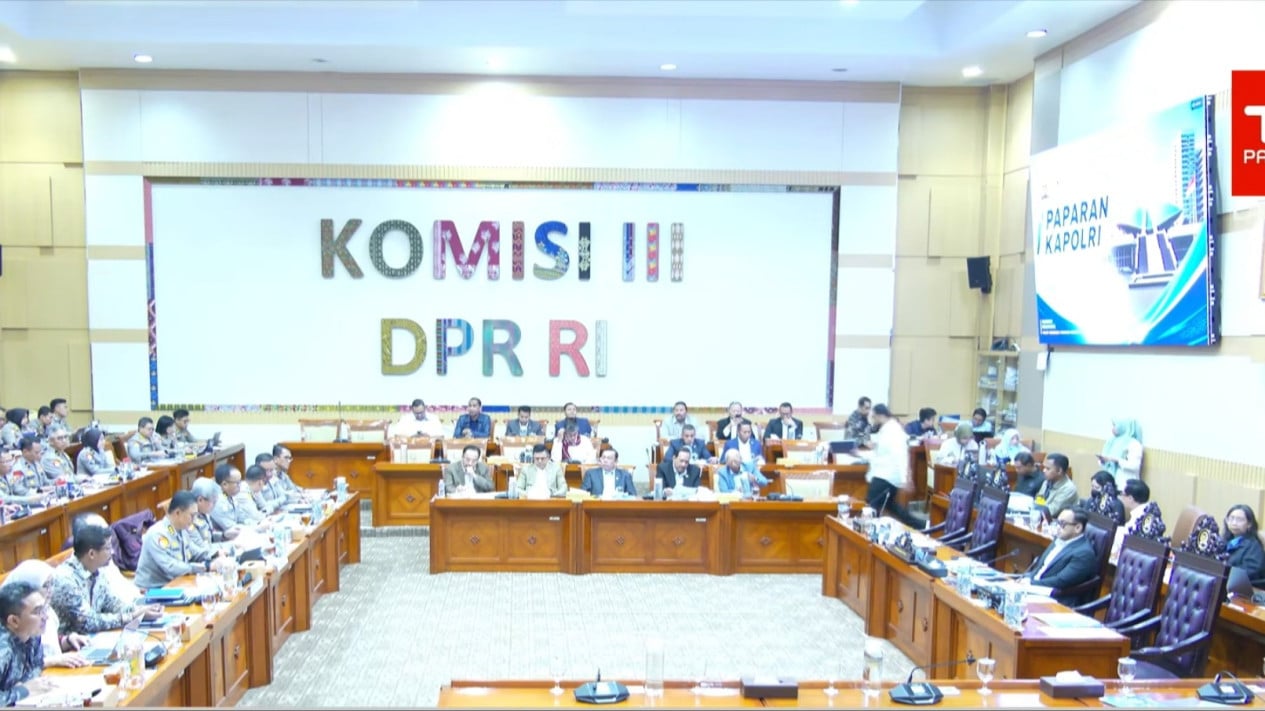
The Indonesian National Police (Polri) has proposed an additional budget of Rp66 trillion, despite having already been granted a 2027 budget ceiling of Rp139.19 trillion.
The proposed budget increase is intended to support several police requirements, such as disaster management, riot control, and VVIP security.
This was stated by the National Police’s Assistant for Logistics, Inspector General Wahyu Hadiningrat, while reading the presentation of National Police Chief General Listyo Sigit Prabowo during a working meeting with Commission III of the House of Representatives (DPR RI) at the Parliament Complex, Senayan, Central Jakarta, on Tuesday, 1 September 2026.
“The Polri budget ceiling for the 2027 fiscal year has been set. Polri has received an allocation of Rp139.19 trillion. This value is a decrease of approximately Rp6.86 trillion, or 4.70%, compared to the 2026 budget allocation of Rp146.05 trillion,” said Wahyu.
Wahyu noted that the budget increase is required to meet personnel expenditure needs of Rp61.11 trillion, goods expenditure of Rp30.93 trillion, and capital expenditure of Rp47.14 trillion.
Additionally, Polri has allocated Rp832.15 billion to support national priority programmes for 2027.
“The majority of that budget is for the modernisation of special equipment and police infrastructure, amounting to Rp762.06 billion, while the remainder is spread across four other programmes,” he said.
Furthermore, he stated that the ideal budget requirement for Polri for the 2027 fiscal year is proposed at Rp178.69 trillion. During the indicative ceiling determination stage, he noted that Polri received Rp118 trillion, fulfilling approximately 66%. During the budget ceiling determination stage, the allocation increased by approximately Rp21.19 trillion to Rp139.19 trillion.
“However, the largest increase is found in capital expenditure from pure rupiah sources. On the other hand, operational goods expenditure has decreased by approximately Rp5.05 trillion compared to the 2025 budget allocation,” he revealed.
Nevertheless, he stated that the decrease in goods expenditure directly impacts Polri’s operational support, such as fuel and lubricants, electricity costs, maintenance of buildings and special equipment, and individual equipment.
“Additionally, there are budget arrears for goods expenditure and electricity, operational needs for new autonomous regions and new work units, recruitment and personnel education needs, as well as support for disaster management, riot control, and VVIP security. This situation forms the basis for the need to re-strengthen Polri’s goods expenditure allocation,” he concluded.