
Indonesian National Police Prepare Recruitment Pathway for Persons with Disabilities
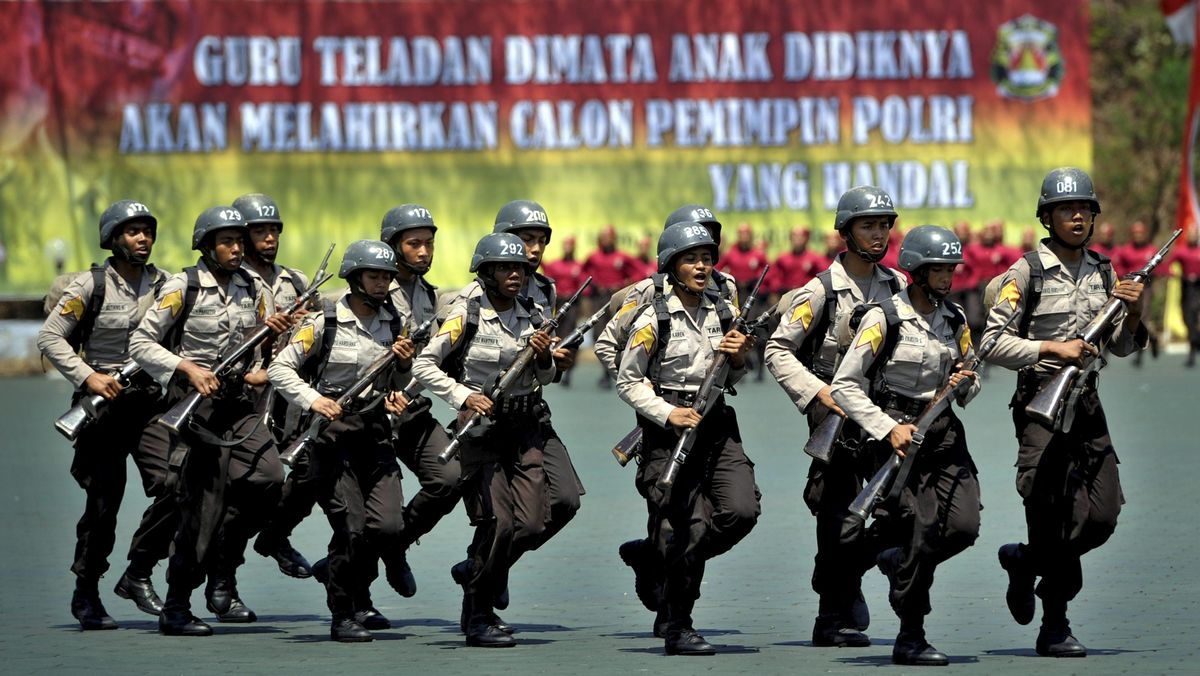
The Indonesian National Police Headquarters is preparing recruitment pathways for persons with disabilities following the ratification of the revised National Police Law during the 21st plenary session of the 2025-2026 session period on Tuesday (9/5).
Karodalpers SSDM Polri, Brighen Erthel Stephan, stated that this is a form of commitment to creating an increasingly inclusive institution by strengthening the recruitment of persons with disabilities as members of the police force.
He explained that the National Police have been making adjustments to the recruitment process for persons with disabilities since 2016, ranging from regulatory aspects to aligning organisational needs with the competencies of the recruited human resources.
“This includes legal regulations and the alignment between job roles and the competencies of recruits from the disability group to enable them to become part of the National Police,” he said in a written statement on Wednesday (10/6).
He further explained that with the inclusion of these provisions in the National Police Law, there is an increasing demand for persons with disabilities to adapt to the police working environment, as well as for all personnel to work alongside their colleagues with disabilities.
Moving forward, he noted that the National Police will continue to gradually expand job opportunities for persons with disabilities with support from various parties.
Erthel stated that currently, the focus remains on recruiting groups with physical and sensory disabilities, specifically motor and sensory impairments. Meanwhile, recruitment and placement patterns for those with mental and intellectual disabilities are still under further study and classification to determine the appropriate methods.
“Currently, they are mostly placed in functional positions, but in the future, opportunities to hold structural positions will open up, subject to the improvement of their competencies and managerial capacity,” he explained.
Meanwhile, the Commissioner of the National Commission for Disabilities, Eka Prastama Widiyanta, assessed that this policy aligns with the spirit of Law Number 8 of 2016 concerning Persons with Disabilities, which encourages increased access to employment.
Eka hopes that the recruitment policy for persons with disabilities within the National Police can serve as a model for various government and regional institutions in building an inclusive and disability-friendly working environment.
“This recruitment can serve as an example of how an institution builds a system that is friendly to persons with disabilities while simultaneously helping to expand their access to employment,” he explained.
On the other hand, the Secretary-General of the National Commission on Violence Against Women, Dwi Ayu Kartika Sari, views this as an important part of the effort to encourage the involvement of persons with disabilities in security sector reform and to realise a more inclusive organisation.
“The awareness to ensure that our friends with disabilities can contribute to security sector reform, including within the police, is a very good step and can serve as an example for other state institutions,” she said.
Previously, under the new regulations, it is stipulated that persons with disabilities can become police personnel provided they meet the necessary requirements.
This regulation is contained in Article 21, paragraph (2) of the revision to the Law on the Third Amendment to Law Number 2 of 2002 concerning the National Police of the Republic of Indonesia (RUU Polri).
“Indonesian citizens with disabilities may be appointed as members of the National Police of the Republic of Indonesia as long as they possess the competencies required by the National Police of the Republic of Indonesia,” reads Article 21, paragraph 2.