
Indonesian National Police and Prof. Ary Ginanjar Strengthen Career Systems Using TalentDNA and Technology
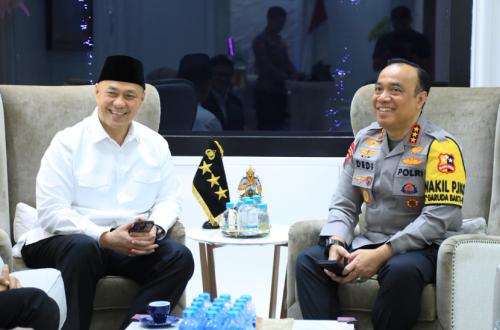
The Indonesian National Police (Polri) is strengthening its personnel career development system by integrating TalentDNA, Assessment Centres, track records, ‘Satu Data Polri’ (Single Data Polri), and Artificial Intelligence (AI). This step is aimed at building a more holistic and objective human resource system capable of identifying both the potential and the integrity of personnel.
This was discussed during a meeting between the Deputy Chief of the Indonesian National Police, Komjen Pol Prof. Dr. Dedi Prasiko, and the founder of ESQ, Prof. Dr. (HC) Ary Ginanjar Agustian, at the National Police Headquarters in Jakarta on Wednesday (30/09/2026). A primary focus of the discussion was the reinforcement of integrity within human resource development, including at the level of High-Ranking Officers (Pati) of the Indonesian National Police.
During the meeting, the results of an Assessment Centre involving 100 High-Ranking Officers were presented, with 96 officers having participated in the assessment. The evaluation process was conducted objectively and based on data, considering various aspects of competence, experience, performance, and personnel track records.
The mapping results are not intended as a judgemental assessment, but rather as a comprehensive overview of the strengths and areas for development regarding several leadership competencies. Key areas identified for continuous reinforcement include integrity, organisational commitment, planning and organising, decision-making, change management, and supervision.
The Deputy Chief of Police emphasised that assessment results should not be viewed in isolation. An individual’s profile must be viewed from multiple perspectives, ranging from competence, performance, and career progression to psychological mapping and integrity records.
“Assessment is just one instrument. The results must be viewed alongside track records, career journeys, performance, psychological mapping, Propam (Internal Affairs) data, findings from Itwasum (Inspectorate General) supervision, and other information sources,” explained Dedi.
He added that assessments should also serve as a space for feedback, allowing every leader to understand their existing strengths as well as areas that can be continuously developed.
Preparing Leaders from the Educational Stage
Strengthening human resources does not only begin when an individual reaches the rank of High-Ranking Officer. Polri intends for this process to be established from the moment personnel enter educational institutions, including the Police Academy (Akpol). “Developed nations prepare their future leaders from the educational process. Therefore, reforming the education system is key to ensuring the organisation can adapt to changing times,” said DEDI.
Future police education will not only focus on technical skills and memorisation but will also focus on building character, integrity, critical thinking, decision-making abilities, and readiness for change. The quality of educators is also a priority; lecturers, instructors, and teachers must possess both competence and the ability to shape the character of students.
Ary Ginanjar explained three essential elements in education: message, method, and messenger. “In terms of the message, the substance is already good. The method needs to be developed so that education does not only touch the cognitive realm but also the affective realm. Meanwhile, the messenger, or the educators, must be able to deliver material that builds the character and integrity of the students,” said Ary.
Using TalentDNA to Recognise Potential Early On
The meeting also presented the results of TalentDNA mapping for 282 Police Academy cadets. This mapping is used to identify the potential, character, strengths, and development areas of each cadet in a more measurable way.
These results can be integrated with educational data, achievements, performance, assessments, track records, and competency development. Consequently, personnel development can be personalised according to individual potential and needs.
ESQ encourages a ‘talent-based personalisation’ approach, which involves developing education and careers without using a ‘one-size-fits-all’ pattern. “Every member has their own values and potential. Therefore, talent development needs to be tailored to individual character and needs,” said Ary.
This approach is expected to assist the Indonesian National Police in preparing future leaders from an early stage while providing space for every individual to develop their best potential.
Source: jawawa.id (https://jawawa.id/newsitem/indonesian-national-police-and-prof-ary-ginanjar-strengthen-career-systems-using-talentdna-and-technology-1790773090)
Originally published by Republika (https://news.republika.co.id/berita/tm6ee0423/polri-dan-prof-ary-ginanjar-kuatkan-sistem-karier-berbasis-talentdna-dan-teknologi), translated from Indonesian