
Indonesian Minister Sentenced to Death for Corruption, Assets Seized
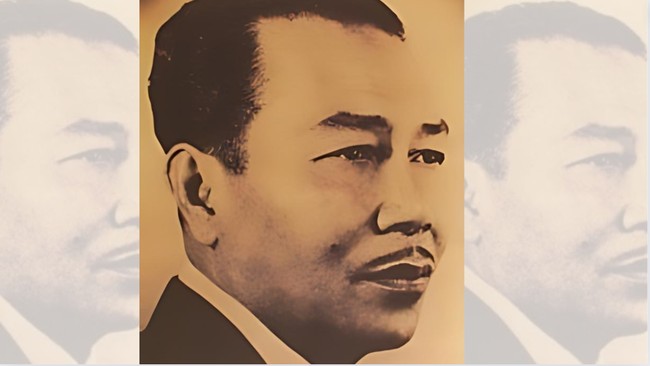
Jusuf Muda Dalam (JMD) once held the position of Minister of Central Bank Affairs during the 1963-1966 period. He served in the Fourth Working Cabinet and the Dwikora Cabinet under the administration of President Soekarno.
As the Minister of Central Bank Affairs, JMD bore significant responsibility for managing state finances and formulating banking policies. However, the limited oversight systems of that era are said to have created loopholes for the abuse of authority.
The scandal involving JMD surfaced in August 1966. He was accused of abusing his power to enrich himself and others. According to the 1966 case report titled ‘Anak Penyamun di Sarang Perawan’ (The Bandit’s Child in the Virgin’s Nest), JMD was involved in four specific offences.
First, JMD authorised import permits through a Deferred Payment scheme for importing companies, involving a total of US$270 million. Second, he granted credits to certain companies that contributed to a ballooning national deficit. Third, JMD embezzled state funds, including revolution funds, amounting to Rp9t9.3 billion. Fourth, he engaged in the unauthorised smuggling of weapons from Czechoslovakia.
The proceeds from these illicit activities were used for personal luxury. It was revealed that he purchased houses, land, jewellery, and cars, and spent lavishly on numerous women; 25 women were noted to have benefited from the corruption, despite him already having six wives.
The scandal incited widespread public outrage, particularly as Indonesia’s economy was deteriorating, with skyrocketing inflation and soaring food prices. The public was outraged that amidst such hardship, a high-ranking official like JMD was living in luxury through corruption.
On 30 August 1966, JMD’s case went to court. The trial was presided over by Chief Judge Made Labde. To trace the flow of misappropriated funds, the panel called numerous witnesses. The proceedings drew massive public attention, with crowded courtrooms and frequent outbursts from the gallery.
During the process, JMD attempted to evade various charges, though he did admit to having six wives. “The judge surely understands why I married six times, after seeing how beautiful my wives are,” JMD remarked before the panel.
On 8 September 1966, the panel delivered its verdict. “With full conviction and responsibility to Almighty God, I hereby impose the death penalty!” declared Chief Judge Made Labde.
The sentence was based on JMD’s proven abuse of his ministerial position for large-scale corruption, resulting in billions of rupiah in state losses. His political background also served as an aggravating factor; the judge noted his communist leanings, evidenced by policies such as mandating the singing of the ‘Internationale’ and changing the term ‘employee’ to ‘labourer’.
The verdict included the seizure of all assets, including four luxury cars, six houses, land, and other buildings. Some parties felt the sentence was too lenient; the Chairman of PBNU, KH Moch Dahlan, even commented harshly that a single death sentence was insufficient.
JMD appealed to the Supreme Court on 8 April 1967, but the court rejected the appeal and upheld the death sentence. However, the execution never took place. In September 1976, before he could face the executioner, JMD died in prison due to tetanus. To this day, JMD remains recorded as the first and only corrupt official sentenced to death in Indonesia.