
Indonesian Minister Proven to Enjoy Corruption Proceeds, Judge Hands Down Death Sentence
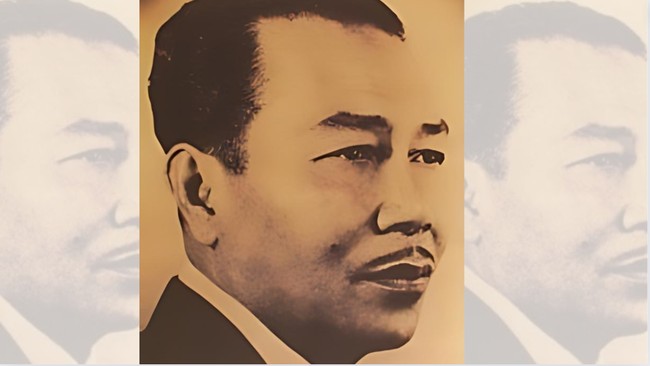
A major scandal involving a minister came to light in August 1966. Jusuf Muda Dalam (JMD) abused his authority to enrich himself and others. JMD served as Minister for Central Bank Affairs from 1963 to 1966 in the Fourth Working Cabinet and the Dwikora Cabinet under President Soekarno. During his tenure, he was responsible for managing state finances and formulating banking policy. However, minimal oversight at the time left the door wide open for corruption. According to a case report titled ‘Anak Penyamun di Sarang Perawan (Skandal JMD)’ (1966), JMD was involved in four offences. First, JMD granted import licences through a Deferred Payment scheme to importing companies, involving the postponement of foreign credit payments for a set period, totalling US$270 million. Second, JMD extended credit to certain companies, which led to a ballooning state deficit. Third, JMD embezzled state funds, or revolution funds, amounting to Rp97.3 billion. Fourth, JMD smuggled weapons without a permit from Czechoslovakia. Proceeds from these disgraceful activities were used for personal gratification. He was known to have purchased houses, land, jewellery, and cars, and squandered money on numerous women. It was revealed that 25 women enjoyed the fruits of his corruption, despite him already having six wives. The scandal immediately sparked public outrage, especially as Indonesia’s economy was deteriorating at the time. Inflation skyrocketed and food prices soared. Amid the people’s suffering, a high-ranking state official named Jusuf Muda Dalam was living a life of luxury funded by corruption. On 30 August 1966, JMD’s case was brought to court. The trial was presided over by Chief Judge Made Labde with two member judges. To trace the flow of misused funds, the panel summoned many witnesses. Every hearing drew intense public attention. The courtroom was packed and often erupted with cheers when witnesses or the defendant gave testimony. The daily Mertjusuar (3 September 1966) recorded that the trial atmosphere was almost always rowdy, as JMD continuously evaded various accusations. He admitted only one thing: his marriages resulting in six wives. ‘Your Honour surely understands why I was in such a hurry to marry six times, after seeing how beautiful my wives are,’ JMD told the panel of judges. After days of proceedings, on 8 September 1966, the panel finally brought down the gavel. ‘With full conviction and a sense of responsibility to God Almighty, I hereby sentence you to death!’ declared Chief Judge Made Labde, as quoted by the Mertjusuar newspaper (10 September 1966). The verdict was based on JMD being proven to have abused his position as Minister for Central Bank Affairs for large-scale corruption, with state losses reaching billions of rupiah. His political background also served as an aggravating factor. The judge assessed that JMD had a communist background, reflected in internal policies at the institution he led, such as requiring the singing of the Internationale, replacing the term ‘karyawan’ with ‘buruh’, and supporting the idea of arming workers and peasants. The judge considered this akin to the banned Indonesian Communist Party, which had been outlawed in 1966. The verdict also included the seizure of all assets, comprising four luxury cars, six houses, land, and other buildings. Nevertheless, some parties considered the sentence too lenient. PBNU Chairman KH Moch Dahlan even made a scathing remark. ‘The death penalty for JMD should not be just once, but three times, or a death sentence by being hoisted on a gallows in front of the public,’ he told the Mertjusuar newspaper (15 September 1966). Unwilling to accept the verdict, JMD appealed to the Supreme Court on 8 April 1967. However, the Supreme Court rejected the appeal and upheld the death sentence. Despite this, the execution was never carried out. In September 1976, before facing the firing squad, JMD died in prison from tetanus. To this day, JMD is recorded as the first and only corruptor sentenced to death in Indonesia.