
Indonesian Migrant Workers as Foreign Exchange Heroes, Minister P2MI Provides Evidence
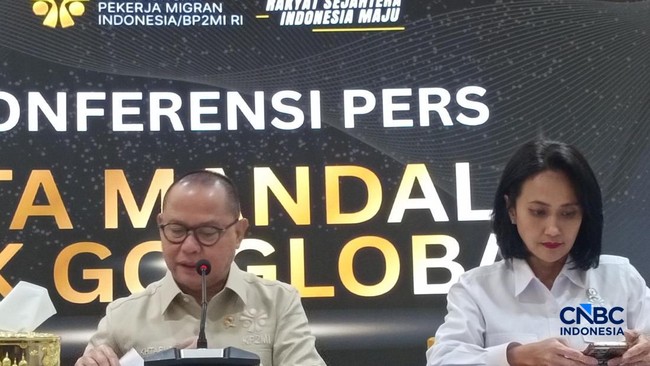
Jakarta, CNBC Indonesia - The government is targeting an increase in national foreign exchange earnings whilst expanding employment opportunities through the Asta Mandala SMK Go Global programme. The programme, part of President Prabowo Subianto’s directives, is being prepared to meet the high demand for Indonesian workers in a number of countries such as Malaysia, Japan, Taiwan, Germany, Turkey, South Korea and Europe.
Minister for the Protection of Indonesian Migrant Workers (P2MI) Mukhtarudin said the programme does not merely provide training for prospective migrant workers, but is structured according to labour demand from destination countries.
“So the mechanism is: first there is the market, first there is the placement country and its sector, what competencies are needed, then how they are trained. So train, become competent, place. The KPI is placement, not just training,” said Mukhtarudin during a press conference at his office in Jakarta on Wednesday (5/8/2026).
He explained that the government has first profiled the labour needs of each country based on job orders (JO) verified by Indonesian representatives abroad. After that, prospective migrant workers are given training according to the competencies required.
“So the order already exists. Once we have the order and know what competencies are needed, we then determine how to train them,” he said.
Priority sectors include caregiving, manufacturing, welding, construction, transport, hospitality, nursing, agriculture and wellness therapy. Graduates will be directed towards employment opportunities in various destination countries, including Japan, Germany, Malaysia, South Korea, Turkey, Singapore, Taiwan, the Maldives and several European countries.
According to Mukhtarudin, the countries currently with the greatest demand for Indonesian migrant workers are in Asia.
“The countries with the highest demand, based on our profiling, are Malaysia, Taiwan, Japan, including Hong Kong, and several European countries, including Turkey and Germany,” he said.
In addition to opening up employment opportunities, the government is also targeting an increased contribution from migrant workers to the national economy through remittances sent to Indonesia.
Mukhtarudin explained that one of the targets of the Asta Mandala SMK Go Global programme is remittance success, namely improving the welfare of migrant workers and their families whilst increasing the country’s foreign exchange earnings.
“These remittances are money sent by migrant workers to their families. By promoting the welfare of Indonesian migrant workers and their families, they also contribute to national foreign exchange reserves,” said Mukhtarudin.
According to him, remittances sent by migrant workers not only increase families’ purchasing power in the regions but also serve as a source of foreign exchange for Indonesia, as they are sent in foreign currency.
“These are productive remittances, sent directly to their families, and it is from that money that they pay for their children’s schooling, pay for their family’s medical treatment, improve their homes and so on, and also start businesses. It is hoped that these remittances can improve public welfare, the welfare of migrant workers’ families. Because remittances are sent in foreign currency, they add to national foreign exchange reserves,” he explained.
He added that the contribution of migrant workers’ remittances to Indonesia’s foreign exchange is substantial.
“That is why we often hear that migrant workers are heroes or foreign exchange champions, because their economic contribution to increasing foreign exchange is considerable. Eleven per cent of national foreign exchange reserves come from remittances, according to Bank Indonesia data,” he continued.
Through the SMK Go Global programme, the government is targeting the placement of 500,000 Indonesian migrant workers by 2029. The programme is expected not only to broaden access to overseas employment but also to improve the quality of Indonesia’s human resources so they can compete in the global labour market, whilst strengthening migrant workers’ contribution to the national economy.