
Indonesian Malls Remain Busy but Shoppers Shift to Cheaper Goods
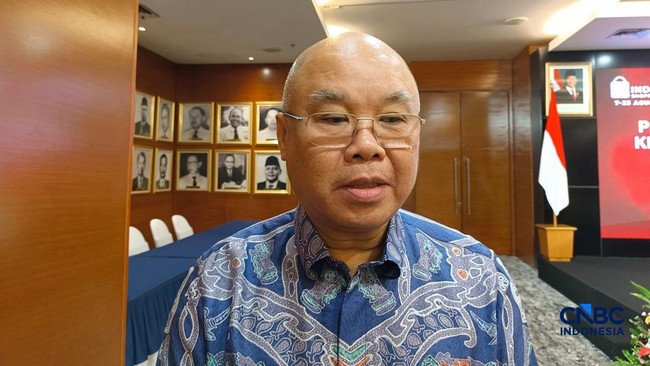
Jakarta, CNBC Indonesia — The Indonesian Shopping Centre Management Association (APPBI) has revealed that shopping centres are still busy with visitors amid various economic challenges. However, the high footfall is not entirely proportional to spending value, as purchasing power, particularly among the lower middle class, remains under pressure.
APPBI Chairman Alphonzus Widjaja said that, based on the association’s records, visit rates to shopping centres have remained relatively stable to date. According to him, malls remain one of Indonesian society’s favourite destinations for gathering.
“The visit rate to shopping centres is relatively stable. Because in all sorts of situations and conditions, Indonesians still go to shopping centres. Indonesian culture is one of gathering, and one of the gathering places in Indonesia is the shopping centre,” said Alphonzus when met at the Auditorium of the Ministry of Trade (Kemendag) in Jakarta on Thursday (30/7/2026).
“So based on our records, the visit rate up to now is relatively stable. It’s normal, and we can see that on public holidays many shopping centres are full. It’s very crowded,” he continued.
Even so, he noted a change in people’s shopping patterns. Consumers are now more careful with their money and tend to choose products with lower prices, or smaller sizes, so that purchases remain within their means.
“What is happening is a change in shopping trend patterns. So now, especially the lower middle class, tend to buy goods with a relatively small unit price, or cheap ones. I think that’s what’s happening. But the visit rate hasn’t fallen — relatively stable is what I mean,” he said.
Alphonzus also highlighted the condition of household consumption, which is still growing nominally, even though the quantity of goods people obtain is actually shrinking. According to him, this reflects purchasing power under pressure amid rising prices.
Consequently, he said, many retailers have begun changing their strategies to keep products affordable, one of which is introducing smaller packaging.
“I think one of those strategies is how our retail friends adapt. Amid rises that can no longer be contained, how to reduce packaging to smaller sizes and so on. I think that’s part of the strategy to keep goods or products affordable for the public, especially the lower middle class,” explained Alphonzus.
“If the packaging is always in large sizes, it would certainly be difficult to afford for people whose purchasing power is being disrupted,” he added.
On the other hand, Alphonzus said the biggest challenge for shopping centres today is not a lack of visitors, but rising operational costs that are not matched by increased revenue.
“In terms of visit rates, I think there’s no problem — it’s relatively stable. The problem for shopping centres is rising costs, operational costs. One of them is energy costs. Energy costs keep rising, gas prices and so on. So this increases operational costs,” he explained.
Nevertheless, he said, mall operators also cannot simply raise rents on their tenants, because retailers are facing less-than-optimal sales conditions.
“But on the other hand, shopping centres cannot raise rents significantly. The increase will certainly be limited. Why? Because our retail friends right now, especially in the low season, cannot achieve high sales. We are currently in the low season, and coincidentally in a situation full of challenges,” he said.
“So shopping centres are facing difficulty. On one side, operational costs are rising. But on the other, they cannot raise rents significantly. I think that’s the challenge,” Alphonzus added.
However, amid these pressures, the occupancy rate of shopping centres nationally is still maintained.
“Now, if we talk about the average across all shopping centres, there are different classes. I think in general the occupancy rate sits at around 85% to 90%,” he said.
The highest occupancy rates are still dominated by shopping centres targeting the upper-middle segment.
Furthermore, Alphonzus said he remains optimistic that the shopping centre industry will record growth by the end of the year, although it will not be very high.
“I think it will still grow. But the growth is almost certainly not going to be significant. But it will probably still grow,” he concluded.
Source: jawawa.id (https://jawawa.id/newsitem/indonesian-malls-remain-busy-but-shoppers-shift-to-cheaper-goods-1785419534)
Originally published by CNBC Indonesia (https://www.cnbcindonesia.com/news/20260730175602-4-755183/fenomena-baru-warga-ri-rajin-ke-mal-belanja-pilih-barang-harga-murah), translated from Indonesian