
Indonesian Mall Operators Distressed: Hit by Used Clothing Imports and Soaring Operational Costs
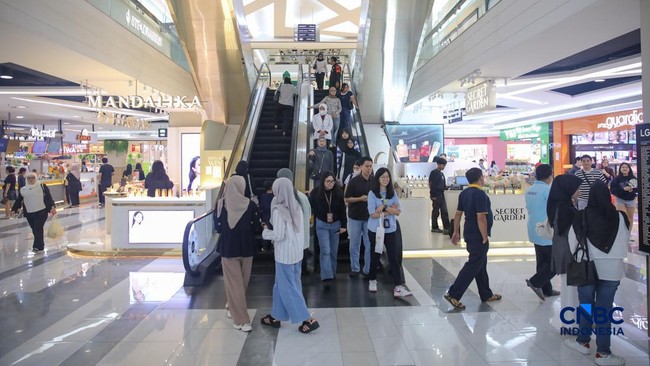
The widespread circulation of illegal imports and second-hand clothing is considered inseparable from changes in consumer patterns, as the public increasingly seeks cheaper products.
Alphonzus Widjaja, General Chairman of the Indonesian Shopping Centre Association (APPBI), stated that pressure on purchasing power is forcing people to meet their needs at the lowest possible prices.
“That is why illegal imports are becoming more prevalent; they are cheap because they are illegal. Second-hand clothing is widespread because people still need clothes,” Alphonzus said during CNBC Indonesia’s Closing Bell, as reported on Sunday (14/6/2026).
According to him, this phenomenon is particularly prevalent among the lower-middle class, whose purchasing power has been under pressure in recent years.
“That is what I believe is driving the rise in illegal imports and second-hand clothing; they tend to buy at a low unit price due to disrupted purchasing power, especially in the lower-middle class. This has been happening for the past few years,” he explained.
He assessed that this condition poses a unique challenge for retail business players who must compete with low-priced products in the market.
Beyond import issues, shopping centre managers are facing heavy pressure amidst slowing public consumption. In addition to facing a longer-than-usual low season, business operational costs have also experienced a significant surge.
Alphonzus revealed that the increase in operational costs borne by retail players has already exceeded 30%.
“This has already surpassed 30% (increase in operational costs),” said Alphonzus.
According to him, the spike in costs was triggered by the rise in non-subsidised fuel (BBM) prices used for logistics, increasing gas energy tariffs, and an increase in various regional levies.
“The costs for LNG (Liquefied Natural Gas) and CNG (Compressed Natural Gas) rise every month because the selling price includes a USD component. This increases every month,” he said.
Furthermore, several local governments have increased revenue from taxes and levies due to limited regional budgets.
“On one hand, operational costs are rising, but we cannot drive sales because we are in a low season period,” he added.
Pressure is felt even more intensely in the food and beverage (F&B) sector. Alphonzus mentioned that cost increases in that sector could reach more than 50%.
“If this continues every month—gas prices rising—it impacts the F&B category; I estimate it could be over 50%,” Alphonzus revealed.
Nevertheless, business players are still attempting to restrain increases in selling prices to avoid further burdening consumers.
Source: jawawa.id (https://jawawa.id/newsitem/indonesian-mall-operators-distressed-hit-by-used-clothing-imports-and-soaring-operational-costs-1781452293)
Originally published by CNBC Indonesia (https://www.cnbcindonesia.com/market/20260614163002-17-742713/bos-mal-ri-mumet-diserang-baju-bekas-impor-biaya-operasional-naik), translated from Indonesian