
Indonesian-Made EV Battery Ready to Open Export Taps
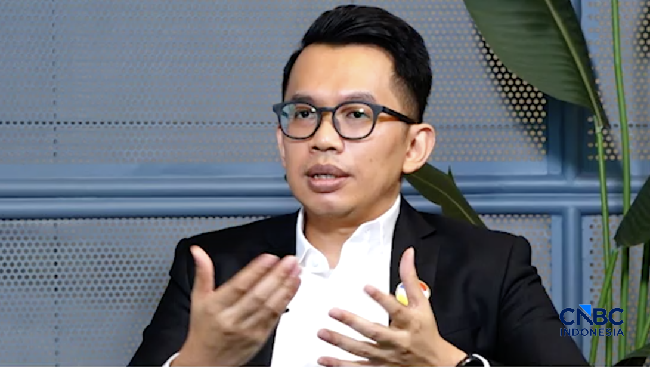
Indonesia Battery Corporation (IBC) is targeting export markets for electric vehicle (EV) batteries produced from the domestic battery ecosystem project. The project is operated through PT CATIB, a collaboration between IBC and Chinese company CATL. IBC President Director Aditya Farhan Arif explained that the company is targeting international markets in addition to meeting domestic needs. He stated that the presence of the battery cell factory will give Indonesia greater bargaining power amid increasingly fierce competition in the global energy industry. “So the market we are targeting is not only domestic but also global. The presence of CATIB can directly provide leverage for Indonesia in the global battery industry constellation,” he said in CNBC Indonesia’s Mining Zone programme, quoted on Tuesday (23/6/2026). Currently, construction of the factory located in Karawang, West Java, has reached 90% progress and is targeted to begin commercial operations at the end of July 2026. “The first capacity we will install is 6.9 gigawatt hours and, God willing, it is still on schedule. So, at the end of July 2026,” said Aditya. The production capacity in this first phase will soon be increased through an expansion plan to reach a minimum of 15 GWh. This volume is estimated to be equivalent to the needs of around 250,000 electric vehicle units. “With this significant volume, we hope that the presence of CATIB can provide supply chain certainty for the national electric vehicle industry and will later become a stimulus for the emergence of battery component and electric vehicle industries,” he said. In addition to targeting the Japanese market through existing automotive manufacturers, IBC is also eyeing the European Union market as an export destination. To meet strict standards abroad, the company is implementing the Life Cycle Assessment (LCA) method to ensure every battery product meets sustainability and low-emission criteria. “Because what is assessed is the full chain and IBC plays in the midstream to downstream, IBC has the opportunity to offset hotspots that exist upstream,” he stressed. Previously, the Ministry of Energy and Mineral Resources (ESDM) confirmed that the EV battery ecosystem project in Karawang, West Java, would be completed by the end of July 2026. Minister of Energy and Mineral Resources Bahlil Lahadalia stated that the project is one of the strategic national downstreaming programs launched by the government. He conveyed this after reporting the latest progress on the downstreaming programme to President Prabowo Subianto in a meeting at the Palace. “So we had a meeting with the President earlier. The first was to evaluate the downstreaming programme. Because several are already underway, we also reported to the President that our downstreaming programme for the car battery ecosystem, a collaboration between CATL and Antam, is complete and, God willing, will be inaugurated at the end of July,” said Bahlil at the Palace, quoted on Tuesday (23/6/2026). In addition to discussing downstreaming progress, Bahlil also reported on the state of national energy security to the President. He stated that Indonesia’s energy reserves are currently at a safe level. “Secondly, we also held a meeting with the President to discuss our energy. And our energy resilience will be able to average a minimum of 20 days,” he said. The integrated EV battery factory project is supported by Indonesia’s large reserves of nickel, a key raw material for battery components. The total initial investment for the entire upstream-to-downstream integrated battery ecosystem project reaches US5.9billion, equivalenttoRp96.04trillion(assuminganexchangerateofRp16, 278perUS). The project consists of six joint ventures (JV) spanning upstream to downstream. JV one to three form the upstream battery ecosystem, while JV four to six form the downstream ecosystem. Upstream: JV 1 is the nickel mining project of PT Sumberdaya Arindo (SDA) with a production capacity of 7.8 million wet metric tons (wmt) of saprolite nickel and 6 million wmt of limonite, totalling 13.8 million wmt. PT Antam holds a 51% stake and CBL holds 49%. This project has been in production since 2023. JV 2 is the nickel smelter project of PT Feni Haltim (FHT) using Rotary Kiln Electric Furnace (RKEF) technology with a capacity of 88,000 tons of refined nickel alloy per year. CBL holds a 60% stake and PT Antam holds 40%. This project is targeted to begin production in 2027. JV 3 is the nickel smelter project of PT Nickel Cobalt Halmahera (HPAL JVCO) using High Pressure Acid Leaching (HPAL) technology with a capacity of 55,000 tons of MHP per year. CBL holds a 70% stake and PT Antam holds 30%. This project is targeted to begin production in 2028. Downstream: JV 4 is a battery material project producing cathode materials, cobalt sulphate, and ternary precursors with a capacity of 30,000 tons of Li-hydroxide, located in East Halmahera, North Maluku. CBL holds a 70% stake and PT IBC holds 30%. This project is targeted to begin production in 2028. JV 5 is the battery cell project of PT Contemporary Amperex Technology Indonesia Battery (CATIB) located in the Karawang New Industry City (KNIC), West Java.