
Indonesian Librarians Gather at UMY to Discuss AI Utilisation
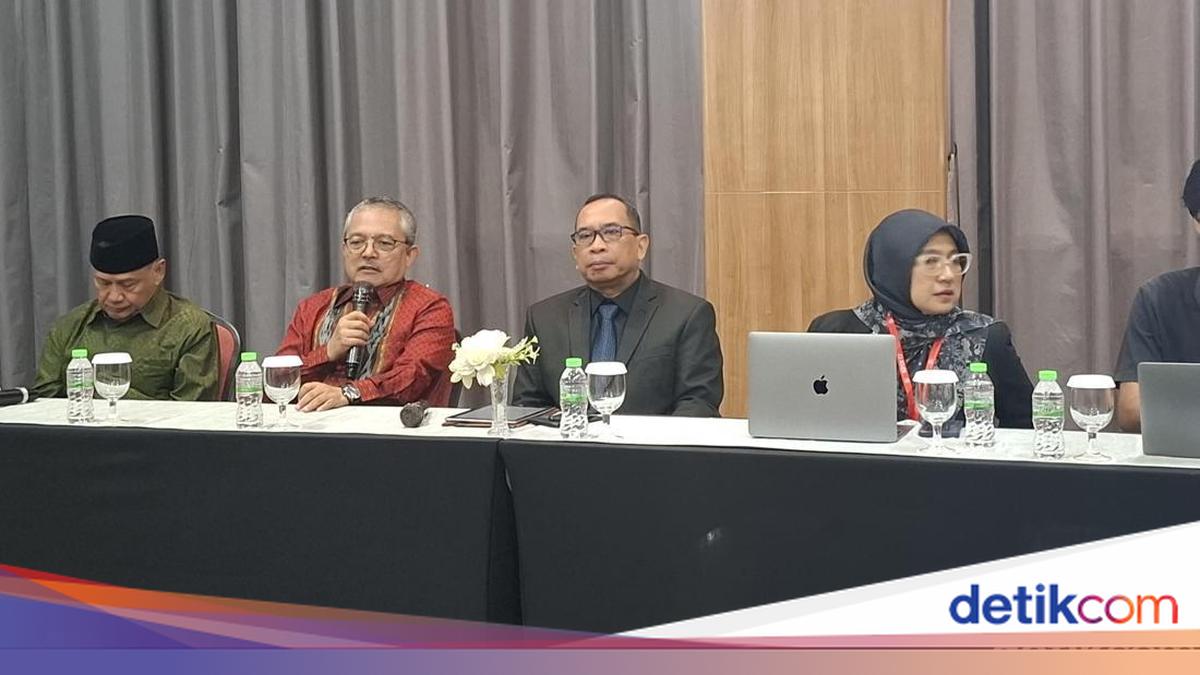
The 17th Indonesian Digital Library Conference (KPDI) is being held at the Universitas Muhammadiyah Yogyakarta (UMY) Student Dormitory from 4 to 6 August 2026. The conference features a professional development programme responding to the rapid advancement of artificial intelligence (AI).
Chairman of the Indonesian Digital Library Forum (FPDI), Joko Santoso, stated that the implementation of AI has brought major changes to how society accesses knowledge. However, he cautioned that AI also has the potential to modify information, making the role of librarians as managers and curators increasingly essential.
‘This curatorial work is becoming more important as the world changes, especially with the implementation of AI which carries the possibility of knowledge modification,’ Joko said during a press conference at the UMY Student Dormitory on Monday (4/8/2026).
According to Joko, the transformation of digital libraries does not mean creating a new type of library to replace conventional ones. Instead, digitalisation represents a transformation of the collections and services that libraries have long possessed. ‘A digital library is actually a representation of the physical library that has existed all along. So, we are not talking about a new library that is different from a conventional one,’ he explained.
He elaborated that the transformation applies to collections, which are now widely available in digital formats, as well as to services, which have shifted from onsite visits to online access. Joko noted that this shift aligns with the behaviour of Gen Z, Gen Alpha, and millennials who have grown up in the digital era. This trend is evident in the National Library’s services, which are now predominantly accessed online. ‘The interesting development in online service transformation is that it can become much larger. For instance, the National Library’s online access is statistically three times higher than its onsite visits,’ he revealed.
Amidst these changes, Joko stressed that librarians bear a growing responsibility to curate information sources so that the public receives verified knowledge. ‘We rely on the work of librarians who can curate increasingly credible sources of information and knowledge in the library. We repeatedly check its authority, scope, currency, and so on,’ he clarified.
Meanwhile, the Head of the National Library of Indonesia, Prof. E. Aminudin Aziz, stated that the digital transformation of libraries, previously synonymous with digitising collections, building repositories, ensuring metadata interoperability, and expanding information access, has now entered a more complex phase. The presence of AI not only changes the technology used but also alters how humans think, learn, seek information, make decisions, and even construct knowledge.
‘Previously, the main question for libraries was how to provide information. Today, the question has shifted to how to ensure the public obtains correct information,’ Aminudin said. He emphasised the need to build critical thinking skills amidst the flood of information, to utilise AI support without losing integrity, ethics, and morality, and to maintain the library as a trusted institution even when machines can produce answers in seconds.
The development of AI indeed opens various opportunities for society. The technology can accelerate information retrieval, summarise documents rapidly, assist with multi-language translation, support research, and expand inclusive learning access. However, behind these conveniences, AI can also produce inaccurate, biased, unsourced, or entirely false information presented in a convincing manner.
These changes place libraries in an increasingly strategic position. Libraries no longer merely function as providers of access to information, but also play a role in building information, digital, and data literacy skills so that the public can utilise technology critically and responsibly. According to Aminudin, the ongoing transformation is not solely about technological advancement, but about human readiness to face it. ‘The centre of change and transformation is not technology, but humans. Libraries have a responsibility to build a society that is not only capable of using technology to access and produce information, but also aware of information quality, source credibility, personal data security, copyright protection, and the importance of ethics in AI utilisation,’ he concluded.