
Indonesian Language Prioritised, Regional Languages Preserved: West Java Strengthens Language Governance
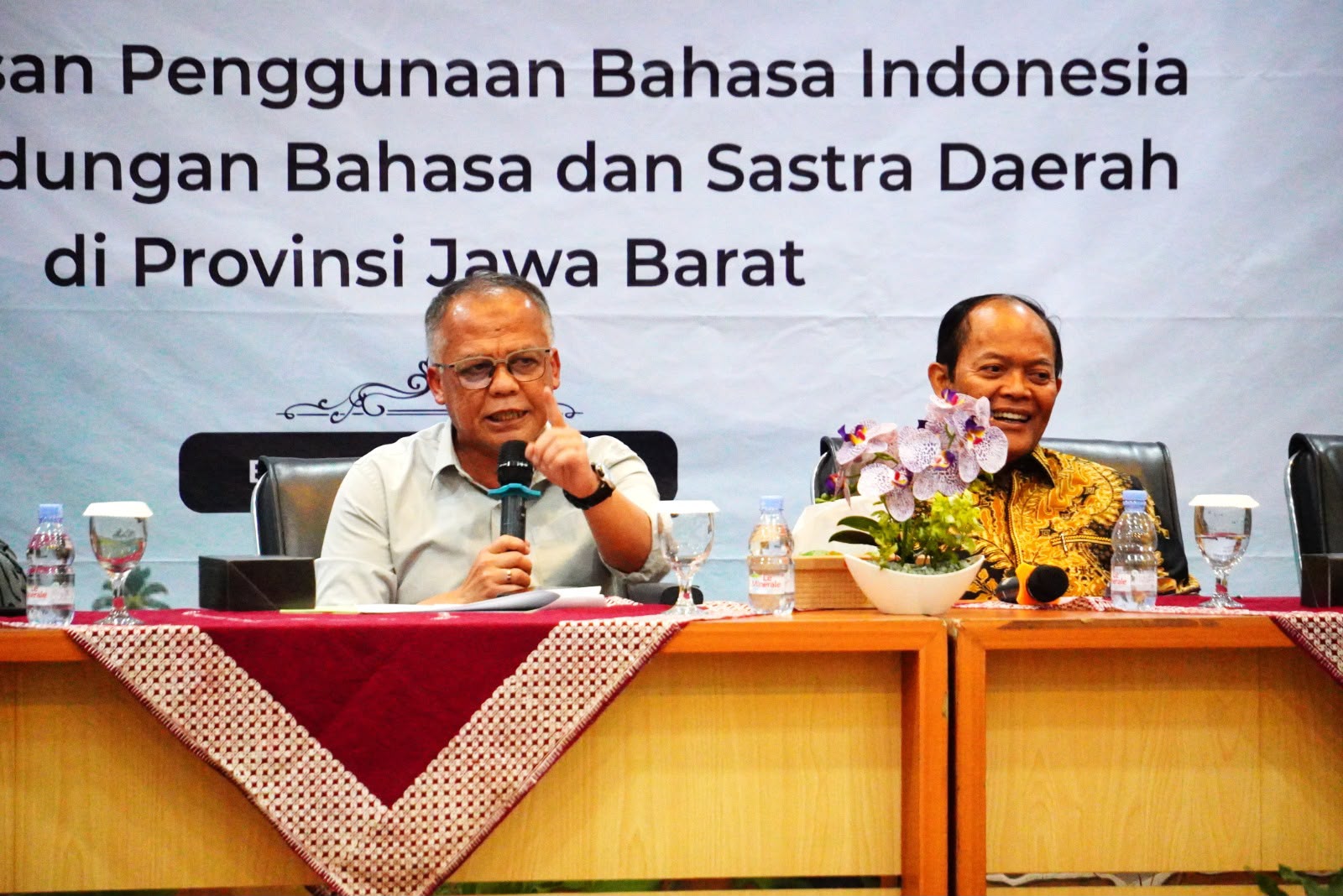
Efforts to implement national language policy are being carried out through collaboration between central and regional governments. The Ministry of Primary and Secondary Education, via the Language Development and Fostering Agency, is encouraging the establishment of stronger, coordinated, and sustainable governance for supervising the use of the Indonesian language. This was addressed through a Regional Consolidation activity themed “Supervision of Indonesian Language Use and Protection of Regional Language and Literature in West Java Province”.
The activity forms part of the implementation of Minister of Primary and Secondary Education Regulation Number 2 of 2025 concerning Guidelines for the Supervision of Indonesian Language Use, as well as Minister of Home Affairs Circular Letter Number 400.4/7446/SJ of 2025 concerning the Supervision of Indonesian Language Use in the regions.
Head of the Language Agency, Hafidz Muksin, emphasised that strengthening the use of the Indonesian language is part of efforts to maintain national identity and sovereignty ahead of the centenary of the Youth Pledge in 2028. “Indonesian is not only a communication tool but also a state symbol that must be respected, taken pride in, and used properly and correctly. Prioritising the Indonesian language is part of efforts to strengthen the nation’s existence, advance national civilisation, and improve quality education,” Hafidz stated in Bandung.
According to him, the position of the Indonesian language on the global stage continues to strengthen. Currently, Indonesian is studied in 61 countries, has become an official language of the UNESCO General Conference, and is present as a study programme at Al-Azhar University in Cairo. However, domestically, excessive use of foreign languages is still found in the names of areas, products, business entities, and public spaces.
“Language regulations are necessary to build a common understanding and collective compliance. The use of the Indonesian language in public spaces, official documents, and government environments already has a clear legal basis through Law Number 24 of 2009, Presidential Regulation Number 63 of 2019, and is reinforced by Minister of Primary and Secondary Education Regulation Number 2 of 2025,” he explained.
Head of the West Java Provincial Language Centre, Herawati, stressed that the successful implementation of language policy requires strong synergy between the central government, regional governments, and all stakeholders. “We express our appreciation to the West Java Provincial Government for the support and collaboration provided. Supervision of Indonesian language use and the protection of regional language and literature cannot run alone but requires the cooperation of all stakeholders,” she said.
This commitment received support from the West Java Provincial Government. The Regional Assistant for Government and People’s Welfare of West Java Province, Asep Sukmana, assessed that the formation of a Supervisory Team for Indonesian Language Use at the provincial and district/city levels is a strategic step to ensure the policy runs effectively. “The regulations that have been issued need to be immediately followed up through institutional formation, supervision implementation, and coaching activities so that the benefits can be felt by the community,” said Asep.
He added that language supervision prioritises coaching, education, mentoring, and improvement recommendations over a punitive approach. As a form of shared commitment, the activity concluded with the signing of a Joint Commitment on the Supervision of Indonesian Language Use in the West Java Province Region. Through this consolidation, West Java is expected to become an example of strengthening an orderly language ecosystem, while simultaneously encouraging the implementation of sustainable national language policies to prioritise Indonesian and protect regional languages.