
Indonesian Labour Party Plagued by Lack of Class Consciousness and Oligarchic Co-optation
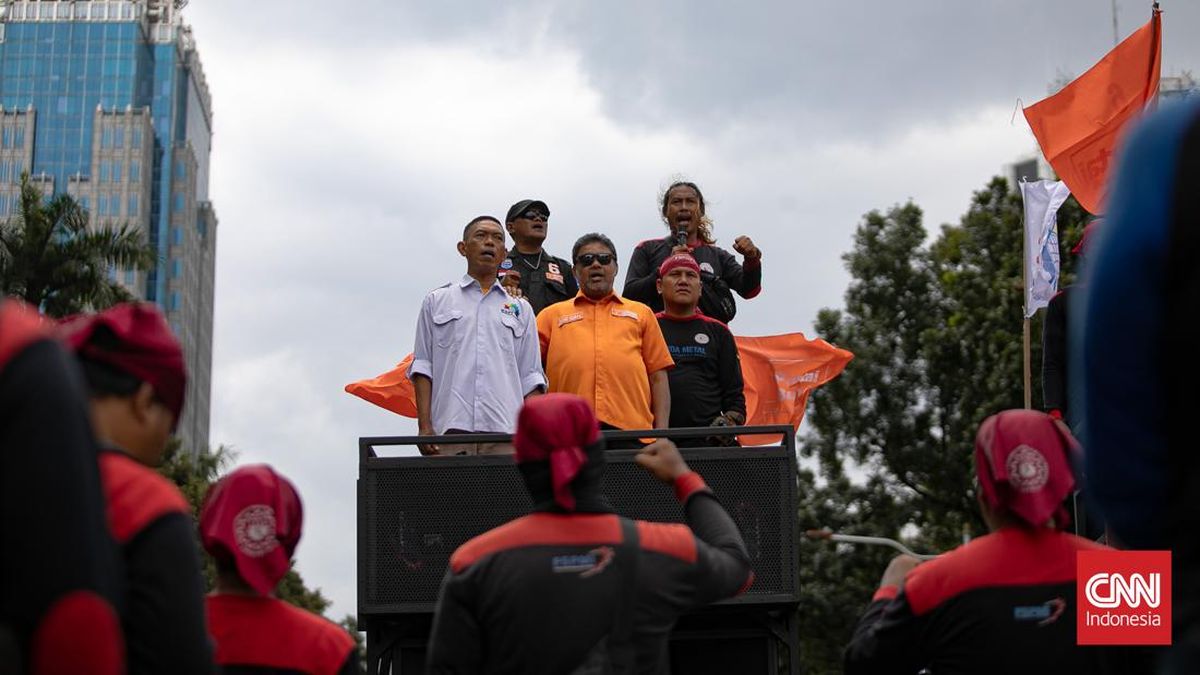
The Indonesian Labour Party is grappling with a crisis of direction and internal fragmentation after Secretary General Ferri Nuzarli and a claimed 1.3 million members of the Organisasi Rakyat Indonesia (ORI) resigned en masse. Ferri cited a divergence in views regarding the party’s struggle, a move that came shortly after Party President Said Iqbal assumed a position within the government as the Presidential Special Advisor on Manpower and Labour Welfare. Said Iqbal dismissed the resignations as a normal occurrence in political parties and declined to comment on the membership claim.
The party, a debutant in the 2024 General Election, failed to secure any seats in the national parliament after garnering only 972,910 valid votes, or 0.64 percent, falling far short of the four percent parliamentary threshold. The party was rebuilt by founders from four major labour confederations, 50 national-level trade union federations, and organisations representing teachers, contract workers, farmers, and fishers.
Cusdiawan, Co-Founder of the Center for Indonesian Governance and Development Policy (CIGDEP), attributes the party’s persistent electoral failures to the structure of political economy and the historical legacy of the New Order. He argues that workers have been systematically depoliticised, becoming subordinated within the state’s economic development rhetoric and trapped in the vortex of oligarchic competition. This historical depoliticisation prevents the conversion of a strong sociological base into formal political power, leaving workers fragmented and easily co-opted by elites.
Agung Baskoro, Executive Director of Trias Politika Strategis, highlighted the internal fragmentation of the Labour Party, noting that a successful party must unite various factions. He also pointed out that the party’s narrow focus on a professional identity limits its voter base, especially given Indonesia’s large informal sector in agriculture and fisheries, which lacks affiliation with industrial labour. Furthermore, Agung noted the party’s lack of a charismatic national figure capable of resonating with the broader public across electoral districts.