
Indonesian Islamic Da'wah Institute Warns of New Forms of Rebellion in the Digital World
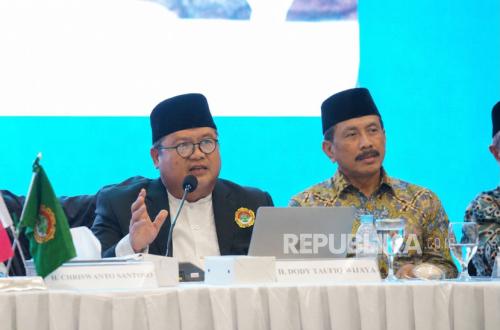
Reflecting on the historical significance of the 30 September Movement (G30S/PKI), the Central Executive Board of the Indonesian Islamic Da’wah Institute (LDII) has reminded all elements of the nation that threats to state ideology have undergone a significant transformation.
While history once recorded threats in the form of physical movements, rebellions, and armed forces, today, infiltration subtly penetrates the public consciousness through the digital realm.
Singgih Tri Sulistiyono, the Chairman of the Indonesian Islamic Da’wah Institute in charge of Inter-Institutional Relations and a Professor of History at Diponegoro University (Undip), emphasised that this historical warning is not intended to foster hatred, but rather to serve as a catalyst for vigilance amidst the rapid flow of information.
He noted that whereas threats to the state were once more easily identified through physical movements, current threats infiltrate subtly via social media, digital propaganda, disinformation, intolerance, and narratives that pit religion against the state.
“Therefore, the ideological resilience of the community must be strengthened through digital literacy and a moderate understanding of religion,” he stated.
To mitigate the potential for horizontal friction, the Indonesian Islamic Da’wah Institute is actively building synergy with the government and various mass organisations to utilise networks down to the village level as a means of social early detection.
Nevertheless, he stressed that such steps must always prioritise legal mechanisms and coordination with the relevant authorities.
He reminded that early detection must not devolve into arbitrary suspicion and labelling.
Persuasive, educational, and familial approaches must be prioritised so that individuals exposed to extremist ideologies can be reintegrated rather than further marginalised.
Recognising that the younger generation often feels disconnected from the historical narratives of the G30S/PKI, the organisation is implementing strategic adaptations in its da’wah communication methods to ensure that messages of national vigilance are not ignored.
“The history of rebellion serves as a lesson for us to strengthen the commitment of the younger generation to the Unitary State of the Republic of Indonesia (NKRI) and Pancasila,” he said.
His message is packaged attractively through short videos, podcasts, and infographics, with the aim of not harbouring resentment, but rather using history as a compass to maintain national unity.