
Indonesian Independence: From the Battlefield to the Negotiating Table
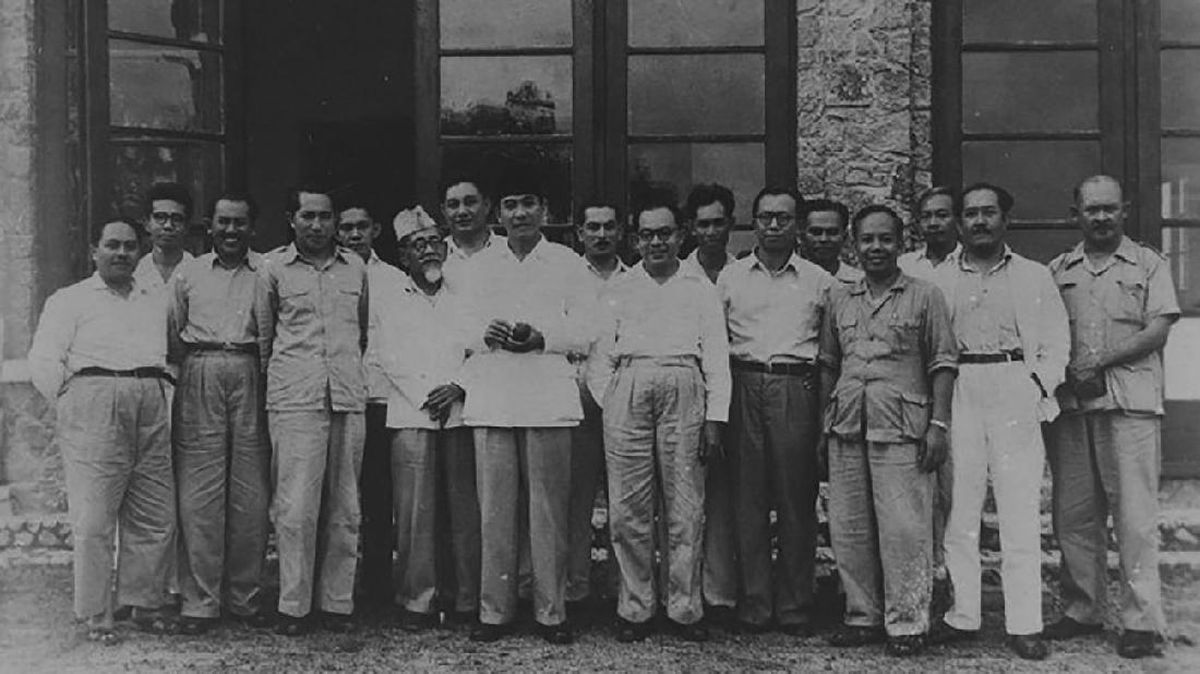
Indonesia was not yet fully independent even though Sukarno and Mohammad Hatta had read the proclamation of independence on 17 August 1945. The Netherlands did not want the newly born nation to truly escape the shackles of colonialism. The Netherlands, which had been defeated by Japan around March 1942, wanted to reoccupy Indonesian territory. Allied Forces Netherlands East Indies (AFNEI) landed in Indonesia about a month after the proclamation was read. This force was tasked with handling Indonesia following Japan’s defeat in the Second World War. Through the Netherlands Indies Civil Administration (NICA), the Netherlands sought to reclaim sovereignty over a newly independent nation. Its military forces occupied several regions. Armed contact resumed. The battles of Ambarawa and Surabaya bore witness to the Netherlands’ unwillingness to let Indonesia go. Surabaya was one of the largest battles, lasting from 10 to 29 November 1945. The bloodshed in various regions also prompted Indonesian leaders at the time to open a new battleground at the negotiating table. The then Prime Minister of the Republic of Indonesia, Sutan Sjahrir, believed that Indonesian independence could not rely solely on physical struggle and arms, but also on diplomacy. In his pamphlet, later known as the book Perjuangan Kita (1946), Sjahrir stated that Indonesia’s fate depended heavily on international circumstances and history. ‘We need a change in the foundations of human social relations, which will be able to eliminate imperialism and capitalism in this world. As long as this has not happened, our national struggle will not be able to fully satisfy, and the independence we obtain, if we obtain it fully from the Netherlands, will only be an independence like that seen in other small countries under the influence of large capitalist nations, namely independence in name only,’ Sjahrir said. One of his steps was to raise the issue of decolonisation of independent Indonesia at the newly formed United Nations Security Council in early 1946. In the early meetings of the UN Security Council, then still based in London, the Indonesian issue was voiced by the Ukrainian delegation, an extension of the Soviet Union delegation. David van Reybrouck, in his book Revolusi, Indonesia and the Birth of the Modern World (2024:330), noted that this meeting was very important. According to him, the moment became a significant milestone for the UN Security Council in playing a role on decolonisation issues after the Second World War. ‘Times have changed and Sjahrir knew it,’ Reybrouck said in his book. One month later, in April 1946, official talks between the Indonesian and Dutch delegations were held. This time, not in Indonesia, but at Hoge Veluwe National Park in the Netherlands. At that time, the Dutch delegation, represented by Prime Minister Schermerhorn, Foreign Minister Van Roijen, Deputy Prime Minister Willem Drees, and Minister of Overseas Territories Johann Logemann, brought an agenda that only recognised Java as Indonesian territory and maintained Dutch sovereignty. However, the two countries failed to reach an agreement in the Hooge Veluwe talks. Afterwards, the negotiating table shifted to Linggarjati, Kuningan, West Java. On 11–13 November 1946, in a villa, the Indonesian and Dutch delegations negotiated. The Netherlands was under Schermerhorn’s command, while the Indonesian delegation was led by ‘Bung Kecil’ Sjahrir. Unlike the failed Hooge Veluwe talks, Linggarjati produced an agreement recognising Indonesian territory covering Java, Sumatra, and Madura. In this agreement, the Netherlands granted de facto recognition to Indonesia. The second agreement from Linggarjati was the formation of a federal state called the United States of Indonesia by Indonesia and the Netherlands before 1 January 1949, and the inclusion of the USI in the Netherlands-Indonesia Union under the authority of the Dutch Queen. The Linggarjati Agreement was signed amid sharp ideological turmoil in the country. Many rejected the results of the Linggarjati negotiations. Sutan Sjahrir then resigned from the post of Prime Minister. The Linggarjati Agreement, which placed Indonesian territory as only Sumatra and Java, caused disappointment among many circles. Julianto Ibrahim, in his book Dinamika Sosial dan Politik Masa Revolusi Indonesia (2016:11), noted that this opposition came from old bodies that had been in opposition to Sjahrir. ‘Organisations opposing Linggarjati later joined together in an organisation called Benteng Republik Indonesia. Supporters of Linggarjati formed a rival organisation called the Left Wing,’ Ibrahim wrote. The Netherlands violated the Linggarjati Agreement and launched a military aggression that lasted from 21 July to 5 August 1947. This aggression prompted the UN to intervene. They issued a ceasefire resolution and formed the Committee of Good Offices, bringing Indonesia to the next negotiation, the Renville talks. These talks took place from 8 December 1947 to 17 January 1948 aboard the American warship Renville anchored at Tanjung Priok Port. The Committee of Good Offices involved Australia, Belgium, and the United States. The three were tasked with mediating and resolving the Indonesia-Netherlands dispute. David Van Reybrouck (2024:402) noted that at that time, the Netherlands chose Belgium because of Belgium’s consistent political support for the Netherlands, particularly regarding colonisation. Meanwhile, Indonesia chose Australia because it was then led by a Labour Party government that was pro-Indonesia. The Indonesian delegation was led by Amir Sjarifuddin, while the Dutch delegation was led by R. Abdulkadir Wijoyoatmojo, an Indonesian who sided with the Netherlands. After negotiating for almost a month, the agreement was signed on 19 January 1948. The agreement stated that the Netherlands only…