
Indonesian healthcare industry utilises solar energy to promote environmental sustainability
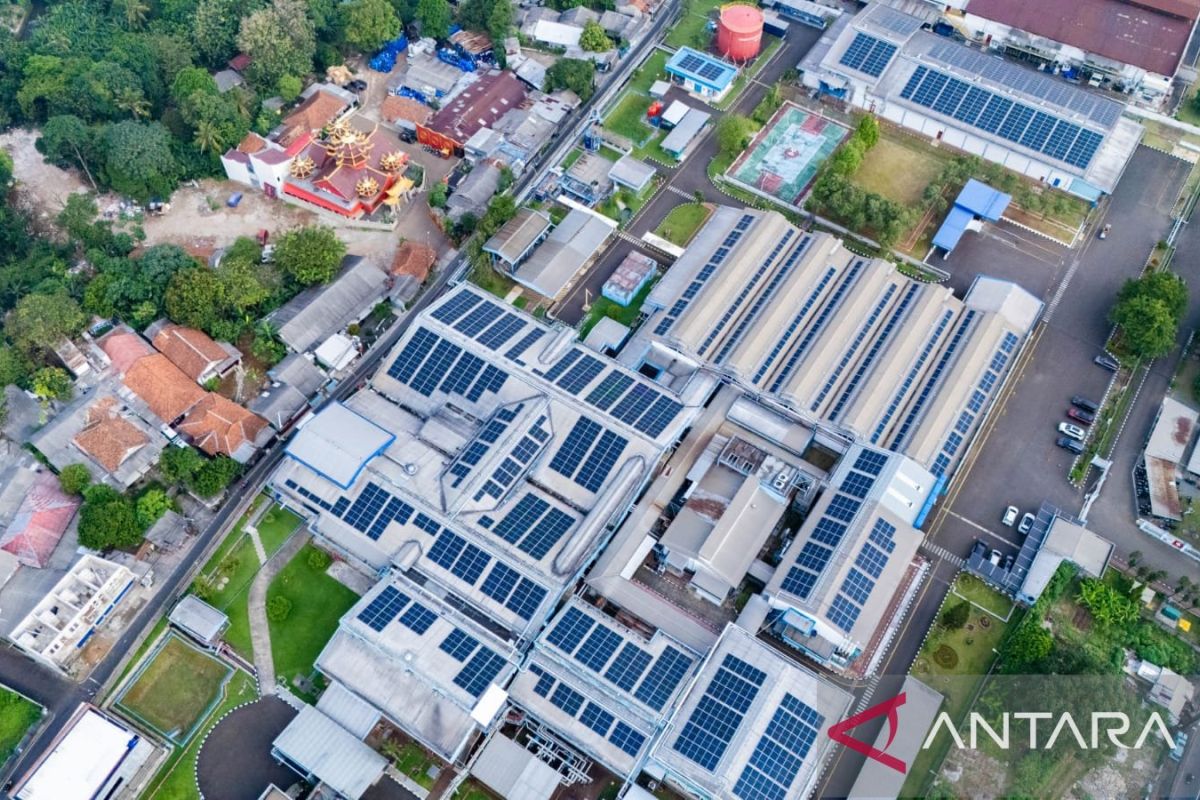
Jakarta (ANTARA) - The healthcare industry in Indonesia has begun utilising solar energy as a concrete step towards environmental sustainability while strengthening a sustainable and efficient manufacturing ecosystem amidst global demands for carbon emission reductions.
This commitment is exemplified by PT Integrated Healthcare Indonesia (IHI), an Indonesian healthcare manufacturing company. Since February 2026, the company has been operating an On-Grid Solar Power Plant (PLTS) with a capacity of 777.98 kilowatt peak (kWp) at its production facility in East Jakarta.
The President Director of PT IHI, Teerasak Lueuwirat, stated in Jakarta on Saturday that the use of solar power as renewable energy serves as a long-term operational strategy to suppress carbon emissions without compromising product quality standards.
“The healthcare industry faces unique challenges in the energy transition because it must maintain high standards of product quality and safety. Various facilities, such as cleanrooms, laboratories, and cooling systems, require a stable energy supply,” he said.
Therefore, he noted that the implementation of renewable energy in the healthcare sector aims not only to reduce emissions but also to ensure operational reliability, which is a primary requirement in the production process of healthcare commodities.
The solar power plant installed at the company’s facility is projected to generate 1,012,503 kilowatt-hours (kWh) of energy per year. This solar installation is estimated to reduce carbon emissions by up to 787.73 tonnes of carbon dioxide per year, equivalent to the positive impact of planting more than 13,000 trees to preserve the environment and mitigate the impacts of climate change.
Teerasak added that the electricity produced from solar energy is directly allocated to support core operational needs, including water treatment, cooling systems, lighting, production facilities, and warehousing areas. Furthermore, to optimise the performance of this green energy, the company has integrated it with a digitalised system based on real-time monitoring.
On the same occasion, the CEO of SUN Energy, Jefferson Kuesar, assessed that the healthcare manufacturing sector is one of the industries with the most critical energy needs in Indonesia due to its high-standard operations regarding quality and reliability. However, he observed a positive shift in trends, where domestic healthcare industry players are beginning to view renewable energy as part of a business strategy to enhance global competitiveness, rather than merely a routine environmental initiative.
This aligns with the Indonesian government’s push to encourage the public and private sectors to transition to environmentally friendly energy to keep global temperature rises as close as possible to the 1.5-degree Celsius limit, as stipulated in the Paris Agreement and realised through Indonesia’s Second Nationally Determined Contribution (NDC) 2030 climate document.
The Second NDC climate document serves as a national roadmap to reduce Greenhouse Gas (GHG) emissions, with a target reduction of 31.89 per cent through domestic efforts and 43.2 per cent with international support, via a long-term national strategy.
“The use of solar power plants in healthcare facilities is a tangible example of energy transformation in Indonesia, supporting the creation of a more efficient, competitive, and environmentally friendly healthcare industry,” said Kuesar, while also marking World Environment Day 2026, expressing hope that climate movements and environmental preservation could become ingrained across all levels of society.