
Indonesian Health Minister Views Health Cooperation with China as Increasingly Open
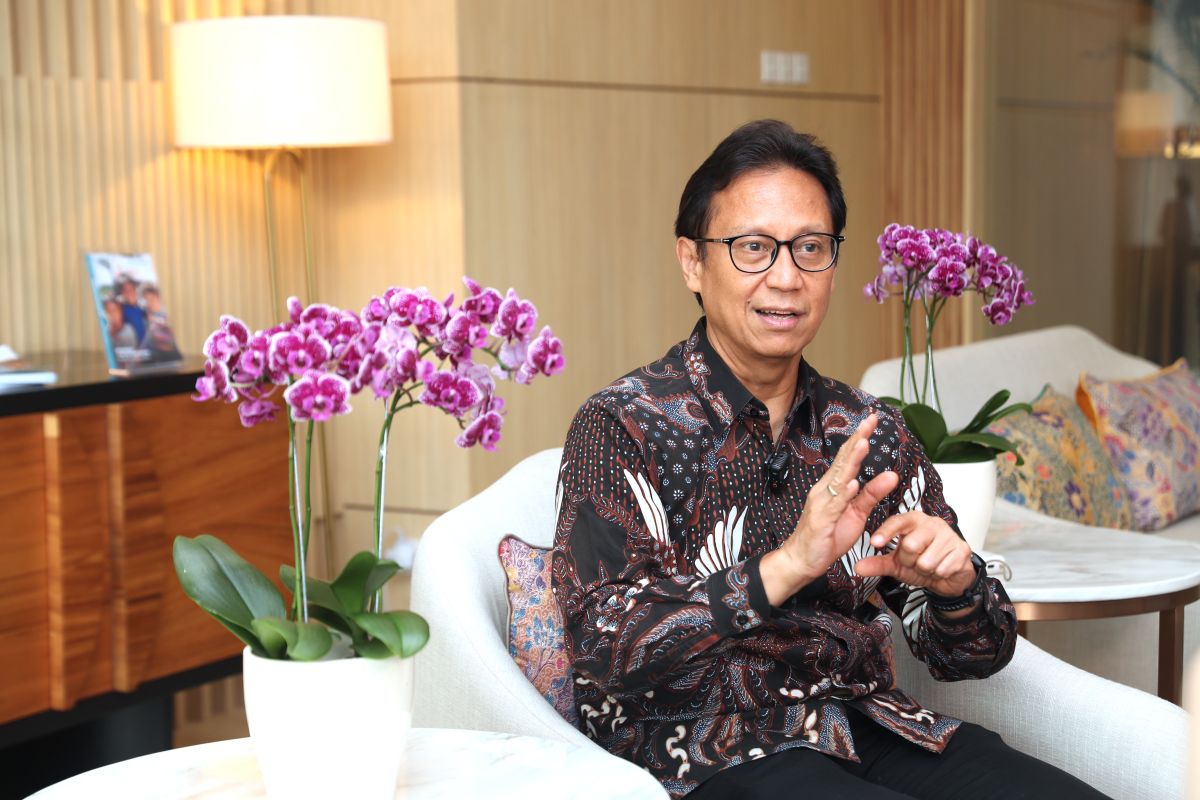
Jakarta (ANTARA) - The Indonesian Health Minister, Budi Gunadi Sadikin, stated that health cooperation between Indonesia and China has encompassed various fields and is moving “in the right direction,” indicating broad prospects for future collaboration.
In a recent interview with Xinhua, Budi noted that the two countries have established cooperation for years, with health collaboration so far covering nearly “all aspects,” including clinical services, clinical management, artificial intelligence (AI), and biotechnology.
Budi visited China in March, during which both sides discussed deepening cooperation in various fields, including digital and smart health as well as human resources.
Health Minister Budi revealed that this cooperation not only covers medical equipment and technology but also efforts to enhance healthcare service capacity, particularly the training of medical personnel. He cited the example of Indonesian heart specialists undergoing interventional cardiology training at several hospitals in China.
Budi explained that Indonesia is expanding emergency heart services to more cities by building catheterisation laboratories, but this expansion also requires doctors with specialised skills to operate the equipment and perform procedures.
Several Indonesian doctors who received training in China have returned home and are now able to perform procedures that can help save lives, Budi stated.
The Health Minister highlighted advanced medical technology as another important area of cooperation with China, including biotechnology, AI, and robotics. According to him, cooperation in these fields, along with medical talent training, can bring greater benefits to Indonesia’s healthcare service system.
Regarding the use of AI in healthcare, Budi said he sees China adopting AI in its national healthcare system, demonstrating how the technology can be applied in this sector.
He stated that the application of AI in the healthcare system is very broad, from drug development and clinical procedures to administrative efficiency, mentioning examples such as AI-assisted tuberculosis (TB) detection through digital X-rays and automated medical record systems.
Budi explained that AI can help increase doctors’ capacity and knowledge, adding that while AI will not replace medical personnel, “doctors who use AI will certainly replace doctors who do not use AI.”
Budi also highlighted public health as another area for bilateral cooperation, particularly in TB control. He noted that China has made significant progress in reducing TB incidence rates despite its large population.
The Health Minister attributed China’s success to a strong disease surveillance system and effective treatment strategies. This is what Indonesia wants to learn from.
Looking ahead, Budi said ongoing collaboration with China in various fields, including AI, biotechnology, and medical training, can support the development of future healthcare services that not only focus on curing diseases but also maintaining public health.