
'Indonesian Food' Book Highlights Food as a Determinant of Indonesian Human Quality
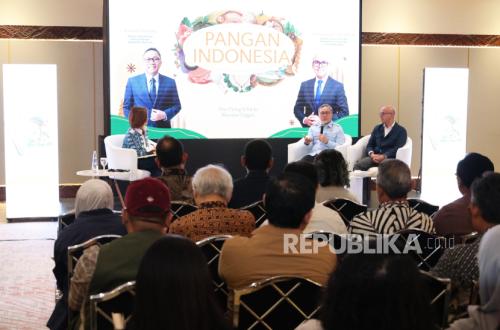
The Coordinating Minister for Food Affairs, Zulkifli Hasan, alongside the Special Assistant to the President for Communication and Policy Analysis, Dirgayuza Setiawan, launched the book ‘Indonesian Food: From Healthy Plates to Superior Humans’ during the IdeaFest 2026 series on Friday (4/9/2026).
The book examines Indonesia’s food journey through nine strategic commodities: rice, maize, soybeans, ruminant meat, poultry, fish, eggs, milk, and sugar. The discussion extends beyond production and consumption, linking these elements to nutritional fulfilment and the quality of Indonesian human resources.
“Food is a matter of life. But more than that, food is a matter of who we are as a nation,” said Zulkifli Hasan during the book launch event.
According to Zulkifli, ensuring food security is a vital part of the effort to build a self-sufficient Indonesia while preparing a healthy and productive workforce. Therefore, achievements in the food sector should be viewed as a foundation for strengthening a broader food agenda.
One achievement highlighted in the book is national rice production. In 2025, rice production reached approximately 34 million tonnes, exceeding the consumption requirement of about 31 million tonnes. This achievement serves as a stepping stone in Indonesia’s journey towards food sovereignty.
“But this achievement is not the finish line. This is the starting line for even greater work, building Indonesian food for the civilisation of the future,” said Zulkifli.
Zulkifli emphasised that developing a food ecosystem requires the involvement of various parties, including farmers, fishermen, business actors, academics, and the general public. In addition to ensuring food availability, increasing public understanding regarding food sources and nutritional value is also part of these efforts.
Meanwhile, Dirgayuance stated that the book also views food as part of Indonesia’s historical journey and identity. The diversity of food sources is reflected in the differing consumption patterns of people across various regions.
In the process of writing the book, he discovered that several foods currently commonly consumed by the public have relatively recent histories. On the other hand, various local food sources such as sago, taro, breadfruit, foxtail millet, maize, and tubers have long been part of the dietary patterns of the Nusantara people.
“This book speaks about national identity. About how food shapes the health, intelligence, productivity, and competitiveness of the Indonesian people,” said Dirgayuza.
The book consists of four chapters discussing Indonesia’s journey towards food sovereignty, ranging from the meaning of food sovereignty to a vision of Indonesia once that condition is achieved. The discussion covers strategic food commodities, history and consumption patterns, policy, and the national food ecosystem.
The launch at IdeaFest 2026 provides an opportunity to introduce food issues to a wider audience. This year, the 15th annual IdeaFest carries the theme ‘ReHumanize’, featuring creative workers, entrepreneurs, communities, and individuals from various backgrounds.
Through this book, food is positioned as part of the human development agenda. This vision aligns with the Indonesia 2045 aspirations to build a healthy, productive, and competitive society, with food and nutrition fulfilment serving as one of its foundations.