
Indonesian EV Sector Booms as Local SMEs Integrated into Supply Chain
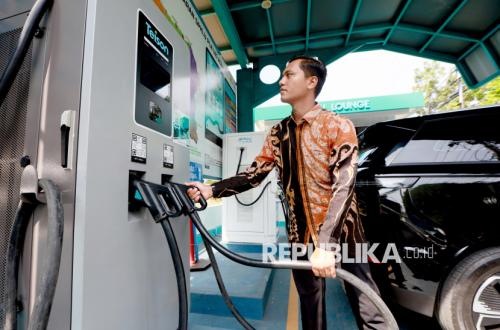
REPUBLIKA.CO.ID, JAKARTA – The surge in Indonesia’s electric vehicle market is creating new opportunities for local small and medium enterprises (SMEs) to join the EV supply chain. The government is urging SMEs not to remain mere spectators amid the surge in EV investments but to actively participate in the national component industry. Industry Minister Agus Gumiwang Kartasasmita stated Indonesia has significant potential to become a global EV manufacturing hub, supported by raw material reserves, a large domestic market, and the development of an EV ecosystem from upstream to downstream. “The government, through Presidential Regulation No. 55 of 2019, has affirmed its commitment to developing electric vehicles as part of the energy transition, green economy, and national industrialisation agenda,” Agus said in Jakarta on Thursday (28 May 2026). The Ministry of Industry is accelerating SME involvement in the Battery Electric Vehicle (BEV) industry to prevent national EV supply chains from being dominated by large corporations. The move also aims to strengthen local content and increase domestic industry value addition. Through its Directorate General of Small, Medium and Creative Industries (IKMA), the ministry partnered with the Directorate General of Automotive Industry (ILMATE), the Investment Ministry/BKPM, PT SGMW Motor Indonesia, and PT VKTR Mobility Technology to hold a supply chain business exploration event in Cikarang, West Java, on 22 May 2026. “The government aims for the BEV industry ecosystem to include not only large corporations but also SMEs to facilitate technology transfer and strengthen the national industry,” Agus said. The government believes national EV component industry opportunities are growing alongside domestic EV sales surges. According to Gaikindo data, BEV sales in Q1 2026 reached 33,150 units, a 95.9% increase from the same period last year. Beyond cars, national electric bus numbers reached 798 units by April 2026. Meanwhile, electric two-wheelers hit 236,451 units in February 2026, accounting for around 65% of the country’s total EV population. IKMA Director General Reni Yanita said the market growth presents significant opportunities for automotive component SMEs to enter the national EV supply chain. “We hope this event will unlock strategic partnerships between transport SMEs and large industries, while providing information on EV component needs to meet domestic component content (TKDN) requirements,” Reni said. Expansion of charging infrastructure is bolstering the national EV market. PLN data shows 4,769 public EV charging stations (SPKLU) spread across 3,097 locations in Indonesia as of April 2026. The number is targeted to surge to 62,918 units by 2030 to support the Ministry of Energy and Mineral Resources’ roadmap projection of nearly 944,000 national EVs. Director of Metal, Machinery, Electronics, and Transport SMEs at the ministry, Dini Hanggandari, said strengthening SME capacity is crucial for local businesses to meet global EV technology and quality standards. She added that strengthening domestic component industries will determine how much Indonesia can benefit from the rapidly growing EV boom’s economic impact.