
Indonesian Engineer's Project Amazed the Dutch, Once Began with a Buffalo Head Ritual
A project by an Indonesian engineer once amazed the Dutch. His design was considered a deviation from the formulas that had become the global standard for engineers. However, behind this modern technical approach, the designer first carried out a Javanese tradition by planting a buffalo head before construction began.
The engineer was Sedyatmo, a figure later known as the inventor of the ‘cakar ayam’ (chicken claw) foundation construction. His name is now immortalised as a toll road section in Jakarta.
In 1936, two years after earning his engineering degree, Sedyatmo was entrusted by Mangkunegoro VII to build an aqueduct in Wiroko Village, Wonogiri. The bridge was designed to channel water from the Wiroko River for use by local farmers.
The project was no easy task. The location was remote, access roads were poor, and the area was infested with venomous snakes. Undeterred, Sedyatmo devised a design that was economical in materials, cost, and time, yet still produced a strong, high-quality structure.
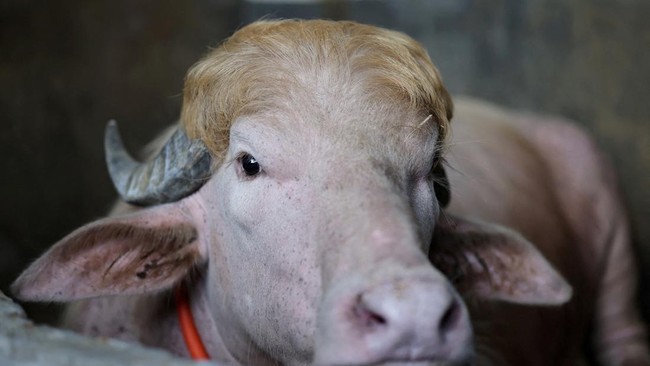
Amidst this modern technical approach, Sedyatmo also respected the customs of the local community. Before construction began, he slaughtered a buffalo and planted its head at the project site. According to Javanese belief at the time, the buried buffalo head was an offering to the guardian spirits of the place to ensure the construction proceeded smoothly and the workers were protected.
However, in his autobiography, Sedyatmo stressed that he did not perform the tradition out of belief in its mystical elements. He did it solely to honour the community involved in the project. He recalled that the buffalo meat was eaten together by the villagers and workers as a form of togetherness, while the head was buried because it was mostly bone and difficult to use.
Despite this, during the project, Sedyatmo’s work faced opposition from Dutch engineers. They considered his design a deviation because it used thinner concrete than the prevailing technical standards. Sedyatmo remained confident, arguing that they were too fixated on theories in books and that the strength of his bridge was not inferior to those built with conventional formulas.
When the project was completed in 1937, the results exceeded expectations. The Wiroko Aqueduct stood firm, proving Sedyatmo’s calculations correct. The success became a turning point in his career. His ability caught the attention of a senior official in the Dutch East Indies Department of Public Works, Prof. Ir. Bijlaard, who asked him to join the department, making Sedyatmo the first Javanese person to work there.
His achievements continued to grow. In 1953, he was appointed a professor at the Bandung Institute of Technology (ITB) in the field of water resources. His career peaked in 1961 when he created the innovative ‘cakar ayam’ foundation, a reinforced concrete slab foundation used on unstable soil. The invention later received patents from dozens of countries, cementing his legacy as one of the most influential engineers in Indonesian history.
Source: jawawa.id (https://jawawa.id/newsitem/indonesian-engineers-project-amazed-the-dutch-once-began-with-a-buffalo-head-ritual-1784605868)
Originally published by CNBC Indonesia (https://www.cnbcindonesia.com/entrepreneur/20260720132653-25-752202/proyek-ri-ini-bikin-belanda-kagum-ternyata-sempat-tanam-kepala-kerbau), translated from Indonesian