
Indonesian Engineer Marco Laju Develops AI Agent to Help US Patients Obtain Medication
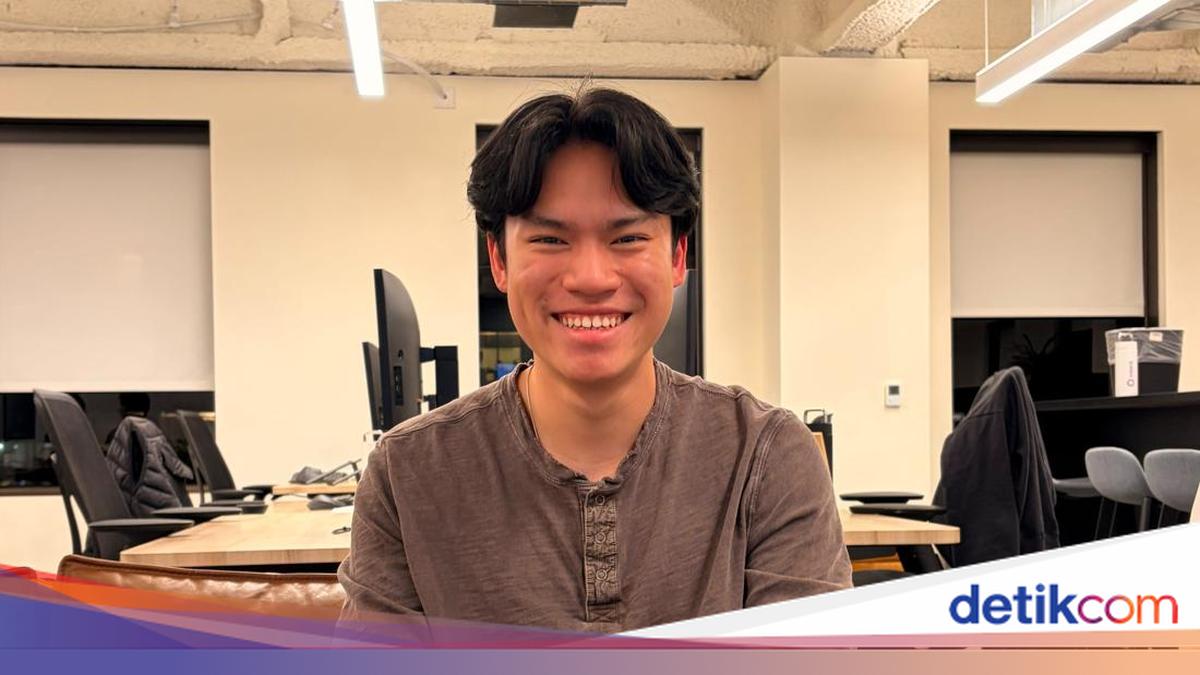
Indonesian engineer Marco Laju has developed an artificial intelligence (AI) agent to help patients in the United States obtain medication. Built at San Francisco health technology company Latent, the agent reviews medical records and prepares applications for approval of drug coverage.
To speed up this process, the AI-based technology is designed to reduce the administrative work involved in applying for drug coverage. It can make searches through medical records and checks of requirements more efficient, helping patients gain access to medication sooner.
In the US, a doctor’s prescription is not always the end of a patient’s journey. Healthcare teams still need to trace treatment histories and provide clinical evidence to insurers before coverage for a therapy is approved.
Known as prior authorisation, the process brings clinical information together with administrative requirements. Pharmacy teams must find relevant evidence in a patient’s history and use it to answer the insurer’s questions.
For Marco, the challenge is to build an agent that understands the context of this information and can carry out a sequence of tasks based on what it finds.
Finding information is not enough
A question such as whether a patient has tried a particular medication may require more than simply searching documents for the drug’s name.
A prescription list might show that the medication was prescribed. But a later visit note could explain that the patient stopped taking it because of side effects. Another document might record that the treatment did not produce the expected response.
These distinctions matter when pharmacy teams explain a patient’s treatment history to an insurer. The required information may be spread across doctors’ notes, laboratory results and years of medication history.
Marco has developed an agent that can search these records and gather relevant context to support access to medication.
“AI agents can help read and analyse this information according to the needs of the administrative or clinical process being carried out,” Marco said in a written statement on Wednesday, 11 November 2026.
His work includes developing agents to find clinical evidence, help answer questions based on medical records, and support the preparation and completion of prior authorisation applications.
These tasks are interconnected. Findings at one stage can determine what needs to be checked next. The agent therefore needs to retain context throughout its work, rather than treating each question as a separate task.
“With this approach, AI does not just read a single form; it can help make sense of the patient’s broader context,” Marco said.
Building agents for complex problems
Healthcare is a challenging environment for AI agent development. Medical records are not always complete or organised consistently, and repeated information does not necessarily reflect a patient’s current condition.
Meanwhile, coverage questions and requirements can vary depending on the drug and the insurer’s policy. Information relevant to one application may not be sufficient for another.
The engineering challenge Marco is addressing is to connect an agent’s ability to search data with the actions required in the workflow. The system must be able to use patient context to support the task at hand.
“That is why AI in healthcare cannot simply produce a convincing answer,” Marco said.
Healthcare professionals remain part of the workflow during development. The agent handles information searches and administrative tasks, while clinical pharmacy teams review its work and retain decisions that fall within their professional responsibility.
This work matters because of the process it supports. Medical records are needed to explain the basis for a coverage application, while healthcare professionals must divide their time between administration and patient care.
Marco’s agent is intended to handle these stages, allowing human expertise to focus on work that requires professional judgement.
From AI infrastructure to healthcare
Marco graduated in computer science from The University of Texas at Austin, where he researched infrastructure for running AI agent workflows efficiently. After graduating, he worked at Apple on the Health Research Platform before joining Latent.
His background in computing systems now underpins his work building AI agents that can use information and carry out stages of a task in real-world settings.
In healthcare, the problem has a concrete objective. Between a doctor’s decision and a patient’s access to medication lies an administrative process that requires accuracy and an understanding of context.
Through his AI agent, Marco aims to help healthcare teams connect the information in medical records with the work needed to secure approval for drug coverage.
Source: jawawa.id (https://jawawa.id/newsitem/indonesian-engineer-marco-laju-develops-ai-agent-to-help-us-patients-obtain-medication-1795762317)
Originally published by detikcom (https://news.detik.com/berita/d-8772469/marco-laju-insinyur-ri-kembangkan-agen-ai-bantu-pasien-di-as-urus-obat), translated from Indonesian