
Indonesian Embassy in Beijing Invites Chinese Firms to Invest in Renewable Energy
Beijing (ANTARA) – The Indonesian Embassy in Beijing has invited Chinese businesses to invest in renewable energy in Indonesia.
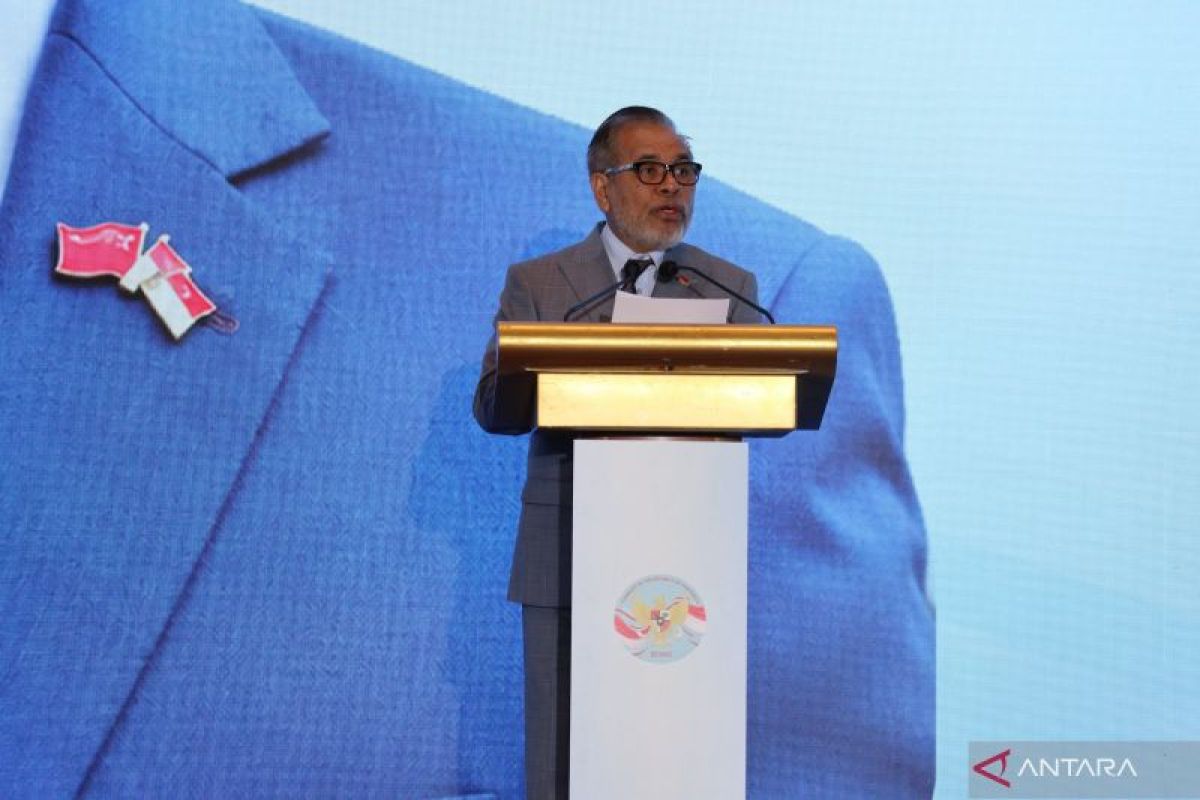
“We particularly welcome Chinese investment in renewable power generation, energy storage, electricity transmission and green modernisation,” Indonesia’s Ambassador to China and Mongolia, Djauhari Oratmangun, said in Beijing on Monday.
Djauhari made the remarks at an Indonesia-China business forum entitled “Mobilising China RE Investment into Indonesia”, attended by around 150 Indonesian and Chinese business representatives.
“Under President Prabowo’s leadership, Indonesia is pursuing an ambitious agenda to strengthen energy resilience while accelerating the transition to cleaner and more sustainable energy,” Ambassador Djauhari said.
Indonesia has substantial renewable energy potential, including solar, hydropower, geothermal and wind resources, he said.
The National Research and Innovation Agency (BRIN) estimates Indonesia’s total renewable energy potential at about 3,687 gigawatts, derived from various sources, particularly solar and wind.
“China has demonstrated remarkable leadership in renewable energy technology, from solar panels and wind turbines to battery-based energy storage and smart electricity grids,” Djauhari added.
By combining China’s technological expertise and investment capacity with Indonesia’s abundant resources and growing energy needs, the two countries can create mutually beneficial opportunities, he said.
“I hope and believe these memoranda of understanding will be followed up with concrete implementation, resulting in measurable projects, technology partnerships and actual investment in Indonesia’s renewable energy sector,” Djauhari said.
In his remarks, Djauhari also said bilateral trade between Indonesia and China exceeded US$167 billion in 2025, while Chinese investment in Indonesia amounted to US$7.5 billion. This made China Indonesia’s third-largest foreign investor; when Hong Kong is included, China ranked first, with investment exceeding US$8.3 billion.
During a panel discussion at the event, Yulian Wihantoro, head of Bank Indonesia’s representative office in Beijing, said the central bank’s role as regulator was to ensure that long-term investment could be sustained.
“This means, first, that they can make direct transactions from rupiah to yuan or vice versa, and also access funding in their respective currencies through the Cross-Border Interbank Payment System (CIPS),” Yulian said.
Bank Indonesia (BI) said transactions under the Local Currency Transaction (LCT) scheme between Indonesia and China had reached US$13 billion in rupiah and renminbi by the end of April 2026. The figure for 2025 was also US$13 billion.
“But the implementation of CIPS depends on each bank, so they have different business solutions,” Yulian added.
Yulian said BI had appointed Bank Mandiri, Indonesia’s largest local bank, as a direct participant in CIPS.
“Starting next year, we will also handle Hong Kong, and we hope there will be greater liquidity using the CIPS scheme for both rupiah and yuan, including for products in the financial markets,” Yulian said.
The use of local currencies in trade and investment transactions is seen as enabling businesses in both countries to reduce their dependence on the US dollar, as part of a strategy to diversify international transactions that will continue to be strengthened.
At the event, Indonesian and Chinese companies also signed memoranda of understanding with total commitments of Rp150 billion.
The agreements involved PT Enviro Buana Solusindo, Tongfang Environment Co., Ltd. and IndoEnergy Gateway Inc.; PT Qavah Sarva Nalaswara and Hua Splendor CulTech (Beijing) Co., Ltd.; Untukmu.AI Pte Ltd, PT Lumina Artha Kreasi and Hua Splendor CulTech (Beijing) Co., Ltd.; PT Lumina Artha Kreasi, Galaxin Group Capital Limited, Guangdong Baihuida New Material Co., Ltd. and Global Multilateral Research Institute Limited; and PT Enercon Global Mineral and Shandong Guote Intelligent Equipment Technology Co., Ltd.
Source: jawawa.id (https://jawawa.id/newsitem/indonesian-embassy-in-beijing-invites-chinese-firms-to-invest-in-renewable-energy-1793613335)
Originally published by Antara (Indonesian) (https://www.antaranews.com/berita/5826571/kbri-beijing-undang-pengusaha-china-bidang-energi-terbarukan), translated from Indonesian