
Indonesian Doctor's Innovation: Using AI to Detect Heart Failure
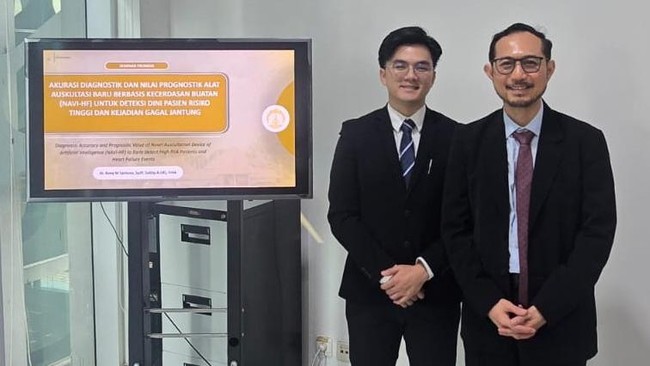
A cardiologist in Indonesia has developed a device based on artificial intelligence (AI) to help detect signs of pulmonary congestion through a more practical, rapid, and objective analysis of chest sounds. The development of this tool stems from the persistently high burden of heart failure in Indonesia. According to data from the Asian-HF Registry, Indonesia has the second-highest number of heart failure cases in Asia after China. The one-year mortality rate for patients reaches 34.1%, while around 30% of patients must undergo rehospitalisation due to a worsening condition after being discharged from hospital. One of the main causes of the high readmission rate is residual pulmonary congestion that remains undetected when the patient is sent home. This condition often cannot be identified through standard stethoscope examinations. Meanwhile, Lung Ultrasound and NT-proBNP blood tests require special equipment, incur higher costs, and demand trained medical personnel. Addressing this challenge, Dr. Rony M. Santoso, a cardiologist and consultant in interventional cardiovascular and vascular medicine at Primaya Hospital Tangerang, developed the Novel Auscultation Device of Artificial Intelligence for Heart Failure (NAVI-HF). The research is part of his doctoral dissertation at the Faculty of Medicine, University of Indonesia. NAVI-HF is an AI-based device designed to help doctors detect signs of pulmonary congestion by analysing chest sounds more practically, quickly, and objectively. Unlike a conventional stethoscope, NAVI-HF records chest sounds from five examination points for approximately one minute. The recording is then analysed using an AI algorithm to identify whether the patient still has signs of pulmonary congestion that could risk triggering a worsening of heart failure after leaving the hospital. In a study involving 246 acute heart failure patients, NAVI-HF demonstrated good diagnostic performance. The device recorded an accuracy rate of 86%, a sensitivity of 91%, and a specificity of 82% compared to Lung Ultrasound as the reference standard. A follow-up study over six months also found that patients with a positive NAVI-HF result had a 1.6 times higher risk of rehospitalisation due to heart failure compared to patients with a negative result. Rony emphasised that NAVI-HF is not designed to replace the role of doctors, but rather to serve as a tool to help identify high-risk patients so that treatment can be administered earlier. “NAVI-HF was developed to help doctors identify patients who are still at risk of deterioration through a simple, portable, and AI-supported device. This way, patients requiring closer monitoring can be recognised earlier, allowing therapy to be adjusted before complications occur,” he explained in a written statement received by CNBC Indonesia on Wednesday. In the future, NAVI-HF also has the potential to support home-based patient monitoring services and telemedicine. “We hope this innovation can support earlier detection, assist doctors in clinical decision-making, and simultaneously reduce the risk of rehospitalisation due to heart failure,” he added. According to Rony, the use of AI in NAVI-HF is an example of how technology can support modern medical practice. He stated that AI is not intended to replace doctors, but rather to help deliver faster, more objective, and targeted diagnoses, thereby improving the quality of life for heart failure patients while reducing the burden on Indonesia’s healthcare services.