
Indonesian Democracy Index in Central Java Improves, Outstripping the National Score
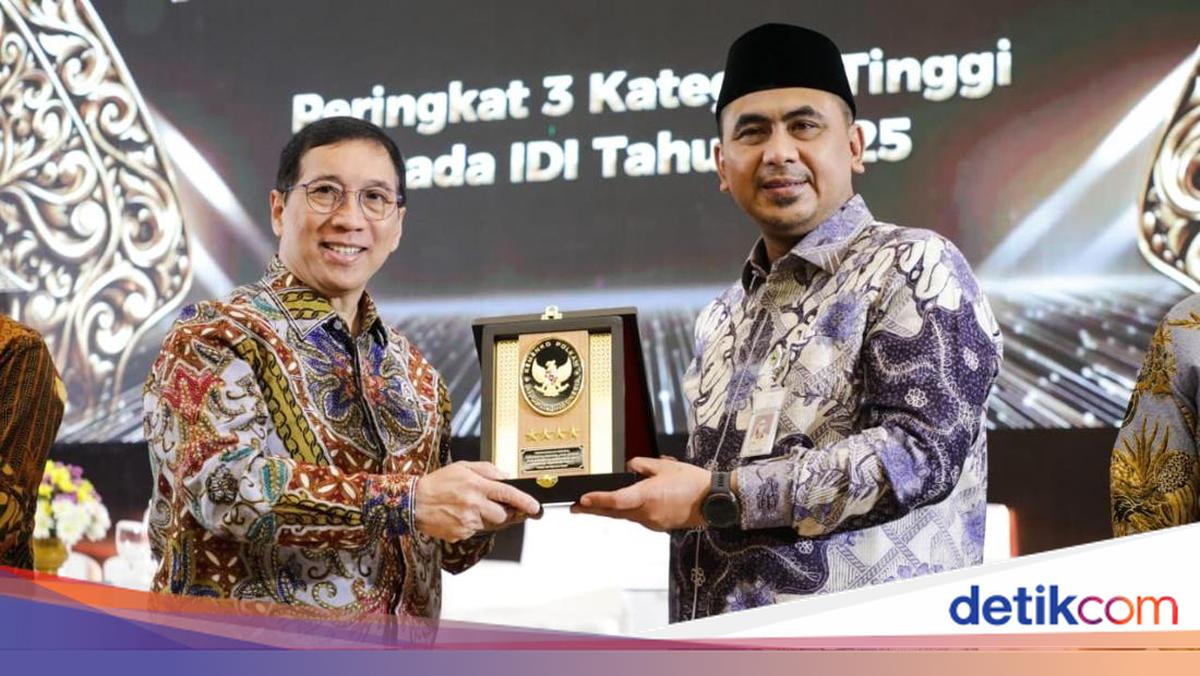
This emerged at the Kick-Off for the National Evaluation of the 2025 Indonesian Democracy Index Achievement, part of the programme to Strengthen Democracy and Improve the National Development Strategy, held at Horison Ultima Sentraland, Simpang Lima, Semarang, on Thursday, 21 May 2026. During the event, the Deputy Governor of Central Java, Taj Yasin, expressed appreciation for Central Java’s achievement of rising one rank in this year’s assessment. “Alhamdulillah Central Java has moved up one notch. Last year it was ranked fourth, now it is ranked third,” he said in a written statement. He added that the upward shift was not merely the result of government work, but the fruit of community involvement in keeping the democratic space alive. “This cannot be done by the government alone, because democracy indicators are broad, spanning politics, economy, and the freedom of people to speak.” He noted that one of the indicators driving Central Java’s improvement was the openness of public service channels and the accessibility of the public complaint space at both provincial and regency/city levels. He argued that criticism, feedback, and reports from the public are crucial in strengthening democracy’s quality. The government, he added, needs citizen participation to read real-world problems on the ground. “Inputs from the public help us. Information about various events in Central Java also helps the government take the right steps. Democracy cannot be built alone,” he said. However, behind the achievement, Taj Yasin acknowledged there remains substantial work, particularly in the economic sector. He therefore urged the business sector to play a role in strengthening democracy’s quality through more inclusive economic development. “When we talk about democracy, the economy also matters as a measure. We need to see how much companies affect surrounding communities. This must be coordinated together so that the Central Java Democracy Index next year can rise again,” he said. In the same forum, Deputy Coordinating Minister for Political and Security Affairs Lodewijk Freidrich Paulus praised Central Java’s national ranking rise. He said the achievement indicates positive competition among regions to improve democracy and development. “Central Java jumped one level from fourth to third. That means there is competition to do better,” he said. Nevertheless, Lodewijk cautioned that nationally the IDI 2025 score declined. The national IDI fell by 1.62 points, from 79.81 in 2024 to 78.19 in 2025, still below the national development target set at 81.69 to 85.23. “Indeed the decline was not drastic, but it serves as a wake-up call for all of us. Democracy must continue to be refined,” he said. He explained that the national IDI over the past decade has shown a fluctuating path. After stagnating from 2009-2013, democracy indices rose significantly in 2014-2019, fell during the 2020 pandemic, rose again in 2021-2022, and fluctuated through to 2025. Therefore, the national evaluation forum is expected not to be a ceremonial affair but a starting point for more substantive improvements in democracy. “We cannot impose exact replication across all regions because regional wisdom varies. But the IDI should be a measuring tool as well as a compass for democracy improvements,” he asserted. Deputy Head of the Central Statistics Agency (BPS), Sonny Harry B Harmadi, stressed that democracy quality has become an official measure of national development success, both medium- and long-term. He noted that the IDI now features not only in the RPJMN but also in the RPJPN and regional RPJMDs. In other words, democracy quality will be an important indicator in Indonesia’s development path toward 2045. “Democracy is now a measure of national development performance. So it’s not only about politics but about human development as well,” he said. He added that the biggest challenge to Indonesian democracy cannot be separated from human resources quality. Based on BPS data, regions with higher Human Development Index tend to have better democracy indices. Likewise, areas with high poverty levels generally have lower democracy quality. “If public education improves, health improves, and people’s economies become more prosperous, then democracy quality will also rise,” he said. He argued that healthy democracy requires a critical, educated, and adequately prosperous society. Therefore, human development is a crucial foundation for strengthening substantive democracy in Indonesia. Sonny also warned of the importance of preventing identity politics that could divide society. He said that democracy strengthening going forward should be directed toward enhancing inclusivity, public communication, and active public participation in policy-making. “Let us not allow this country to fracture due to identity politics exploitation. Democracy must strengthen unity,” he concluded.