
Indonesian Creator Discovers Cultural Charms During Visit to China
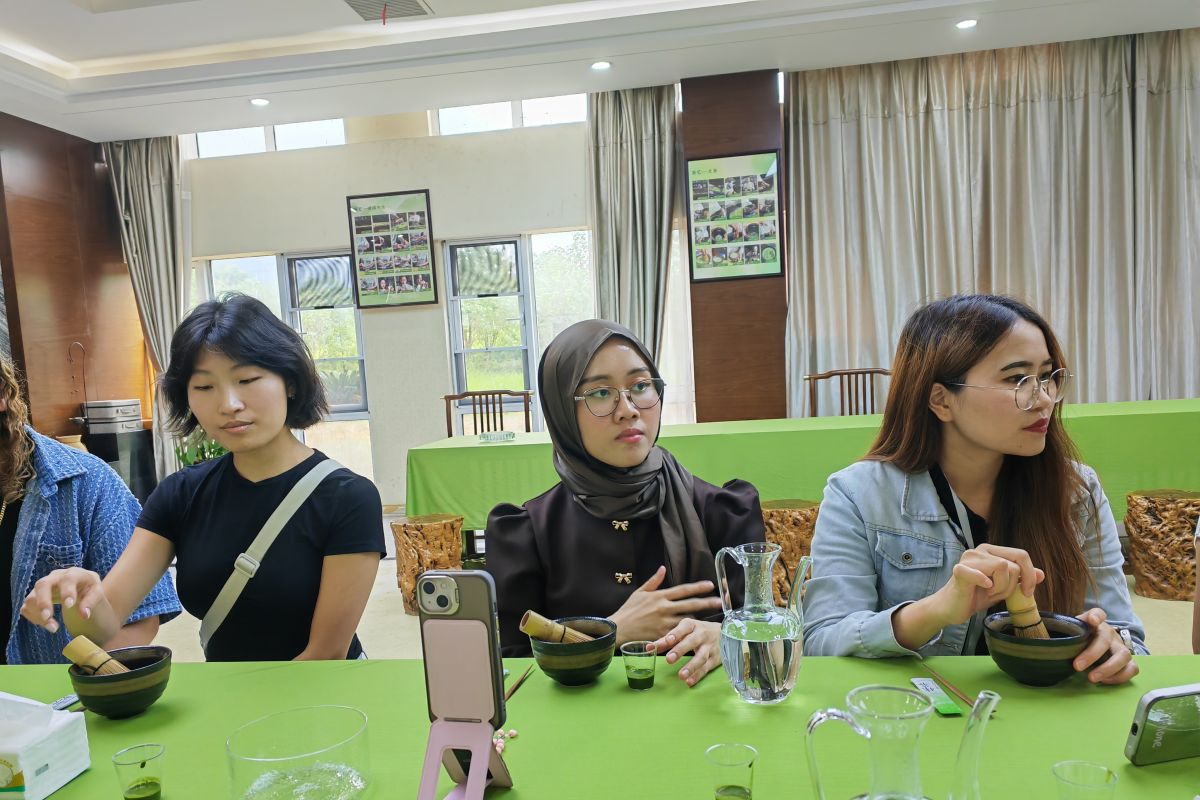
In her second trip to China, 24-year-old Indonesian Najwa Nur Awalia gained a fresh perspective on the country through an in-depth visit to Guizhou province in southwestern China. In early August, content creators and youth representatives from over 10 countries, including Indonesia, Brazil, and Thailand, visited Guizhou to participate in cultural exchange and experience activities. Najwa, a 2024 environmental geography graduate who works in education consulting and manages social media accounts focused on youth development, described the trip as a pleasant surprise. After previously failing to qualify for a youth dialogue programme, she was recommended by the organising committee for this exchange, giving her the opportunity to explore Chinese culture further. ‘I have always been interested in China’s development and culture, and I was very happy to gain first-hand experience on this occasion,’ said Najwa, who participated in a summer programme at Zhejiang University in 2023. The trip encompassed various activities, from traditional cultural experiences to visits highlighting local industrial development. In the ancient town of Longli in Jinping county, Najwa tried traditional face painting. She showed the painter a butterfly motif she had prepared and asked for it to be incorporated into the design. With a history of over 600 years, Longli was originally built as a military fortress during the Ming Dynasty and was later included in an eco-museum project sponsored by the Chinese and Norwegian governments. Within minutes, the face painting combining traditional motifs with butterfly elements was complete. The painted-face dragon dance, a folk art performance unique to the town, has been included in the provincial-level intangible cultural heritage list. Combining dragon dance with elements of traditional opera, the performance features dancers with varied facial makeup tailored to their roles. In recent years, local artists have refined traditional face painting designs while creating improvised works based on individual preferences. ‘This was the first time my face was painted. Integrating my favourite butterfly element into traditional art was very novel,’ Najwa said. She was impressed that the painter needed only seconds to study the reference image before creating a design and choosing colours suited to her taste. ‘This is one of the best butterfly artworks I have ever seen. It perfectly blends history and art,’ she added. According to Najwa, the experience of incorporating her personal preferences into traditional art gave her a more direct understanding of China’s intangible cultural heritage. She then tried the dragon dance, which gave her another perspective on traditional folk culture: the importance of teamwork. Under the guidance of Wang Zhenwei, an inheritor of the painted-face dragon dance, Najwa and the other participants learned the basic movements of the performance. ‘It was a bit tiring at first, like exercising, and made me sweat. The dragon dance requires everyone to work closely together and follow the rhythm of the dragon’s head,’ she said. ‘But it was truly fascinating. I think it is a historical and cultural treasure that young people should appreciate and preserve.’ Najwa noted that dragon dances are commonly performed by Chinese-Indonesian communities during festivals. Experiencing the dance first-hand made her appreciate the excitement of the folk tradition and the importance of teamwork even more. During her visit to Longli ancient town, Najwa was also impressed by the well-preserved historic buildings and the vibrant local life. Despite the language barrier, residents communicated with her through simple gestures and translation apps, even taking the initiative to introduce local culture and cuisine. Another highlight of the trip was matcha. In Jiangkou county, the youth group sampled various matcha-based snacks and delved into the culture of ‘diancha’, the art of whisking tea powder dating back to the Song Dynasty. Gui Tea Group, based in Jiangkou, sold over 2,500 tonnes of matcha in 2025, with an output value exceeding 500 million yuan. The company stated that its products have been exported to more than 50 countries and regions, including the United States, Japan, and Indonesia. The matcha tasting also left a deep impression on Najwa. As a matcha lover, she learned more about the production process during the visit and discovered how different roasting temperatures can affect the aroma and flavour of matcha. ‘The matcha in China is different from what I have tasted in Indonesia or Japan, and its uses are also very wide—not just for drinks, but also for biscuits, desserts, and even matcha chips,’ she said. She noted that in Indonesia, matcha is generally served as a beverage in cafés, whereas the variety of matcha products she encountered in China opened her eyes to new possibilities. As a social media creator focusing on youth development, Najwa plans to produce content about her experiences.