
Indonesian Consumer Spending Increasingly Reliant on Loans as Savings Weaken
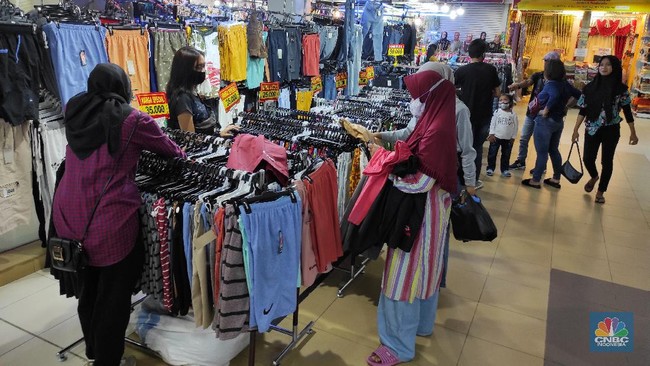
Jakarta, CNBC Indonesia — Public purchasing power grew positively in June 2026, as reflected in the Mandiri Spending Index, which showed consumer spending reaching 123 points, or 5.9% growth year-on-year.
Alongside the growth in spending power, the Mandiri Saving Index also recorded growth of 5.7%, with the index standing at 84.8.
This was driven by the rise of the index’s forming components, namely the loan index, which covers online loans or P2P lending, credit cards, and paylater services from non-bank financing companies. The index value reached 157.7, growing 24.6% year-on-year.
“This shows that spending is still growing positively even though the savings rate is weakening. At the same time, the use of financing is increasing,” according to the Daily Economic and Market report from Bank Mandiri’s Office of Chief Economist published on Tuesday (28/7/2026).
Based on data from the Financial Services Authority (OJK) and Bank Indonesia, total outstanding online loans, credit cards, and (non-bank) paylater schemes reached Rp160.7 trillion in May 2026. Of that amount, outstanding online loans stood at Rp103.7 trillion, or around 65% of the combined total of the three financing types.
Meanwhile, outstanding credit card debt reached Rp43.8 trillion (27%), while paylater disbursed by financing companies amounted to Rp13.2 trillion (8%). The highest growth was shown by paylater (53.6% year-on-year), followed by P2P lending (25.7%), and credit cards (15.6%).
According to OJK data, the share of online loans used for consumer needs rose to 86% in April 2026, up from 78% in April 2025 and 68% in April 2024. Conversely, the share of loans for productive activities continued to decline, falling to just 14%.
“This shift shows that the increase in borrowing is driven more by household consumption needs, whilst demand for financing for business activities has become more limited,” the Mandiri economics team’s report stated.
Nevertheless, it is worth noting that consumer spending momentum eased at the start of the third quarter of 2026. Based on MSI data, average public spending growth at the start of the third quarter stood at 5.8% year-on-year, lower than the second quarter (6.1%) and the first quarter (6.4%).
On the other hand, weakening savings and the rising share of consumer financing indicate that a portion of consumption is increasingly propped up by household leverage.
“Therefore, strengthening income levels must become a priority so that future consumption is supported by stronger household financial capacity,” the Mandiri report said.
“Policies to safeguard disposable incomes, contain pressure on living costs, and encourage job creation are essential so that consumption momentum is maintained on a healthier footing,” it continued.