
Indonesian Companies Increasingly Squeezed by Mounting Pressures
Jakarta, CNBC Indonesia – Economists at the Center of Reform on Economics (CORE) Indonesia have revealed that the impact of Bank Indonesia’s (BI) benchmark interest rate hikes, or BI Rate, is putting the real sector under increasing pressure. The reason is that the BI Rate pushes bank lending rates ever higher.
Akbar Susamto, Director of Research for Macroeconomics, Fiscal and Monetary Policy at CORE Indonesia, said the real sector was already under severe strain due to global uncertainty, with industries also finding it increasingly difficult to compete amid weak demand.
“The real sector was already facing many pressures, from rising production costs due to uncertain global conditions, to sluggish demand because there are no more major holiday moments after April 2026, and then BI raised interest rates on top of that, squeezing the real sector even further,” Akbar said at the Core Midyear Economic Review forum on Wednesday (29/7/2026).
According to him, the BI Rate hike adds pressure on the real sector because it can raise banks’ lending rates. Given the real sector’s close dependence on bank credit, higher lending rates mean many businesses are beginning to hold back on expansion.
“When the BI Rate is raised, banks’ interest rates usually rise as well. If banks’ interest rates go up, it means the cost of funding for the real sector becomes more expensive. Because it is more expensive, some may feel they can no longer afford it, so they may postpone purchases. That is what presses down on the real sector,” Akbar explained.
“Entrepreneurs who were planning to invest — buying machinery, equipment, all sorts of things, capital goods or anything else, or making initial investments — when interest rates rise, they hold back because it feels too expensive. What happens? Investments are postponed, expansion is put off,” Akbar continued.
Nevertheless, Akbar said the impact of the rate hike will not be felt immediately, as banks still have to adjust ongoing financing contracts and maintain relationships with their customers. However, based on past experience, rate increases have ultimately been followed by slower credit growth.
The pressure on the real sector, he added, also has the potential to magnify challenges in the labour market. According to Akbar, employment problems had already emerged before the BI Rate hike, driven by digital transformation, corporate efficiency measures, and pressures on a number of business sectors.
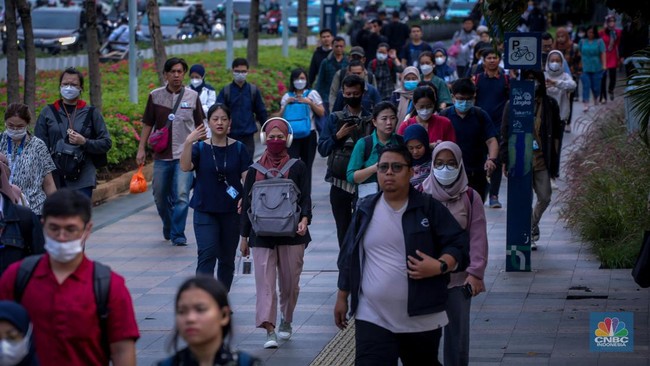
“The real sector is increasingly squeezed, and this will also put pressure on Indonesia’s workforce. It is true that the unemployment rate in February 2026 fell to 4.68%, but that does not reflect the fact that many workers are shifting from the formal to the informal sector,” Akbar explained.
Akbar viewed BI’s decision to raise interest rates as a difficult choice, as it must strike a balance between maintaining the stability of the rupiah exchange rate and sustaining real-sector activity.
“Bank Indonesia is in a difficult position: on one hand it needs to safeguard rupiah exchange rate stability, but on the other, higher interest rates put pressure on the real sector. The impact going forward very much depends on the effectiveness of this policy,” said Akbar.
Source: jawawa.id (https://jawawa.id/newsitem/indonesian-companies-increasingly-squeezed-by-mounting-pressures-1785397921)
Originally published by CNBC Indonesia (https://www.cnbcindonesia.com/news/20260730132238-4-755075/perusahaan-di-ri-makin-terjepit-dapat-tekanan-bertubi-tubi), translated from Indonesian