
Indonesian Coal to be Processed as Petrol Additive
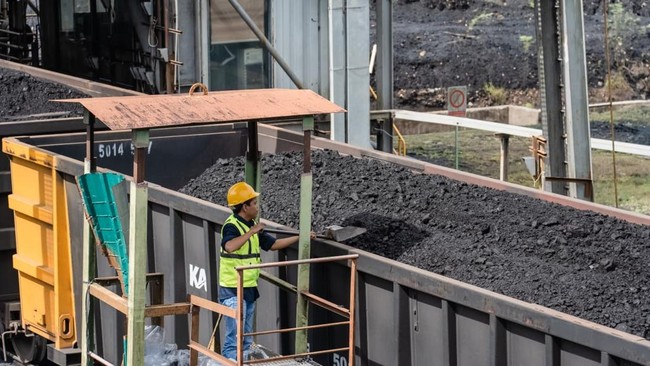
The Indonesian government is encouraging the development of coal downstreaming to produce alternative fuels, including processing coal into methanol which can be utilised as a fuel oil additive.
Deputy Minister of Energy and Mineral Resources, Yuliot Tanjung, stated that the government has been promoting investment in coal-to-methanol processing in several regions with significant coal resource potential. One such development is currently underway in East Kalimantan.
“I personally conducted the groundbreaking for those activities. Some projects in East Kalimantan have already commenced. We are also pushing for activities in South Sumatra, where there are areas with substantial coal potential. We are primarily using low-caloric coal, involving technological cooperation,” said Yuliot when met at the Kalibata Heroes Cemetery on Tuesday (29/09/2026).
Furthermore, Yuliot explained that the products resulting from this downstreaming process are not directly petrol. The stage currently being promoted by the government is the conversion of coal into methanol.
“Methanol can be used as a component for blending fuel,” he added.
Previously, the Chairman of the Indonesian Mining Experts Association (Perhapi), Sudirman Widhy, stated that, technologically, processing coal into petrol or gasoline is highly feasible.
“In general, converting coal into gasoline is very possible. The technology for this already exists,” he told CNBC Indonesia on Wednesday (23/09/2026).
According to him, one country that possesses such technology is South Africa, through the company Sasol. That company operates Coal to Liquid (CTL) facilities to process coal into liquid products.
Sudirman explained that the process of converting coal into petrol begins by transforming coal into synthetic gas (syngas). Coal is reacted with oxygen and steam at high temperatures and pressures to produce synthesis gas consisting of carbon monoxide (CO) and hydrogen (H2).
Syngas is then further processed into methanol, which can subsequently be processed into derivatives such as Dimethyl Ether (DME) or gasoline. However, Sudirman emphasised that the greatest challenge lies not in technological readiness, but in investment and production costs.
“The main problem is not regarding technology, but rather economic viability,” he said.
He noted that the high requirement for investment could be a deterrent for private companies considering entering coal-to-petrol processing projects.
Sudirman cited the coal-to-DME processing project, which previously planned to involve the American company Air Products. The company eventually withdrew from the project plan, partly due to economic considerations.
“It was proven recently that Air Products from the United States withdrew and was reluctant to continue the plan for DME production from coal, primarily due to economic reasons,” he concluded.